










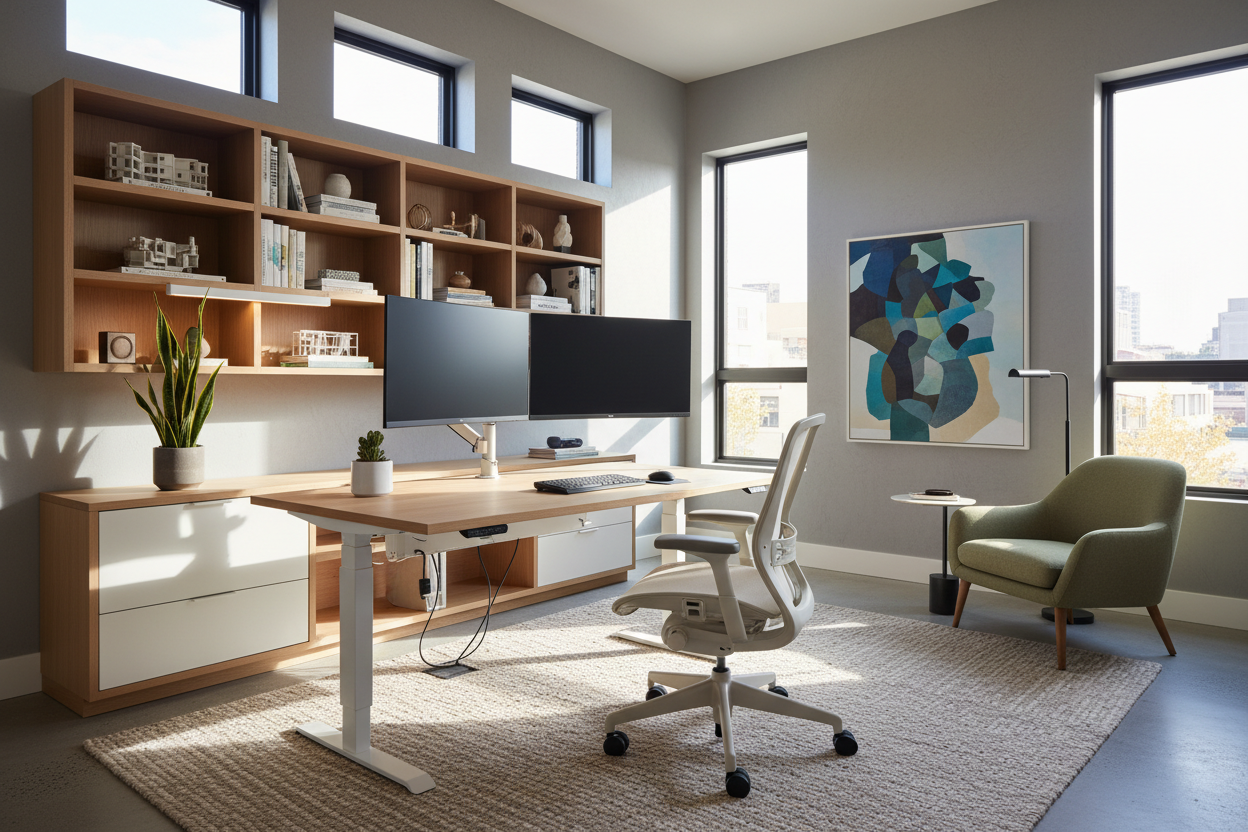
Walking into a workspace that feels stagnant or cluttered doesn't just affect aesthetics; it directly impacts cognitive load and professional output. Many clients come to me feeling drained by their environment, not realizing that poor lighting and inefficient layouts are the silent culprits. This guide explores sophisticated office renovation ideas designed to merge high-end aesthetics with rigorous functionality, ensuring your investment yields a space that works as hard as you do.
Key Features to Prioritize
- Ergonomic Integrity: Prioritize seating and desk heights that support neutral body posture to reduce fatigue.
- Acoustic Management: Incorporate soft surfaces (rugs, acoustic panels) to dampen echo and improve focus.
- Lighting Layers: Balance ambient overhead light with specific task lighting to reduce eye strain.
- Material Durability: Select contract-grade fabrics and scratch-resistant surfaces for high-touch areas.
- Spatial Flow: Ensure distinct zones for deep work, collaboration, and storage to maintain organization.
Mastering the Layout: Flow and Function
When considering remodel office ideas, the floor plan is your foundation. In professional design, we look at "circulation paths"—the invisible lines you walk to get from the door to the desk or the filing cabinet. If you have to dodge a chair or squeeze past a bookshelf, the flow is broken.
For executive suites or home offices, position the desk in the "command position," facing the entrance but not directly in line with it. This taps into primal psychology, offering a sense of security and authority. If you are managing a team space, cluster desks to encourage collaboration but orient them so eye contact is optional, not forced, preserving individual privacy.
Materiality: The Tactile Experience
The difference between a showroom look and a livable office often comes down to material selection. While solid wood offers a luxurious, heavy visual weight, it is susceptible to humidity changes and water rings. For desk surfaces, I often recommend high-pressure laminates (HPL) or engineered veneers with a matte finish. These provide the warmth of wood but offer superior resistance to heat and scratches.
Textural Contrast
Avoid the "flat" look by mixing textures. If your desk is sleek and smooth, pair it with a task chair upholstered in a bouclé or a heavy weave rather than standard mesh. This introduces a residential softness that makes the office feel less sterile and more inviting.
Smart Solutions for the Small Office Renovation
Limited square footage requires vertical thinking. In a small office renovation, floor space is premium real estate. Instead of deep, lateral filing cabinets, opt for wall-mounted shelving systems that draw the eye upward, creating an illusion of height.
Look for furniture with exposed legs (like mid-century modern styles) rather than pieces with skirts or solid bases. Being able to see the floor underneath the furniture tricks the brain into perceiving the room as larger. Additionally, consider a "floating" desk anchored to the wall; this eliminates visual clutter and simplifies cleaning.
Lighting: The mood Setter
Bad lighting kills good design. A single overhead fixture casts harsh shadows and flattens the room's dimension. Aim for a temperature of 3000K to 4000K—crisp enough for focus, but warm enough to be pleasant. Layer your lighting by adding a focused architectural task lamp and perhaps a floor lamp with a linen shade in the corner to soften the room's edges.
Lessons from My Own Projects
I learned a hard lesson about surface finishes during a project for a boutique law firm. We installed gorgeous, high-gloss black lacquer desks to achieve a sleek, "Succession" style look. It was visually stunning on installation day. However, within a week, the client called me in frustration. The high-gloss finish acted like a mirror for fingerprints, dust, and even the slightest micro-scratches from sliding a laptop.
We ended up having to refinish the tops with a nano-tech matte material that resists fingerprints and "heals" micro-scratches. Since then, I always warn clients: if you actually use your desk for heavy work, avoid high-gloss finishes. Matte or satin finishes are far more forgiving and hide the daily wear and tear that is inevitable in a working office.
Final Thoughts
Renovating your office is about more than just buying new furniture; it is about curating an environment that respects your workflow. By focusing on durable materials, proper lighting, and an efficient layout, you create a space that remains timeless and functional for years to come.
Frequently Asked Questions
How do I budget for an office renovation?
Start by allocating 40% of your budget to the desk and chair, as these are your primary tools. Reserve 30% for storage and lighting, and the remaining 30% for decor, paint, and unexpected costs. Always prioritize the quality of the chair over aesthetic accessories.
What is the best color for productivity?
While blue is often cited for focus, it can feel cold. I prefer "greige" (warm gray) or sage green. These earth tones reduce anxiety and eye strain while providing a neutral backdrop that doesn't compete for your attention.
Is a standing desk worth the investment?
Absolutely, but only if the mechanism is high quality. Look for dual-motor electric bases rather than manual cranks. The stability at full height is crucial; a wobbly desk breaks concentration instantly.

Leave a comment
This site is protected by hCaptcha and the hCaptcha Privacy Policy and Terms of Service apply.