










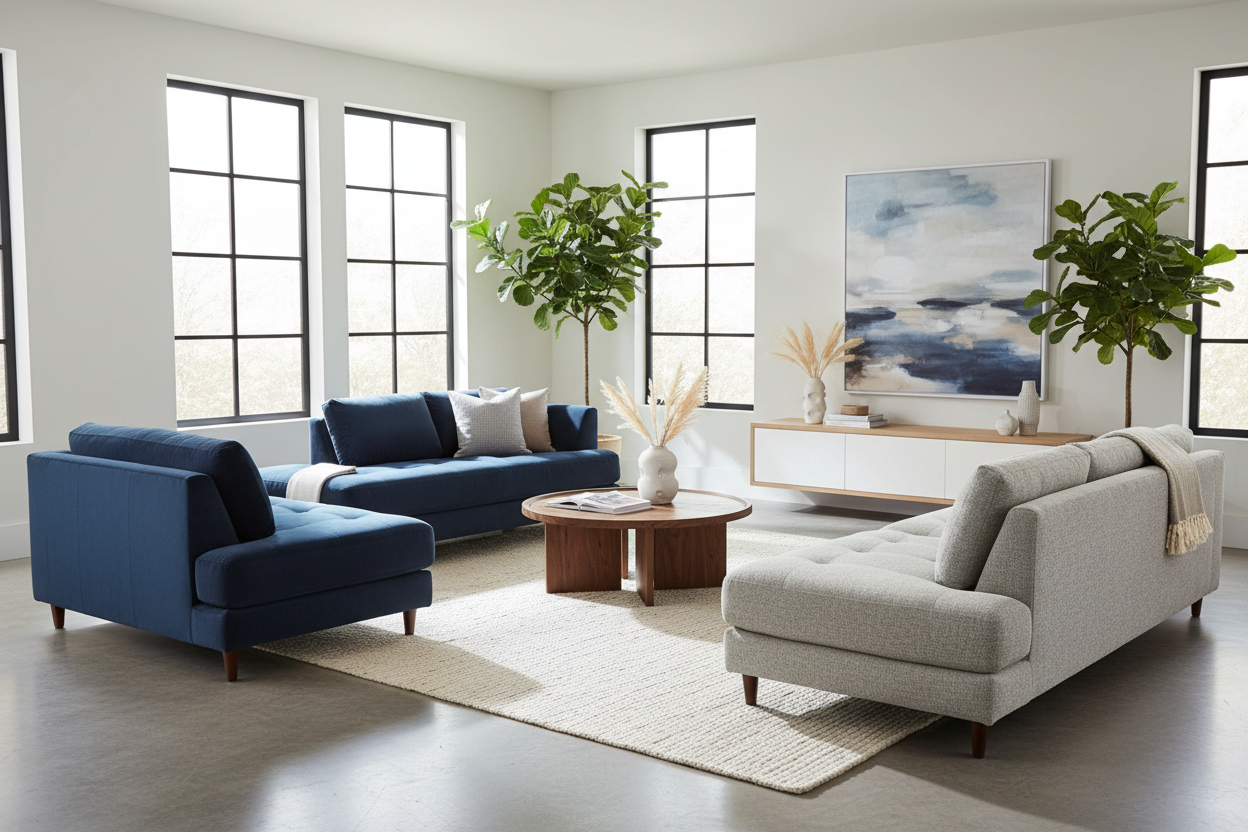
There is a specific type of design heartbreak reserved for homeowners who wait twelve weeks for a sofa, only to realize the fabric feels like burlap or the seat depth cuts off their circulation. In the age of one-click ordering, the art of the "sit test" has been lost, yet it remains the single most critical step in furnishing a living room. When you actively search for a sectional nearby, you are not merely looking for convenience or lower shipping costs; you are auditing quality before it enters your home. As a designer, I always advise clients to prioritize local availability where they can physically interact with the piece. This article explores why the tactile experience is non-negotiable and how to spot quality construction on the showroom floor.
Key Features to Evaluate In-Person
- Suspension System: Ask to see under the hood. Eight-way hand-tied springs are the gold standard for longevity, whereas simple webbing often sags within years.
- Cushion Density: Test the "sink." A density of 1.8 to 2.5 lbs indicates high-resiliency foam that won't pancake after six months of use.
- Joinery: Lift one corner of the sectional. If the frame twists or squeaks, walk away. You want kiln-dried hardwood frames that feel rigid.
- Fabric Tactility: heavy-duty rub counts (over 15,000 double rubs) are vital, but so is the hand-feel. Does the weave catch on jewelry? Does it feel hot to the touch?
The Ergonomics of the "Sit Test"
No product description can tell you how a sofa fits your specific body mechanics. When visiting a showroom, do not just sit politely on the edge. Remove your shoes (if permitted), curl up, and lie down. You are testing for lumbar support and seat depth.
A common issue with ordering online is misjudging the scale. A deep-seated "lounging" sectional (often 40+ inches deep) looks luxurious in photos but can be uncomfortable for formal sitting if your feet don't touch the floor. By finding a retailer nearby, you can determine if the pitch of the backrest aligns with your posture requirements.
Scaling for Tight Quarters
If you are hunting for a small sectional sofa nearby, the margin for error is razor-thin. In compact urban apartments or cozy dens, a difference of three inches can block a walkway or obstruct a doorway.
When viewing pieces locally, bring a tape measure and, more importantly, photos of your room. Visualize the "visual weight" of the piece. A sectional with rolled arms and a skirted base will dominate a small room, making it feel claustrophobic. Conversely, a small sectional nearby with a track arm and exposed legs will allow light to pass under the furniture, creating a sense of airiness and open space.
Fabric: Beyond the Swatch
Ordering a 2-inch fabric swatch online is helpful, but it doesn't show you how the fabric behaves over a large surface area. When you inspect a sectional in person, you can see how the light hits the weave from different angles. You can also test for "pilling" potential by rubbing the fabric vigorously with your thumb. If fibers start to loosen immediately, that textile will look worn within a year. Local showrooms also allow you to see dye lot variations that digital screens often distort.
Lessons from My Own Projects
I learned the hard way why sourcing locally matters during a project for a loft renovation last year. My client was adamant about a specific modular piece they saw on Instagram. Against my better judgment, we ordered it. When it arrived, the "velvet" described online was actually a stiff polyester microfiber that held onto static electricity like a magnet. Every time someone sat down, their hair stood up.
We ended up returning it—eating a massive restocking fee—and went to hunt for a small sectional nearby at a local trade showroom. The difference was immediate. We found a piece where the modular clips were metal, not plastic (a detail the online description omitted), and the cushions had a down-wrap that offered a "lived-in" look without looking messy. The biggest takeaway? The smell. The online sofa had a chemical off-gassing scent that lingered for days. The floor model we found nearby smelled like clean linen and wood. Never underestimate the sensory details that photos exclude.
Conclusion
Your sectional is likely the most used piece of furniture in your home. It anchors the room and facilitates connection. While the internet offers infinite variety, the security of purchasing a piece you have sat on, touched, and inspected cannot be overstated. Visit your local showrooms, ask the hard questions about construction, and choose a piece that offers lasting comfort rather than just immediate availability.
Frequently Asked Questions
How do I measure a sectional to ensure it fits through my door?
Measure the height of the sectional (minus legs, if removable) and the diagonal depth. This diagonal measurement must be smaller than the width of your narrowest doorway. Don't forget to account for tight turns in hallways or elevator heights if you live in a building.
Is it better to buy a floor model or order a custom sectional nearby?
Buying a floor model offers immediate gratification and often a significant discount, but inspect it closely for wear and tear. Custom ordering allows you to select performance fabrics suited to your lifestyle (pets, kids), but lead times can range from 6 to 14 weeks.
What should I look for in a sectional for a small apartment?
Look for a "reversible chaise" option. This allows you to move the chaise portion to the left or right side, giving you flexibility if you move to a new apartment. Also, prioritize low-profile backs to keep sightlines open across the room.

Leave a comment
This site is protected by hCaptcha and the hCaptcha Privacy Policy and Terms of Service apply.