










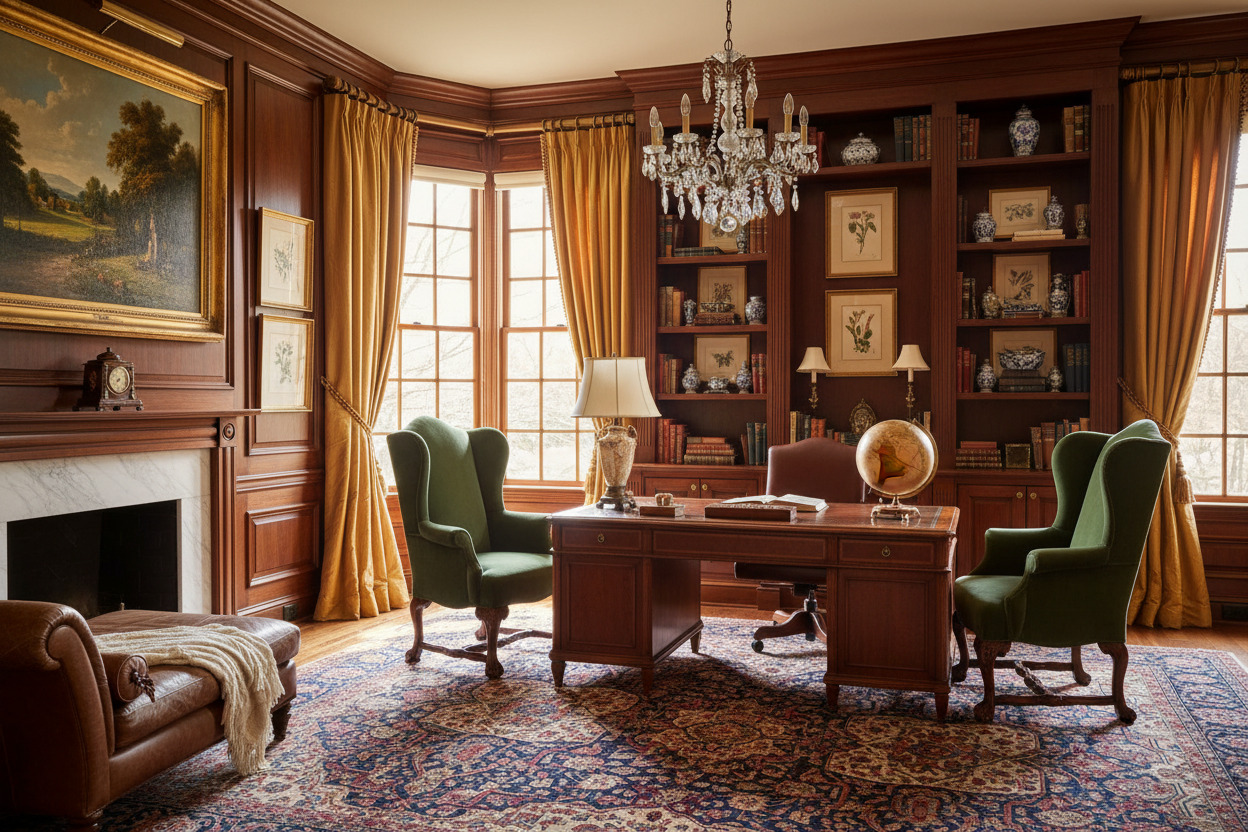
Does your workspace feel temporary, cold, or uninspiring? In an era dominated by sleek, sterile minimalism, many of my clients are yearning for a return to substance. They want a room that commands respect and offers deep comfort—a traditional home office. This design aesthetic isn't about creating a dusty museum exhibit; it is about grounding your workday in an environment that feels established, intellectual, and enduring.
Quick Decision Guide: The Essentials
If you are planning a renovation or a furniture refresh, keep these four pillars in mind to nail the aesthetic without overthinking it:
- The Anchor: Prioritize a double-pedestal desk or a heavy partners desk made of dark woods like mahogany, cherry, or walnut.
- The Palette: Lean into deep, saturated hues—hunter green, navy blue, or burgundy—offset by warm wood tones.
- The Textures: Layer the room with leather (tufted is best), velvet drapery, and wool oriental rugs to absorb sound and add visual weight.
- The Lighting: Avoid harsh overhead LEDs. Opt for brass library lamps, bankers lamps, or sconces with fabric shades for warm, ambient light.
Selecting the Anchor Piece: The Desk
In classic office design, the desk is not just a surface; it is the protagonist of the room. Unlike modern setups where the desk often faces a wall, traditional layouts favor a "floating" desk position, facing the door. This commands the room.
When sourcing furniture, I always advise clients to look for solid wood construction or high-quality wood veneers over solid cores. A true traditional style office relies on the depth of the grain. Look for details like brass hardware, inlaid leather tops, and decorative molding. If you are tight on space, a secretary desk offers that classic home office charm with a smaller footprint.
Seating: Where Comfort Meets Gravitas
The quintessential image of traditional office decor involves a Chesterfield chair or a high-back executive chair. However, a word of caution: vintage aesthetics often lack modern ergonomics.
For a modern traditional home office, I recommend chairs that feature the classic silhouette—button tufting, nailhead trim, rolled arms—but are built on modern swivel-tilt mechanisms with lumbar support. You should not have to sacrifice your spine for style. For guest seating, wingback chairs upholstered in plaid or velvet add immediate sophistication.
The Library Effect: Storage and Walls
Nothing defines classic home office design ideas quite like built-in millwork. Floor-to-ceiling bookshelves complete the look and provide excellent acoustic dampening. If custom joinery isn't in the budget, high-quality freestanding bookcases placed side-by-side with molding added to the top can mimic the look of built-ins.
For the walls, consider wainscoting or beadboard. These architectural elements add the texture and shadow lines essential to traditional office design ideas. If woodwork is too extensive, a heavy, textured wallpaper in a damask or paisley print can achieve that enclosed, cozy library feel.
Lighting and Accessories: The "Jewelry" of the Room
Lighting sets the mood. In classic office design ideas, we layer light. You need task lighting (a brass bankers lamp is the gold standard) and ambient lighting. An antique brass chandelier or floor lamps with silk shades soften the room.
Accessorizing is where you can inject personality into your traditional office interior design ideas. Think globes, framed botanical prints, leather-bound books, and heavy crystal paperweights. These items bridge the gap between a showroom look and a lived-in space.
Lessons from My Own Projects
I learned the hard way that traditional office ideas often clash with modern technology. Years ago, I designed a stunning space centered around an antique 19th-century English partners desk. It was visually breathtaking—until the client plugged in their computer.
Traditional furniture was designed for quills, not charging cables. We ended up with a nest of black wires spilling over the beautiful mahogany front, ruining the aesthetic instantly. Now, when I design a modern traditional office, I specifically look for reproduction desks that feature hidden grommets and cable management channels built into the pedestals. Or, if we use an antique, I use floor-mounted outlets hidden under the rug beneath the desk to keep cords from trailing across the room. It’s a small, unpolished detail, but managing those cables is the difference between a magazine-ready room and a cluttered mess.
Conclusion
Curating a workspace with traditional home office design ideas is an investment in your peace of mind. By focusing on rich materials, proper scale, and warm lighting, you create a space that feels permanent and significant. It is a place where work feels less like a chore and more like a craft.
Frequently Asked Questions
How do I make a traditional office look modern?
To achieve a modern traditional home office, keep the heavy wood furniture but swap the dark, heavy drapes for lighter linen window treatments. Use a modern abstract art piece in a gold frame to break up the historical feel, and ensure your desk chair has modern ergonomic adjustments.
Is traditional design suitable for small rooms?
Absolutely. Traditional home office decor works well in small spaces because it embraces "coziness." Use a darker paint color on the walls and ceiling to blur the boundaries of the room, creating a jewel-box effect, and opt for a writing table with slender legs rather than a bulky pedestal desk.
What is the best flooring for a classic office?
Hardwood floors (oak or walnut) laid in a herringbone pattern are the pinnacle of classic office design. Always anchor the desk area with a large Oriental or Persian rug to add warmth, sound absorption, and color texture.

Leave a comment
This site is protected by hCaptcha and the hCaptcha Privacy Policy and Terms of Service apply.