










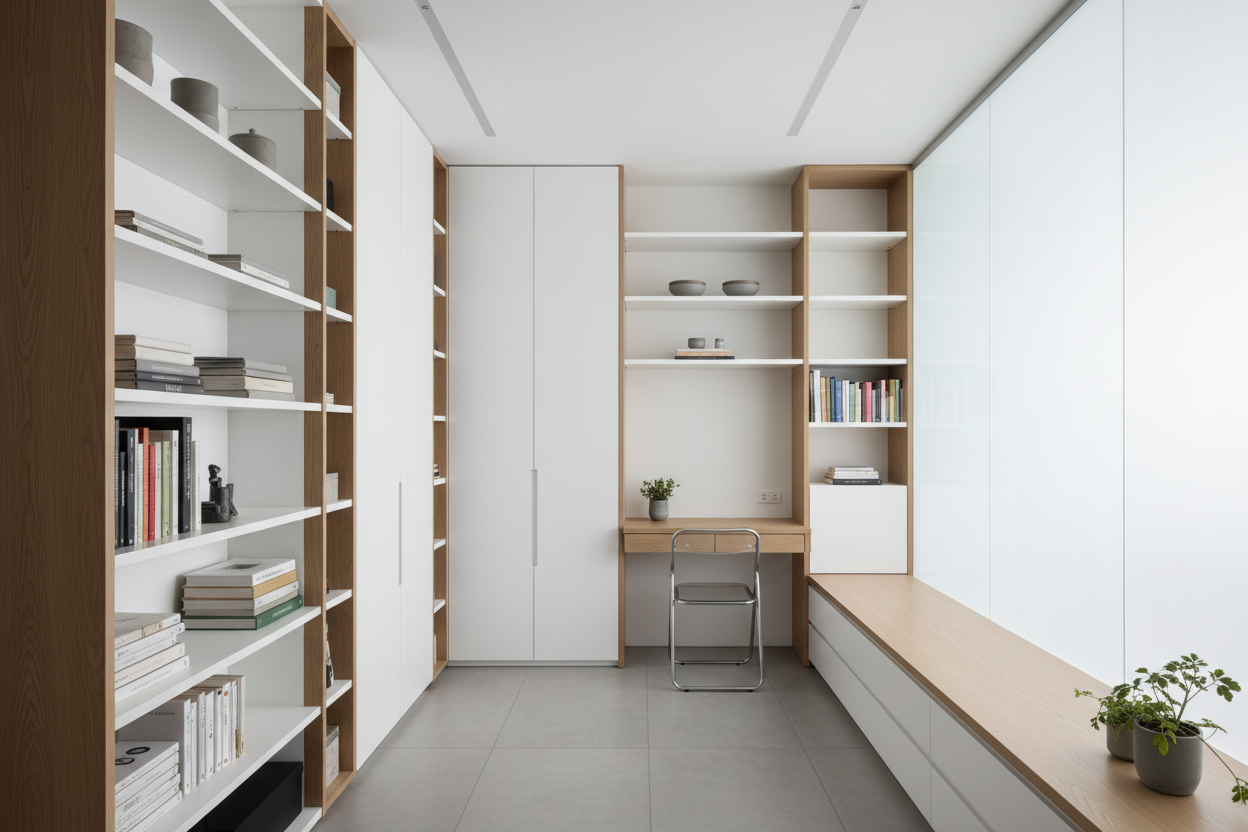
Your hallway is likely the hardest working square footage in your home, yet it often gets the least amount of design love. It serves as the primary artery of the house, the landing strip for groceries, and the dumping ground for mail, keys, and shedding layers. If you are tired of tripping over shoes or staring at piles of unorganized clutter, the solution usually boils down to one specific piece of furniture: a functional console or cabinet. Specifically, finding the right hallway storage cabinet with drawers can transform a chaotic thoroughfare into a serene passage.
The core challenge is balancing storage volume with floor space. You cannot simply shove a standard dresser into a corridor and hope for the best. You need furniture that hugs the wall, offers concealed storage for the small items that cause visual noise, and withstands high traffic. Let’s look at how to select a piece that solves your storage problems without blocking your path.
The Geometry of the Long Hallway
Most corridors suffer from being long and narrow. This specific geometry makes furnishing them tricky. If you place a standard 20-inch deep cabinet in a 36-inch wide hall, you have effectively created a bottleneck that makes moving furniture or carrying laundry baskets impossible. This is where the long hallway storage cabinet shines. These pieces are designed with a shallow depth—often between 10 to 15 inches—but make up for it with horizontal length.
A long, low profile helps ground the space. By stretching the furniture along the wall, you draw the eye down the length of the hall, emphasizing the architecture rather than the lack of width. If you have a particularly expansive wall, placing two identical shallow cabinets side-by-side can create a custom built-in look for a fraction of the cost. This approach maximizes the utility of the wall without encroaching on your walking space.
Why Drawers Are Non-Negotiable
Open shelving in a hallway is a risk. Unless you are an extreme minimalist who owns four pairs of pristine shoes, open shelves eventually look messy. This is why I always steer clients toward a hallway storage cabinet with drawers. Drawers are the ultimate tool for "out of sight, out of mind" organization.
Think about what actually clutters a hallway. It isn't usually big items; it's the debris of daily life. Dog leashes, sunglasses, batteries, unopened mail, and spare keys. A cabinet with a dedicated top row of drawers acts as a catch-all. It gives every family member a designated "junk drawer" where they can empty their pockets immediately upon entering. Below the drawers, cabinet doors can hide larger items like backpacks, seasonal boots, or bulk household supplies.
My Narrow Escape
I learned the importance of depth the hard way. In my first apartment, I inherited a beautiful, sturdy oak dresser. I wrestled it into my hallway, thinking it would be perfect for linens. It looked great until I had to walk past it. I realized quickly that I had to turn my shoulders sideways every time I walked from the living room to the bedroom. It disrupted the flow of the entire house. I replaced it a month later with a specialized long hallway storage cabinet that was only 12 inches deep. The difference was immediate. The hallway felt twice as wide, yet I actually gained usable storage for smaller items because the interior organization was better suited for the space.
Material and Durability Matters
Hallways are high-traffic zones. Your cabinet will get bumped by hips, vacuum cleaners, and grocery bags. Delicate finishes or sharp, protruding hardware can be a liability here. When shopping, look for durable materials like solid wood or high-quality veneers that can take a scratch or two without falling apart.
If your hallway is dark (as many are), avoid heavy, dark woods which can make the space feel like a tunnel. Opt for painted finishes in light greys, creams, or even a bold accent color like navy or sage green. A painted finish is also easier to touch up if it gets scuffed. For hardware, consider recessed handles or flat pulls. It might seem like a minor detail, but catching your belt loop on a drawer knob every time you walk by is a frustration you want to avoid.
Maximizing Vertical Space vs. Floor Space
There are two schools of thought when selecting your unit: legs versus plinth bases. A cabinet raised on legs can make a small hallway feel airier because you can see the floor continuing underneath the piece. It creates an illusion of more space. However, a plinth base (where the cabinet sits flush to the floor) eliminates the dust bunnies that inevitably gather underneath and maximizes every inch of internal storage capacity.
If you choose a hallway storage cabinet with drawers that sits on legs, ensure the legs are set back slightly or aren't splayed outward, which can create a tripping hazard. If you go for the floor-to-top storage style, ensure the unit is anchored to the wall. This is a crucial safety step for any narrow furniture, as the shallow depth makes them more prone to tipping if a heavy drawer is pulled open.
Styling Your Storage
Once you have the practical side sorted, the top of your cabinet becomes a prime design opportunity. Since the cabinet is likely narrow, you can't clutter the surface with deep objects. Instead, rely on the wall above it.
A large mirror is the oldest trick in the book for a reason—it bounces light around and visually doubles the width of the hall. Hang a mirror roughly 6 to 8 inches above the surface of your cabinet. Flank it with wall sconces to save surface space, or use a tall, slender lamp if you have an outlet nearby. A long runner rug placed parallel to your long hallway storage cabinet will further define the zone and protect your floors from the heavy foot traffic.
The Custom Fit on a Budget
You might struggle to find a single piece of furniture that perfectly spans a 10-foot hallway. Custom joinery is the ideal solution, but it is expensive. A practical workaround is the "modular" approach. Many retailers sell storage systems intended for dining rooms or media centers that work perfectly in hallways.
Look for "sideboards" or "buffets" described as "slim" or "apartment size." Alternatively, stacking low-profile shoe cabinets and topping them with a custom-cut piece of wood can create the look of a high-end, bespoke unit. This allows you to tailor the length exactly to your wall, ensuring you don't leave awkward, unusable gaps at either end.
Final Thoughts on Placement
Before you buy, map it out. Use painter's tape to mark the footprint of the cabinet on your floor. Leave the tape there for a few days. Walk past it carrying groceries. Walk past it in the dark. If you find yourself stepping on the tape or feeling crowded, you need a shallower unit. Comfort and flow should always supersede storage capacity in a thoroughfare. By prioritizing a slim profile and smart organization like drawers, you can reclaim your walkway and keep the clutter at bay.
Frequently Asked Questions
What is the minimum walkway width I should maintain in a hallway?
You should aim to keep at least 36 inches of clear walking space. If your hallway is tight, this might mean choosing a cabinet that is only 10 to 12 inches deep to ensure you can pass by comfortably without turning sideways.
How do I prevent a tall, narrow cabinet from tipping over?
Anchoring is essential for narrow hallway furniture. Most cabinets come with anti-tip kits, which usually consist of a bracket and a strap or screw that attaches the back of the unit directly to a wall stud. If yours didn't come with one, you can purchase a universal furniture anchor kit at any hardware store.
Can I use a shoe cabinet for general storage?
Absolutely. Many modern shoe cabinets utilize tip-out drawers that are perfect for storing items other than footwear. They are excellent for holding mail, reusable shopping bags, pet supplies, and umbrellas, and they are typically designed with a very slim profile ideal for narrow corridors.

Leave a comment
This site is protected by hCaptcha and the hCaptcha Privacy Policy and Terms of Service apply.