










Living in a compact environment often means sacrificing surface area for flow. You want a place to set your coffee or phone, but you also need to walk through the room without bruising your shins. This is where the specific engineering of a slim side table becomes a layout savior. Rather than dominating a room, these narrow pieces of furniture slip into the "dead zones"—the awkward gaps between a sofa and a wall, or the tight corner beside a reading chair—providing functionality without visual bulk.
Why Inches Matter in Small Layouts
In interior design, scale is everything. A standard end table usually measures between 18 to 24 inches in width. In a spacious suburban living room, that footprint is negligible. In a city apartment or a smaller den, however, losing two feet of floor space can make a room feel claustrophobic. The beauty of a thin accent table lies in its ability to offer the same utility—holding a lamp, a drink, or a book—while occupying less than half the footprint, often clocking in at 8 to 12 inches wide.
I learned this lesson the hard way during my time living in a converted studio loft. My sofa was pushed against a structural pillar, leaving exactly nine inches of clearance before the walkway began. For months, I placed my drink on the floor, which inevitably led to spills and stained rugs. I tried to force a standard cube table into the spot, but it blocked the path to the kitchen. Finally hunting down a skinny corner table that was merely a weighted base with a narrow pedestal changed the entire dynamic of the room. It didn't just solve the spill problem; it visually finished the space, making the cramped corner look intentional rather than accidental.
The Rise of the C-Table
One of the most popular iterations of this furniture category is the C-table. Shaped exactly like the letter, these tables are designed to cantilever over the arm of a sofa or the seat of a chair. Because the base slides underneath your furniture, the actual floor space required is practically zero. This is the ultimate hack for anyone trying to maximize a floor plan.
When shopping for this style, pay close attention to the clearance height. You need the top of the table to clear the arm of your sofa, but not by too much, or it becomes uncomfortable to use as a writing surface or laptop stand. A C-shaped side table slim enough to tuck away when not in use can double as a TV tray or a makeshift desk, adding layers of versatility to a single purchase.
Material Selection and Visual Weight
Because these tables are small, you might assume they can't make a design impact. The opposite is true. Because they are often standalone silhouettes, the material defines the vibe of the corner.
Acrylic or glass options are fantastic for maintaining an open, airy feel. If your room is already crowded with heavy upholstery, a clear table disappears to the eye, reducing visual clutter while still providing a hard surface. On the other hand, a matte black metal frame creates a sharp, industrial line that draws the eye vertically, which can actually make low ceilings feel higher.
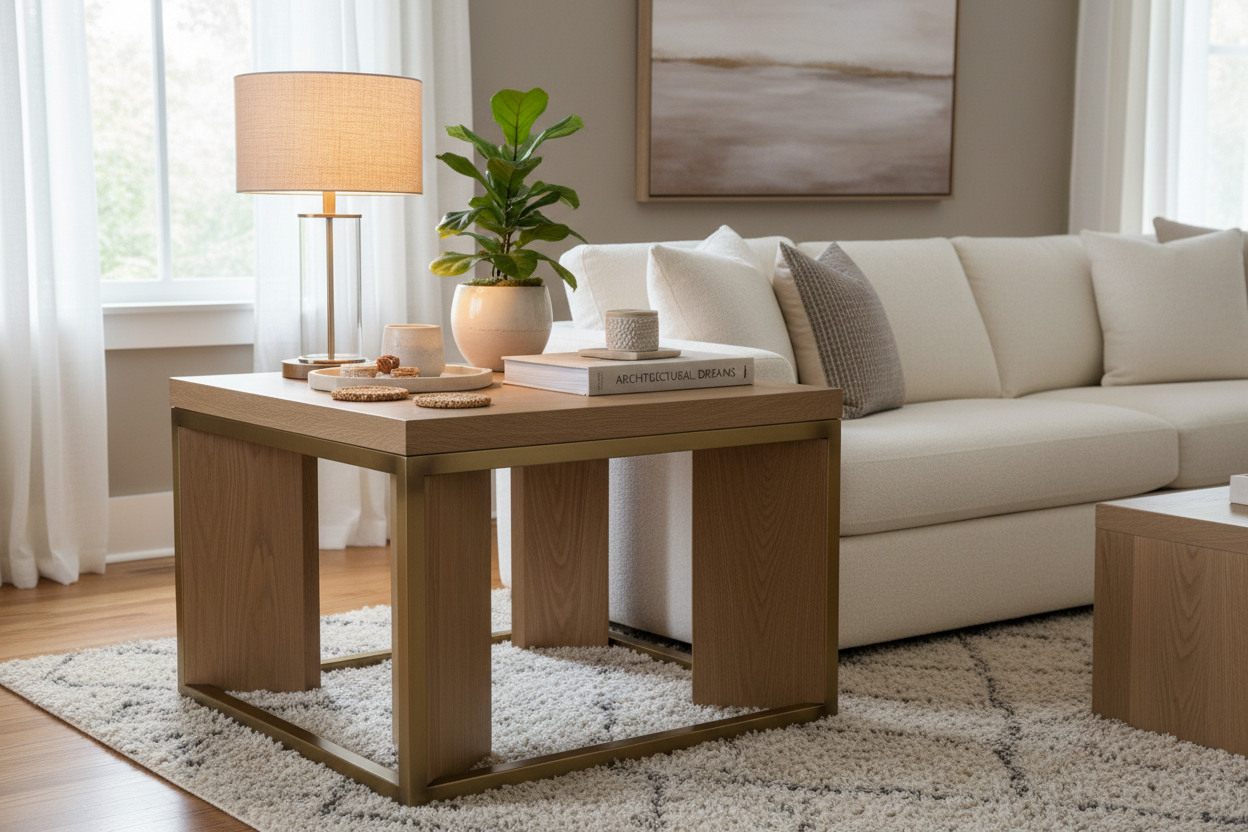
Wood adds warmth but be careful with chunky wooden designs in narrow spaces. A solid block of wood can look heavy. Instead, look for wood tops on thin metal legs to balance warmth with airiness.
Beyond the Living Room
While we usually associate end tables with sofas, a narrow profile allows these pieces to migrate throughout the home. In a bathroom with a pedestal sink and zero counter space, a water-resistant thin accent table becomes a necessary landing pad for toiletries, a candle, or a spare towel. It turns a utilitarian bathroom into a more spa-like environment.
Bedrooms are another prime candidate. Modern bed frames often leave little room for traditional nightstands. If you have squeezed a queen bed into a full-sized room, you might only have a sliver of space on either side. A skinny corner table works perfectly here. It might not hold a massive lamp and a stack of ten books, but it will hold your phone charger, a glass of water, and an alarm clock, which is all most of us really need.
Stability and Durability Concerns
There is a physics trade-off when you go narrow. The narrower the base, the less stable the table becomes, especially on carpet. If you have active pets or small children, a lightweight, tall, narrow table is a tipping hazard.
To mitigate this, look for designs with weighted bases. Heavy marble or iron bases keep the center of gravity low. If you fall in love with a lightweight aluminum table, ensure it is placed in a low-traffic corner where it isn't likely to be bumped, or wedge it between a wall and a heavy piece of furniture for added security.
Styling Your Narrow Surface
Once you have your table, the challenge becomes styling it without overcrowding it. The rule of three (grouping three items) can be difficult on a surface that is only 10 inches wide. It is often better to stick to one or two functional items.
If you need light, consider a floor lamp behind the table rather than a table lamp on top of it. This frees up the entire surface for daily use. Alternatively, wall sconces are a narrow table's best friend. If you must place decor on it, choose vertical objects—a tall, thin vase or a sculptural candlestick—to mimic the lines of the table itself.
Finding the right side table slim enough to fit your gap but sturdy enough to hold your life takes a bit of measuring, but the payoff is a room that feels finished and functions perfectly. It transforms the frustratingly tight areas of your home into practical, stylish assets.
Frequently Asked Questions
How wide is a typical slim side table?
Most slim side tables range between 8 to 12 inches in width. Anything under 8 inches is generally considered a "drink table" or pedestal and may not be large enough for a laptop or a standard table lamp.
Can a thin table hold a lamp safely?
Yes, but you must check the table's weight limit and base stability. For narrow tables, it is safer to use a lamp with a small, heavy base to prevent tipping, or opt for a floor lamp nearby to keep the small surface area free for other items.
What is the best shape for a tight corner?
A rectangular or square shape usually maximizes surface area in a corner better than a round table, as it sits flush against the walls. However, if the table is located in a high-traffic walkway, a round table is often better to avoid painful collisions with sharp corners.

Leave a comment
This site is protected by hCaptcha and the hCaptcha Privacy Policy and Terms of Service apply.