










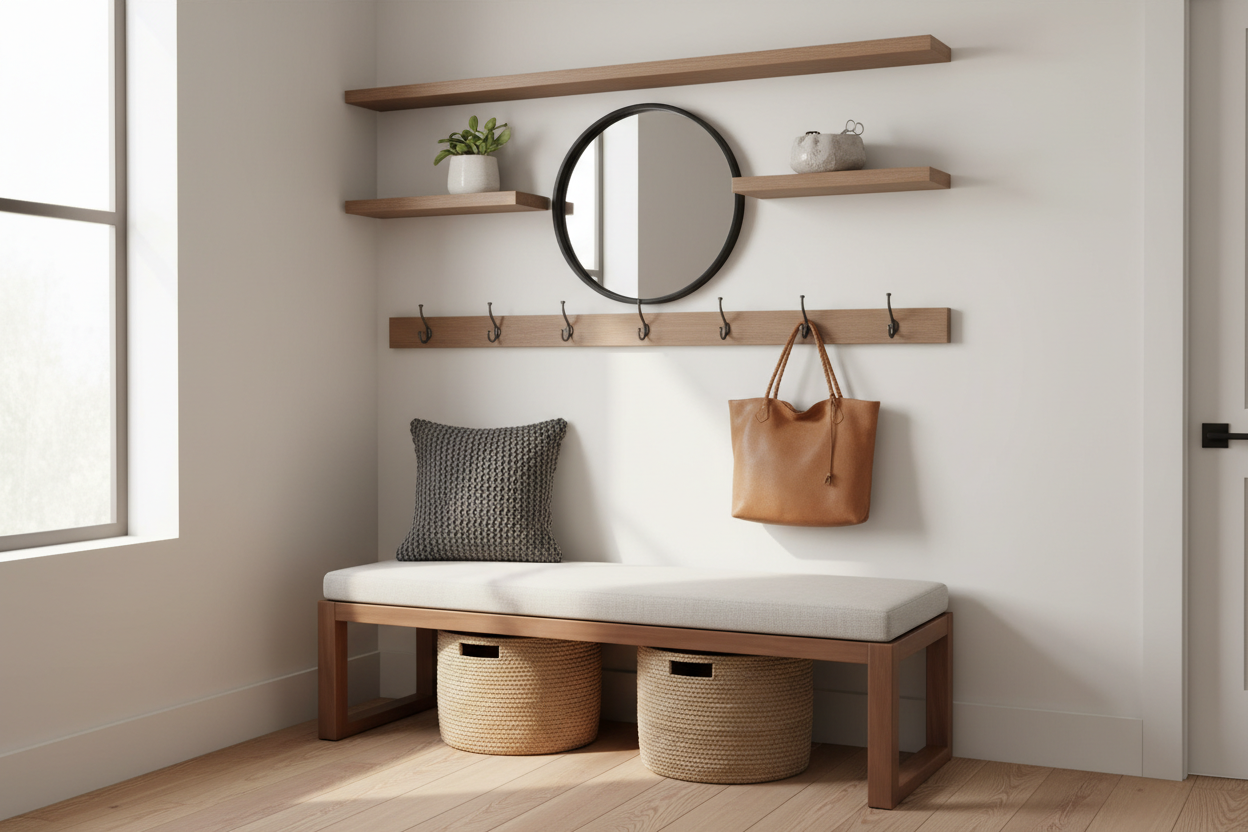
You walk through the front door, keys in hand, a bag on your shoulder, and immediately trip over a stray sneaker. It is a scenario played out in households everywhere. The entryway is the most trafficked area of the home, yet it often receives the least amount of design attention. The solution isn't necessarily a massive renovation or building a custom mudroom. Often, the most effective fix is a simple, hardworking duo: an entryway shelf and bench. This combination creates a dedicated drop zone that captures clutter before it migrates into the living room, blending critical storage with a welcoming aesthetic.
Why the Bench and Shelf Dynamic Works
The logic behind pairing these two items lies in the balance of vertical and horizontal utility. A standalone bench collects piles of coats. A standalone shelf leaves shoes scattered on the floor. When you utilize an entryway shelf with bench, you address the full spectrum of arrival and departure needs. You have a place to sit while putting on footwear, storage underneath for those shoes, and hooks or surface area above for coats, hats, and keys.
Beyond utility, this setup anchors the space. In an open-concept home or a long, narrow hallway, floating furniture can look lost. A coordinated bench and shelf for entryway use creates a visual focal point, signaling to guests that they have entered a specific, organized zone of the home.
My Experience with the "Drop Zone"
A few years ago, I lived in a rental with a front door that opened directly into the living room. There was no foyer, no coat closet, and definitely no mudroom. For months, my dining table became the graveyard for mail, and my sofa arm was the permanent coat rack. The visual clutter was stressful immediately upon walking in.
I decided to install a separate entryway bench and wall shelf rather than a bulky hall tree because I needed to control the height. I mounted a rustic wood shelf with heavy-duty iron hooks about five feet high and placed a low-profile storage bench directly underneath. The transformation was immediate. The shelf held a small basket for mail and keys, keeping the dining table clear. The bench hid my running shoes. It wasn't just about furniture; it was about reclaiming my mental space. That simple shelf and bench set changed the entire flow of my daily routine, proving you don't need square footage to have function.
Choosing Between Sets and Separates
When shopping or planning your space, you generally have two paths: buying a cohesive entryway bench and shelf set or mixing and matching separate pieces. Both have distinct advantages depending on your home's layout.
The Coordinated Set
If you prefer a seamless look without the guesswork of color matching, an entryway bench & shelf set is the way to go. These are designed to have identical finishes, wood grains, and hardware styles. Manufacturers size them to be proportional to one another, ensuring the bench isn't significantly wider than the shelf, which can throw off the visual balance. This is often the best choice for those who want a quick, "click-and-done" solution that looks professionally curated.
The Mix-and-Match Approach
Opting for a separate entryway wall shelf and bench gives you significantly more design freedom. This approach allows you to play with texture and scale. For instance, you might pair a sleek, modern velvet bench with a rough-hewn, reclaimed wood shelf to add warmth. This method is also practical for awkward spaces. If you have wainscoting or a radiator that prevents a standard unit from fitting, buying separates allows you to mount the shelf at whatever height necessary while selecting a bench that fits the available floor depth.
Installation and Placement Tips
Getting the placement right is the difference between a functional space and a cramped one. If you are installing an entryway bench and shelf set that consists of two separate pieces, the vertical spacing is critical. A good rule of thumb is to hang the shelf so that the hooks are accessible but high enough that long coats don't bunch up on the bench seat.
Usually, mounting the shelf 60 to 66 inches from the floor works well for average height adults. However, sit on the bench before you drill any holes. Ensure that when you lean back, your head doesn't bang into the shelf or the hanging coats. There should be enough clearance to sit comfortably to tie your shoes without feeling claustrophobic.
Styling Your Entryway Combo
Once you have your bench and shelf for entryway organization in place, styling is what prevents it from looking like a locker room. The goal is to soften the hard lines of the furniture.
Start with the bench. Add one or two throw pillows to introduce color and texture. If the bench has open storage underneath, use woven baskets or wire bins to hide shoes. This keeps the visual weight low and hides the dirt of daily life. For the shelf, functionality should come first, but leave room for personality. If you have a top ledge, lean a small mirror or a framed photo there. A trailing plant (real or high-quality faux) placed on the edge of the shelf adds life and breaks up the rigidity of the wood and metal.
Material Matters
Durability is non-negotiable in the foyer. This furniture will take a beating from wet umbrellas, muddy boots, and heavy bags. Solid wood and metal are the standard for a reason. If you choose an upholstered entryway shelf with bench, ensure the fabric is performance-grade or treated for stain resistance. Leather or faux leather is often a superior choice for seating here because it can be wiped down easily.
For the shelf, check the weight capacity, especially for the hooks. Winter coats and loaded backpacks are heavy. Ensure your wall shelf is anchored into studs, not just drywall, to prevent it from ripping out under the weight of your gear. A sturdy shelf and bench set is an investment in your home's infrastructure.
Making it Work for Small Spaces
Don't assume you need a grand foyer to utilize this concept. In tight apartments, look for shallow depth furniture. A bench only needs to be about 12 to 15 inches deep to be functional for sitting. Combine a narrow bench with a shelf that has a rail and S-hooks rather than deep cubbies. This keeps the profile against the wall and maintains the walkway. By utilizing the vertical space with an entryway bench and wall shelf, you actually make a small room feel larger by clearing the floor space.
Frequently Asked Questions
How much space should be between the bench and the shelf?
There is no single standard, but you generally want at least 3 to 4 feet of clearance between the seat of the bench and the bottom of the shelf. This allows enough room for you to sit up straight without hitting your head and provides hanging space for jackets so they don't puddle on the seat.
Can I use a storage ottoman instead of a bench?
Absolutely. A storage ottoman or two side-by-side cubes work perfectly as part of an entryway setup. This is often a great solution for very small spaces where a full-length bench might block the door swing.
Do the bench and shelf have to be the exact same width?
No, but they should feel balanced. Visually, it usually looks best if the bench is slightly wider than the shelf above it, creating a pyramid effect. If the shelf is significantly wider than the bench, the arrangement can feel top-heavy and unstable.

Leave a comment
This site is protected by hCaptcha and the hCaptcha Privacy Policy and Terms of Service apply.