










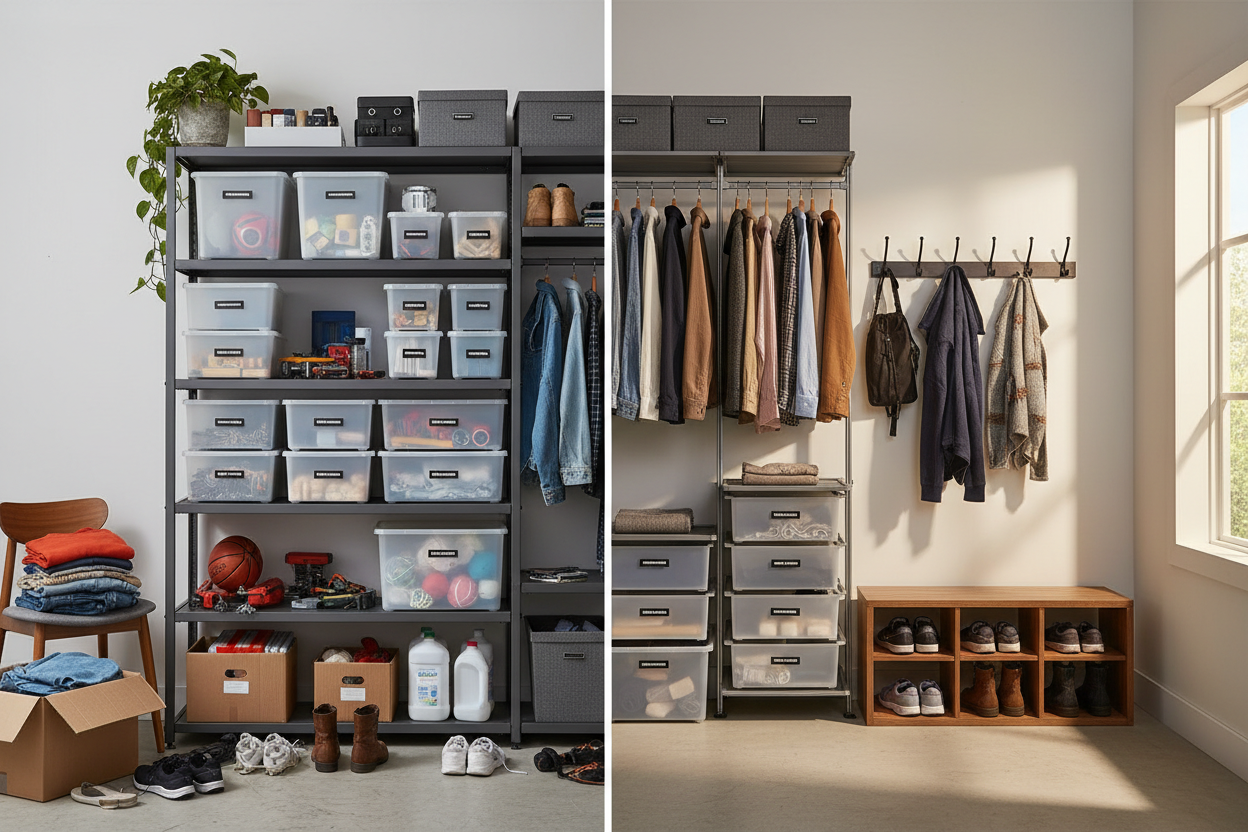
You know the feeling. You open the garage door or the pantry, and your pulse spikes just looking at the chaos. Tools are piled on the workbench, winter coats are draped over lawnmowers, and you can never find the one thing you actually need. The solution isn't just "cleaning up"; it is about establishing a system that physically prevents the mess from returning. For most homeowners and DIY enthusiasts, this means investing in proper storage shelving and cabinets that fit both the space and the specific items being stored.
Getting the right setup completely changes how you interact with a room. Instead of a dumping ground, the space becomes functional square footage. But walking into a hardware store can be overwhelming. You are faced with aisles of plastic, particleboard, and industrial steel. Making the wrong choice leads to sagging shelves, rusted frames, and wasted money. Let’s break down how to select the right hardware without getting lost in the marketing hype.
The Hard Lesson of Buying Cheap
I learned the difference between "storage" and "quality storage" the hard way. A few years ago, I decided to organize my workshop using the most affordable plastic racking I could find at a big-box store. The box claimed a high weight limit, so I loaded it up with paint cans, power tools, and a heavy box of spare tiles. Two weeks later, I walked in to find the entire unit leaning precariously to the left. The plastic uprights had buckled under the sustained weight, and the shelves had bowed so badly that a circular saw had slid off and cracked its casing on the concrete floor. That experience taught me that static weight ratings are often optimistic and that rigidity matters just as much as capacity. Since then, I only install units with reinforced bracing, regardless of what the sticker says.
Open Shelving vs. Enclosed Cabinets
The first major decision is determining how much visibility you want. Open shelving offers immediate access. You can see exactly where the drill is, grab it, and get to work. It utilizes vertical space efficiently and usually handles bulkier items like storage bins or large equipment cases. However, open shelves have a nemesis: dust. If you are cutting wood or grinding metal nearby, everything on those shelves will be coated in a fine layer of grime within days.
This is where enclosed storage shelving cabinets come into play. Cabinets provide a clean, visual break, making the room look less cluttered even if the insides are messy. They protect sensitive gear—like electronics or precision measuring tools—from dust and humidity. If you have children, lockable cabinets are non-negotiable for storing chemicals, solvents, or sharp objects. A hybrid approach often works best: use open racks for large plastic bins and sealable cabinets for loose tools and liquids.
Choosing the Right Material for the Environment
Not all materials survive in all environments. Your choice should depend entirely on where the unit will live.
Steel and Metal
For garages, basements, and workshops, steel is the standard. It handles temperature fluctuations and heavy loads without warping. Look for powder-coated finishes rather than raw or painted metal. Powder coating bonds a dry powder to the metal surface, creating a barrier that is highly resistant to chips, scratches, and rust. If you live in a coastal area or a humid climate, this finish is essential to prevent your investment from corroding within a year.
Industrial Plastic and Resin
Resin shelving has a specific place in the ecosystem. It is completely rust-proof and rot-proof, making it excellent for damp basements or garden sheds where leaks might occur. High-quality resin won't peel or dent. However, plastic lacks the rigidity of steel over long spans. If you place heavy items in the center of a resin shelf, it will eventually sag. These are best used for lighter, bulky items like paper towels, empty coolers, or seasonal decorations.
Wood and Composites
Wood looks great in pantries or interior closets, but it is risky in unconditioned spaces. Humidity causes particleboard to swell and weaken, leading to catastrophic failure if the material gets wet. If you prefer the look of wood in a garage, ensure it is sealed plywood or solid lumber, not melamine or MDF, unless the space is climate-controlled.
Load Capacity and Weight Distribution
Never guess the weight of your gear. A five-gallon bucket of paint weighs roughly 50 pounds. A car engine block or a collection of dumbbells is significantly heavier. When reviewing specifications for storage shelving cabinets, look for the "UDL" (Uniformly Distributed Load) rating. A shelf rated for 500 pounds can only hold that weight if it is spread evenly across the surface. Placing a 500-pound anvil in the dead center of the shelf will likely snap it.
For heavy-duty applications, welded wire decks are superior to flat metal sheets or wood. Wire decking allows water from fire sprinklers to pass through (a code requirement in some areas) and prevents dust buildup. It also adds structural rigidity to the beams, preventing them from twisting under load.
Installation and Anchoring
Gravity is reliable, but stability requires effort. Tall shelving units have a high center of gravity, especially when you load the top shelves with lighter items and leave the bottom empty. Anchoring your units to the wall is a safety step you cannot skip. Most quality shelving systems come with mounting brackets. If you have concrete walls, use masonry anchors; for drywall, locate the studs. A tip-over accident can damage your car or injure a family member, so securing the frame is worth the extra twenty minutes of labor.
Floor leveling is another overlooked aspect. Most garage floors slope toward the door for drainage. If your shelving unit doesn't have adjustable feet, you will need to shim the legs. A leaning shelf exerts unequal pressure on its joints, which can lead to collapse over time. Adjustable leveling feet allow you to create a perfectly plumb structure even on uneven concrete.
Modular Systems and Future-Proofing
Your storage needs today won't be your storage needs five years from now. Modular systems allow you to adjust shelf heights or add extensions as your collection of tools and gear grows. Many manufacturers offer integrated ecosystems where storage shelving cabinets lock together with workbenches and overhead bins. Buying into a modular system might cost more upfront, but it saves the headache of trying to mismatch different brands later.
Reclaiming your space is about more than just buying racks. It is about assessing what you own, understanding the environment, and choosing materials that can handle the load. Whether you choose heavy-duty steel racks or sleek enclosed cabinets, the goal is a system that works as hard as you do.
Frequently Asked Questions
How much space should I leave between the top shelf and the ceiling?
Aim for at least 18 to 24 inches of clearance between the top shelf and the ceiling. This allows you enough room to maneuver bulky items like plastic bins or coolers without getting them wedged tight. It also ensures fire sprinklers (if present) can function effectively.
Can I mix different brands of shelving and cabinets?
While you can physically place different brands next to each other, they rarely bolt together safely or look cohesive due to varying depths and heights. For safety and stability, it is better to stick to one manufacturer or product line so you can bolt units together to create a unified, tip-resistant wall.
What is the best way to organize items on deep shelves?
Deep shelves often become black holes where items get lost in the back. Use clear, labeled bins that act as drawers, allowing you to pull the entire contents out at once. Grouping similar items into these bins prevents small tools from vanishing behind larger boxes.



Leave a comment
This site is protected by hCaptcha and the hCaptcha Privacy Policy and Terms of Service apply.