










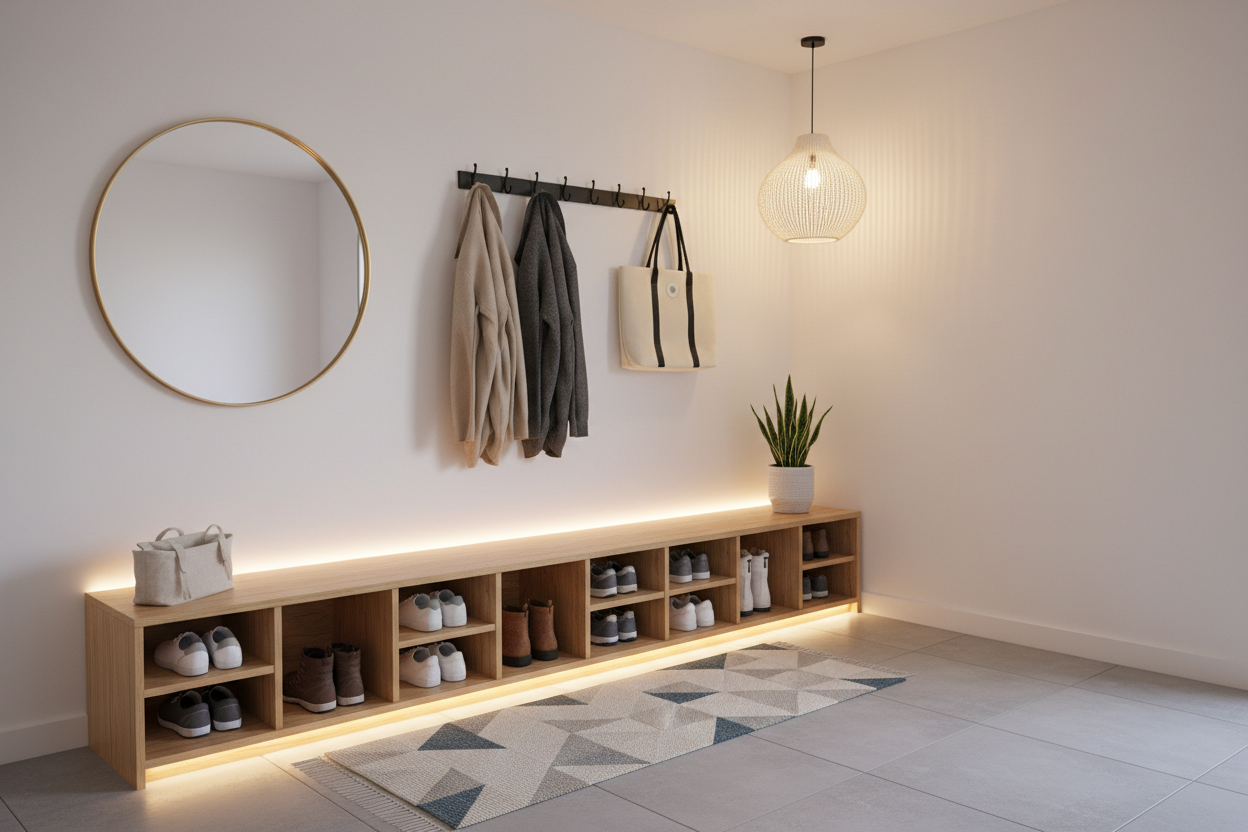
Walking through your front door should feel like a relief, not an obstacle course. Yet, for many of us, that first step inside is greeted by a chaotic jumble of kicked-off sneakers, piles of mail, and coats draped over the nearest chair. If you are looking for the most effective way to manage this chaos, the answer lies in establishing a specific "drop zone" that utilizes vertical height just as much as floor space. A functional entryway relies on a three-tier system: hooks for hanging, closed containers for shoes, and a surface for small items like keys.
I learned this lesson the hard way in my first apartment. The "foyer" was essentially a three-foot square of linoleum that opened directly into the living room. For months, I just let items pile up on a small side table, which eventually spilled over onto the floor. It wasn't until I tripped over my own running shoes while carrying groceries that I realized I needed legitimate doorway storage. I installed a high shelf with hooks underneath and a slim shoe cabinet against the wall. That simple change didn't just clean up the floor; it changed my entire mood when coming home.
Assessing Your "Drop Zone" Potential
Every home has a different layout, and forcing a massive piece of furniture into a cramped space will only make things worse. You need to look at the volume of traffic and the specific items that tend to accumulate. A family of four has very different needs than a couple living in a downtown loft. If you have a dedicated room, a full foyer organizer with a bench and lockers might fit perfectly. However, if your front door opens into a narrow corridor, you have to think slimmer.
Start by measuring not just the width of the wall, but the clearance for the door swing. There are few things more frustrating than buying a beautiful console table only to find your front door bangs into it every time you open it. This is where depth becomes your most critical metric. For tight spaces, look for pieces under 10 inches deep.
The Power of Vertical Storage
When floor space is at a premium, the only way to go is up. Wall-mounted solutions are the unsung heroes of organization. A sturdy row of hooks or a pegboard system can handle jackets, bags, and dog leashes without taking up a single inch of floor space. If you are renting and can't drill holes, look specifically for entry door storage racks that hang over the door itself. These have evolved significantly from the flimsy wire racks of the past; many now offer sturdy baskets and aesthetically pleasing finishes that blend with your decor.
Floating shelves are another excellent tactic. Installing two or three rows of shelves above eye level allows you to store off-season items like winter hats or umbrellas in stylish bins. This keeps the visual clutter high up and out of your direct line of sight, making the hallway feel larger and airier.
Furniture That Multitasks
If you have the square footage, a dedicated piece of furniture can anchor the space. An entryway storage organizer often combines a bench, shoe cubbies, and coat hooks into one unit. These "hall trees" are fantastic because they define the space. Even in an open-concept living room, placing one of these units near the door instantly creates a visual suggestion of a foyer.
For those dealing with a long, thin path into the house, a hallway organizer usually takes the form of a console table. Look for tables with drawers. The surface allows for decor, but the drawers are essential for hiding the unglamorous clutter like takeout menus, spare keys, and sunglasses. To keep the floor clear, pair a console table with baskets underneath. This gives you a place to toss shoes or backpacks without them looking messy.
The Shoe Struggle
Shoes are the primary culprit of entryway mess. They are bulky, dirty, and we usually wear different pairs throughout the week. Leaving them in a pile is a recipe for disaster. Tilt-out shoe cabinets are a game-changer for front door storage. They are incredibly slim—often protruding less than seven inches from the wall—yet they can hold multiple pairs of shoes vertically. Because the cabinet closes, visual noise is instantly reduced. You don't see the mud or the laces; you just see a clean piece of furniture.
Managing the Small Stuff
Keys, wallets, and mail need a home immediately upon entry. Without a designated spot, these items migrate to the kitchen counter or the dining table, creating clutter hotspots elsewhere in the house. A simple tray or bowl on your entryway surface acts as a catch-all. If you lack surface area, a wall-mounted mail organizer with key hooks is vital.
I also recommend adding a small trash bin or recycling basket near the door if possible. This allows you to sort junk mail the second you walk inside, preventing it from ever reaching your living areas. It is a small habit shift that drastically reduces paper clutter over time.
Lighting and Mirrors
While not strictly storage, lighting and mirrors play a huge role in how organized a space feels. A dark entry feels smaller and more cluttered. Good lighting highlights your organization efforts. Furthermore, adding a mirror above your hallway organizer serves two purposes: it allows for a final outfit check before leaving, and it reflects light, making a cramped foyer feel double the size.
Creating a System That Sticks
Buying the bins and installing the shelves is only half the battle. The rest is behavior. The best entryway storage organizer in the world won't help if you don't use it. Make it easy for yourself. If you find you are still draping your coat on the chair, maybe your hooks are too high or too crowded. If shoes are still piling up on the rug, you might need an open basket for "everyday" shoes rather than a cabinet that requires opening a door.
Seasonal rotation is also key. In the summer, move the heavy winter coats to a bedroom closet. In the winter, move the flip-flops out. keeping only what you currently use in the doorway storage area ensures the system doesn't get overwhelmed.
Frequently Asked Questions
How do I create storage if my front door opens directly into the living room?
You can create a "faux" entryway by placing a piece of furniture, like a low bookshelf or a sofa, perpendicular to the wall near the door. This physically blocks the view of the living room and creates a distinct walkway. Use the back of the furniture or the wall behind the door for hooks and slim shoe cabinets to define the drop zone.
What is the best way to store wet or muddy shoes in a small foyer?
Use a boot tray with raised edges, preferably one made of rubber or heavy-duty plastic. Place it immediately next to the door or under a bench. For an aesthetic upgrade, fill the tray with river stones; the stones allow water to drain off the soles of the boots so they dry faster without sitting in a puddle.
How can I organize a narrow hallway without blocking the walking path?
Focus entirely on wall-mounted solutions and avoid floor furniture that sticks out more than 6-8 inches. Use recessed hooks that fold up when not in use, and consider a wall-mounted floating console that keeps the floor underneath completely visible, which tricks the eye into thinking the space is wider.

Leave a comment
This site is protected by hCaptcha and the hCaptcha Privacy Policy and Terms of Service apply.