










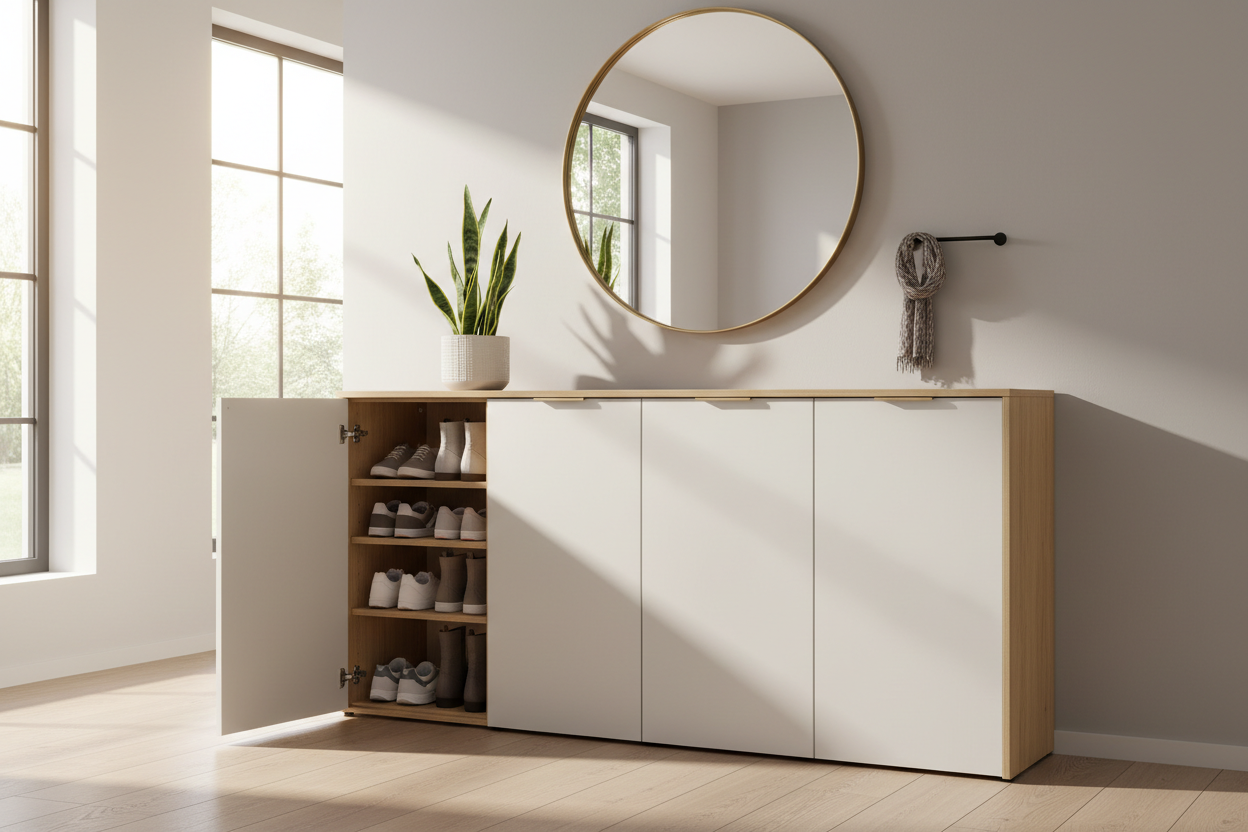
Your entryway is the handshake of your home. It creates that immediate impression for guests, but perhaps more importantly, it dictates your mood the moment you walk through the door after a long day. If you are greeted by a chaotic pile of sneakers, mail, and keys, your stress levels spike before you even take off your coat. The most effective solution isn't just cleaning up; it is introducing a dedicated piece of furniture that anchors the space. A modern hall cabinet serves as this anchor, blending the utility of a storage unit with the sleek aesthetics required for contemporary living.
Unlike heavy, traditional furniture that can make a narrow corridor feel claustrophobic, modern design prioritizes clean lines, efficient use of vertical space, and materials that reflect light. You don't need a sprawling foyer to make this work. The right cabinet acts as a command center, hiding the clutter of daily life behind seamless doors while offering a curated surface for decor.
The Realities of Hallway Clutter: A Personal Perspective
I learned the importance of this furniture piece the hard way. In my previous apartment, the hallway was essentially a dark tunnel. I relied on a simple coat rack and a floor mat. Inevitably, the mail ended up on the kitchen counter, keys went missing in coat pockets, and shoes became a tripping hazard. It wasn't until I invested in a shallow, wall-mounted modern hallway cabinet that the dynamic changed.
Suddenly, I had a specific drawer for keys and sunglasses. The tilt-out shoe compartments hid the visual noise of footwear. It wasn't just about storage; the high-gloss white finish bounced light around the windowless hall, making it feel twice as big. That experience taught me that hallway furniture isn't decorative fluff; it is essential infrastructure for a functional home.
Defining the Modern Aesthetic
When shopping for a modern hall cabinet, you are looking for specific design cues that separate these pieces from the bulky dressers of the past. The goal is visual lightness. You want the piece to recede into the architecture rather than dominate it.
Look for handle-less designs. Push-to-open mechanisms allow for flat, uninterrupted facades that are easier to clean and visually soothing. If handles exist, they are usually understated, often integrated into the edge of the door or appearing as simple, geometric metal pulls. Material choices also play a massive role. While solid wood is timeless, modern iterations often feature mixed materials—think walnut veneer paired with matte black metal legs, or fluted glass doors that hint at the contents without revealing the mess.
The Floating vs. Freestanding Debate
One of the biggest decisions you will face is whether to mount the unit or let it stand on the floor. Floating cabinets are the darling of modern interior design. By keeping the floor visible underneath the cabinet, you trick the eye into thinking the room is larger than it is. This is particularly effective in narrow corridors where floor space is premium real estate. Plus, it makes vacuuming underneath a breeze.
However, freestanding units often offer more storage volume. If you have a large family and heavy winter boots, a sturdy unit with legs might be more practical. The key to keeping a freestanding unit looking modern is to choose one with slender, tapered legs rather than a solid block base. This maintains that essential sense of airiness.
Functionality: What Goes Inside Matters
A pretty facade is useless if the interior doesn't work for your lifestyle. The best modern hallway cabinet designs are deceptive; they look compact but offer intelligent internal organization. Before buying, take inventory of what actually lands in your hallway.
If shoes are your primary nemesis, look for tilt-out compartments. These are genius space-savers because they store shoes vertically, allowing the cabinet to be incredibly shallow—sometimes as slim as 7 to 10 inches deep. This is a game-changer for hallways where a standard 20-inch deep dresser would block traffic.
For general clutter like dog leashes, batteries, and mail, standard drawers are superior. Some high-end units come with internal organizers or velvet-lined trays. If you are repurposing a cabinet that lacks these, simple acrylic dividers can turn a junk drawer into a highly organized system. Don't forget about height. If you plan to store boots, ensure the shelves are adjustable. Fixed shelving is the enemy of versatile storage.
Sizing and Placement Strategy
Measuring for a hall cabinet requires more than just checking if it fits against the wall. You must account for the traffic flow. In a high-traffic zone, you generally want at least 36 inches of clearance between the front of the cabinet and the opposite wall. If you have to turn sideways to get past your furniture, it is too deep, regardless of how beautiful it looks.
Length is another factor. A tiny cabinet in a long hallway looks lost, while a massive unit in a short entry feels overwhelming. A good rule of thumb is to leave at least 6 to 12 inches of breathing room on either side of the unit. This negative space frames the piece and prevents the "crammed in" look.
Styling the Surface
Once you have the storage sorted, the top surface becomes a display opportunity. This is where you inject personality. Since the cabinet itself is likely minimalist, you can afford to be a bit bolder with your decor, but restraint is still key to the modern vibe.
Start with a mirror. A large, round or geometric mirror hung above the cabinet does double duty: it allows for a last-minute appearance check and reflects light to brighten the space. Add a light source, such as a sculptural table lamp or a pair of wall sconces. For the "drop zone" aspect, place a stylish tray or bowl on the surface. This catches the loose change and keys that would otherwise scratch the finish. Finally, add something organic. A structural vase with a single branch or a small succulent adds life to the sleek materials of the cabinet.
Durability and Maintenance
The hallway is a high-impact zone. Bags bang against corners, wet umbrellas lean against sides, and muddy shoes get kicked around. The finish of your modern hall cabinet needs to be resilient. High-gloss lacquers look stunning but can be prone to scratching if you aren't careful. Matte finishes are more forgiving of fingerprints and minor scuffs.
If you choose a wood veneer, ensure it is sealed properly to withstand occasional moisture from wet raincoats. Metal cabinets are incredibly durable and offer a cool, industrial edge, but they can be noisy if you toss keys onto them, so consider using felt pads or liners. Investing in quality hardware is also wise; soft-close hinges prevent doors from slamming, preserving both the furniture and the peace of your home.
Frequently Asked Questions
How deep should a hallway cabinet be for a narrow hall?
For tight spaces, aim for a depth between 10 to 15 inches (25-38 cm). Cabinets specifically designed for shoe storage often utilize tilt-out drawers, allowing them to be as shallow as 7 inches while still accommodating adult-sized footwear.
Can I use a floating media console as a hallway cabinet?
Absolutely. Floating media consoles are often structurally identical to wall-mounted hall units and offer excellent cable management if you plan to have a lamp or charging station on top. Just ensure the depth isn't too excessive for your walkway.
What is the best material for a high-traffic family entryway?
Laminate or high-quality melamine are excellent choices for families as they are resistant to scratches, moisture, and stains. Metal is also virtually indestructible, though it offers a very specific industrial aesthetic.


Leave a comment
This site is protected by hCaptcha and the hCaptcha Privacy Policy and Terms of Service apply.