










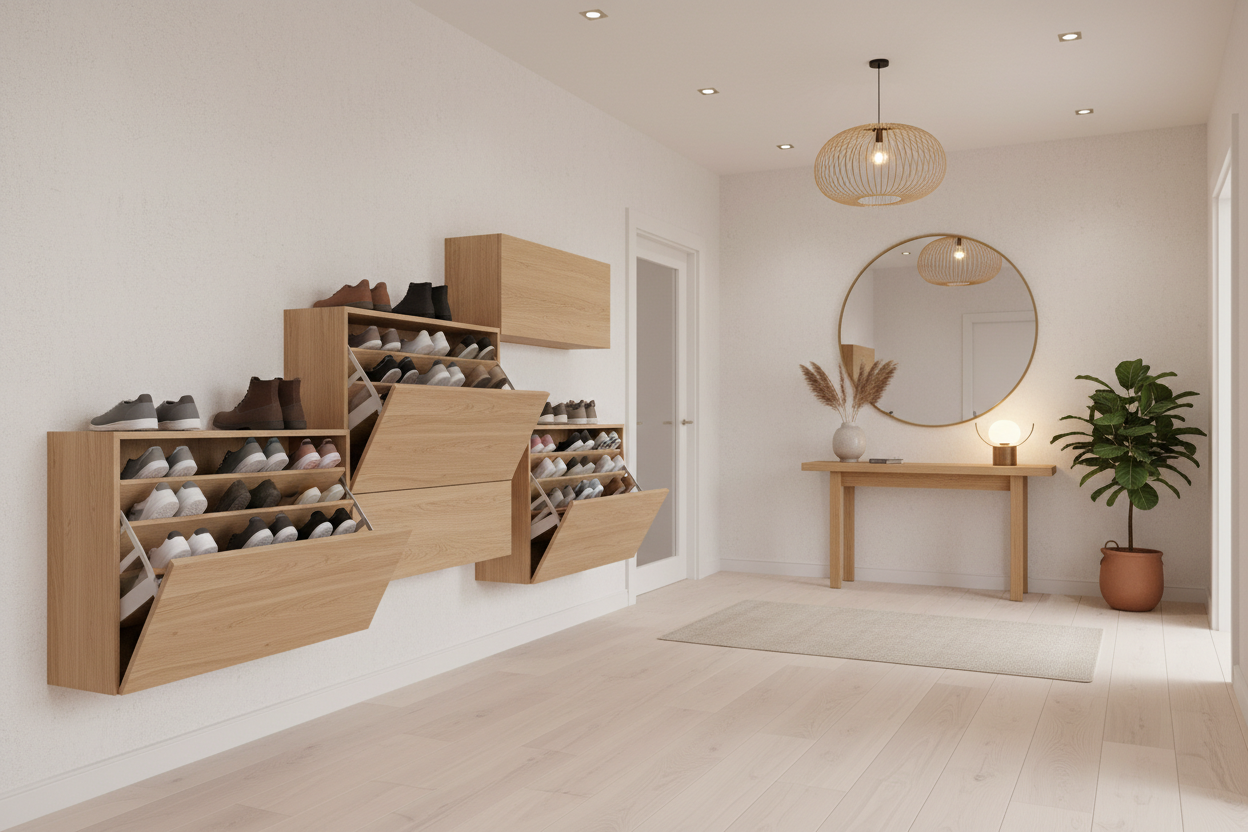
The moment you walk through your front door sets the tone for the rest of your home. For many of us, that tone is chaotic. You step inside, drop your keys on a random surface, kick off your shoes, and toss the mail onto a pile that has been growing for weeks. If your home lacks a dedicated mudroom or a spacious coat closet, the entryway quickly becomes a clutter magnet. The solution isn't necessarily a massive renovation or buying a bulky console table that eats up your walkway. The most effective fix is often looking up.
Installing an entryway hanging cabinet utilizes the vertical space that goes ignored in most hallways. By lifting your storage off the floor, you create a visual sense of openness while still having a dedicated place to hide the daily mess. This approach is particularly effective in narrow corridors or apartment entrances where every square inch of floor space is precious. It is about creating a functional "drop zone" that doesn't trip you up when you're rushing out the door in the morning.
The One-Inch Disaster: A Lesson in Installation
I learned the value of proper wall storage the hard way. Years ago, in a cramped city apartment, I bought a heavy, solid wood cabinet to mount near the door. It was beautiful, but I was impatient. I used the plastic drywall anchors that came in the box rather than taking the time to locate the studs or buy heavy-duty toggles. Two weeks later, I came home to a crash. The cabinet had pulled right out of the plaster, taking a chunk of the wall with it and shattering a vase I had placed on top.
That experience taught me two things. First, an entryway wall-mounted cabinet is only as good as its hardware. Second, the peace of mind that comes from a securely organized entry is worth the extra hour of installation work. Now, whenever I help friends organize their spaces, I insist on using a French cleat system. It distributes the weight evenly across the wall and makes hanging even heavy units manageable for one person. If you plan to store heavy winter items or bags inside, never rely solely on drywall. Find the stud.
Choosing the Right Depth for Narrow Spaces
One of the biggest mistakes homeowners make is choosing a cabinet that is too deep. In a kitchen, standard depth works fine, but in a hallway, sticking out 12 or 15 inches can make the space feel claustrophobic. You might find yourself unconsciously dodging the corner of the unit every time you walk by.
Look for a slim profile entryway storage wall cabinet—something around 8 to 10 inches deep is usually the sweet spot. This provides enough room for mail, keys, dog leashes, and sunglasses without encroaching on your walking path. If you need to store bulkier items like backpacks or large purses, consider a unit that is taller rather than deeper. You can maximize volume without sacrificing the flow of traffic.
Sliding doors are another feature to consider if your entryway is tight. Swinging doors require clearance to open, which can be awkward if someone else is trying to squeeze past. Sliding doors or flip-up compartments keep the footprint contained, ensuring the cabinet remains functional even in the narrowest corridors.
Hidden Storage vs. Open Display
There is a distinct psychological difference between open shelving and closed cabinetry. Open shelves require you to be tidy constantly. If you toss your mail on an open shelf, it still looks like clutter. A cabinet with solid doors offers the luxury of "out of sight, out of mind." You can have a chaotic basket of receipts and spare change inside, but as soon as you close that door, your hallway looks pristine.
However, a combination usually works best. An entryway hanging cabinet with a small open cubby at the bottom or a flat top shelf allows for some decorative flair. You can place a plant or a framed photo on top to soften the look, while the interior remains strictly utilitarian. Some of the best designs feature a row of hooks underneath the main cabinet box. This maximizes utility, giving you a place to hang a scarf or a light jacket immediately below your stored items.
Material and Style: Matching Your Home's Vibe
Since this piece of furniture is at eye level, it acts as a focal point. A cheap particleboard unit might function well, but it can make the entrance feel temporary or dorm-like. Real wood, metal, or high-quality veneers tend to age better and handle the wear and tear of daily use.
For a modern, minimalist look, seek out a "floating" console design with no visible hardware. These usually mount with hidden brackets and offer clean lines that make a small space feel larger. If your home leans towards farmhouse or industrial aesthetics, look for an entryway storage wall cabinet that incorporates iron accents, wire mesh door fronts, or reclaimed wood. The texture of the material can hide fingerprints and minor scuffs, which is a practical bonus in a high-traffic zone.
Organizing the Inside of the Cabinet
Once you have the unit on the wall, the battle is only half won. An empty box will quickly become a junk drawer if not compartmentalized. Use small bins or baskets inside the cabinet to categorize items. Designate one bin for outgoing mail, one for keys (if you don't have hooks), and another for miscellaneous items like lip balm or transit cards.
If the cabinet is large enough, assign a shelf or a bin to each family member. This accountability helps prevent the "not it" game when it comes to cleaning up. When everyone knows exactly where their sunglasses belong, they are far more likely to put them back. This internal organization transforms the cabinet from a simple storage box into a command center for your daily life.
The Final Touch: Lighting and Mirrors
To truly integrate an entryway wall-mounted cabinet into your design, consider the surrounding elements. Mounting a mirror directly above the cabinet serves two purposes: it allows for a last-minute appearance check before leaving, and it reflects light, making a typically dark hallway feel brighter and larger.
Under-cabinet lighting is another upgrade that adds a premium feel for very little cost. A simple battery-operated LED strip stuck to the bottom of the cabinet can illuminate the floor or the hooks beneath, making it easier to find shoes or bags in the dark. It creates a warm, welcoming ambiance that greets you the moment you step inside, proving that functional storage doesn't have to be boring.
Frequently Asked Questions
How high should I hang an entryway cabinet?
A good rule of thumb is to mount the cabinet so the bottom is about 40 to 48 inches off the floor, or roughly chest height. This allows you to easily reach the contents without stooping, while leaving enough clearance underneath for a shoe rack or bench.
Can I use a kitchen wall cabinet in the entryway?
Absolutely. Standard kitchen upper cabinets are often cheaper than specialized entryway furniture and come in various sizes. You may just need to add a finishing panel to the exposed sides or paint it to match your hallway decor so it doesn't look like a spare kitchen part.
How much weight can a wall-mounted cabinet hold?
This depends entirely on the installation method and the wall structure. A cabinet screwed into wall studs can typically hold 50-100 pounds or more. However, if you are relying on drywall anchors, you should limit the weight to light items like keys and mail to avoid damaging your wall.


Leave a comment
This site is protected by hCaptcha and the hCaptcha Privacy Policy and Terms of Service apply.