










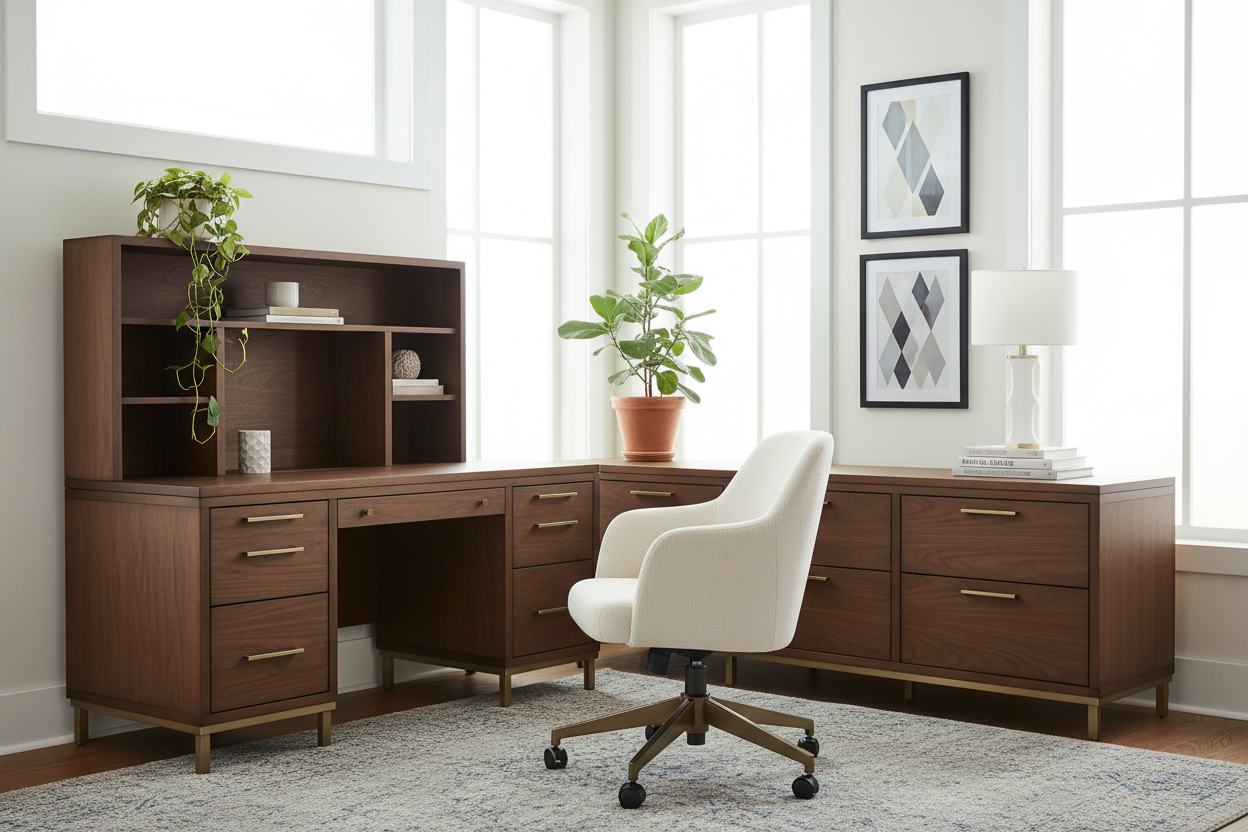
There is a distinct tension between the need for productivity and the desire for a beautiful home. When square footage is at a premium, that tension tightens. You are likely staring at an underutilized alcove or a slice of your living room, wondering how to introduce a workstation without disrupting the existing design language. The solution often lies in well-curated small home office furniture sets, but the selection process requires a discerning eye.
It is not enough for the pieces to simply fit physically; they must fit visually. As an interior designer, I often see homeowners prioritize dimensions over finish, resulting in a workspace that feels like a temporary intrusion rather than an intentional design element. This guide will walk you through selecting pieces that offer architectural harmony and professional-grade ergonomics.
Quick Decision Guide: Key Features to Look For
- Visual Weight: For tight areas, opt for "leggy" silhouettes or glass tops to maintain an open, airy feel rather than blocky pedestal desks.
- Material Integrity: Prioritize solid wood or high-grade veneers over paper laminates, which tend to peel at the edges within a year.
- Ergonomic Scale: Ensure the chair arms slide fully under the desk surface to minimize the footprint when not in use.
- Integrated Cable Management: In small spaces, visible cords create instant visual clutter; look for built-in grommets or modesty panels.
Mastering Scale and Proportion
When sourcing home office suites for compact areas, the concept of "negative space" is paramount. A common error is filling the entire available wall width with a desk. Instead, leave at least six inches of breathing room on either side. This prevents the furniture from looking wedged in and allows for better air circulation and light flow.
The Silhouette Matters
In my client projects, I steer away from heavy, dark woods in small rooms unless the lighting is exceptional. Instead, I lean toward matching office furniture with slender metal frames or light oak finishes. These materials recede visually, making the room appear larger than it is. If you require storage, look for a small office furniture set that utilizes verticality—think hutch units or floating shelves—rather than deep, floor-hogging file cabinets.
Materiality and Tactile Experience
Since you will be in contact with these surfaces for hours daily, the tactile quality is non-negotiable. Many budget-friendly office furniture sets for home use low-pressure laminate. While cost-effective, it often lacks the warmth and texture of real wood.
I recommend looking for "contract-grade" surfaces if your budget permits. High-pressure laminate (HPL) or thermally fused laminate (TFL) offers superior scratch resistance compared to standard retail options. If you prefer wood, ensure it is sealed with a commercial-grade polyurethane to prevent water rings from your morning coffee.
Layout and Workflow in Compact Zones
Placement dictates flow. A floating desk layout—where the desk faces into the room rather than the wall—can define a "zone" more effectively than pushing furniture into a corner. However, this requires a finished back panel on the desk. When evaluating sets, check the rear of the desk; if it is unfinished masonite, your layout options are restricted to wall-facing only.
Lessons from My Own Projects
I learned the hard way that "compact" does not always mean "compatible." A few years ago, I specified a stunning mid-century modern set for a client's 50-square-foot sunroom office. On paper, the measurements were perfect.
However, I hadn't accounted for the "active footprint." The desk had a shallow drawer height, and the matching chair had high, non-adjustable armrests. Every time the client tried to pull close to the desk to type, the chair arms banged against the drawer front. We ended up having to swap the chair entirely, breaking the cohesive look of the suite.
Furthermore, the matte black finish we chose was a nightmare for fingerprints. In a small room with strong natural light, every smudge was magnified. Now, I always advise clients to test a finish sample with their specific lighting conditions and to measure the vertical clearance between chair arms and the desk apron, not just the floor plan.
Conclusion
Transforming a small nook into a powerhouse of productivity is entirely possible with the right furniture. By focusing on visual lightness, durable materials, and the interaction between chair and desk, you can secure a set that serves your career without sacrificing your home's aesthetic.
Frequently Asked Questions
How much space do I need behind the desk for the chair?
You need a minimum of 30 inches (76 cm) of clearance behind the desk to push the chair back and stand up comfortably. If you are browsing small home office furniture sets, ensure your room can accommodate this "push-back" zone, or the ergonomics will fail.
Should I buy a set or mix and match?
Buying a set ensures the wood stains and scale match perfectly, which is crucial in small spaces where disjointed styles can look chaotic. However, if the set's chair is uncomfortable, buy the desk and storage as a suite, and invest separately in a high-quality ergonomic chair.
What is the best material for a heavy-use home office desk?
For daily use, High-Pressure Laminate (HPL) or solid wood with a catalyzed lacquer finish are best. Avoid foil-wrapped particle board, as the edges tend to peel quickly with friction from wrists and chair arms.

Leave a comment
This site is protected by hCaptcha and the hCaptcha Privacy Policy and Terms of Service apply.