










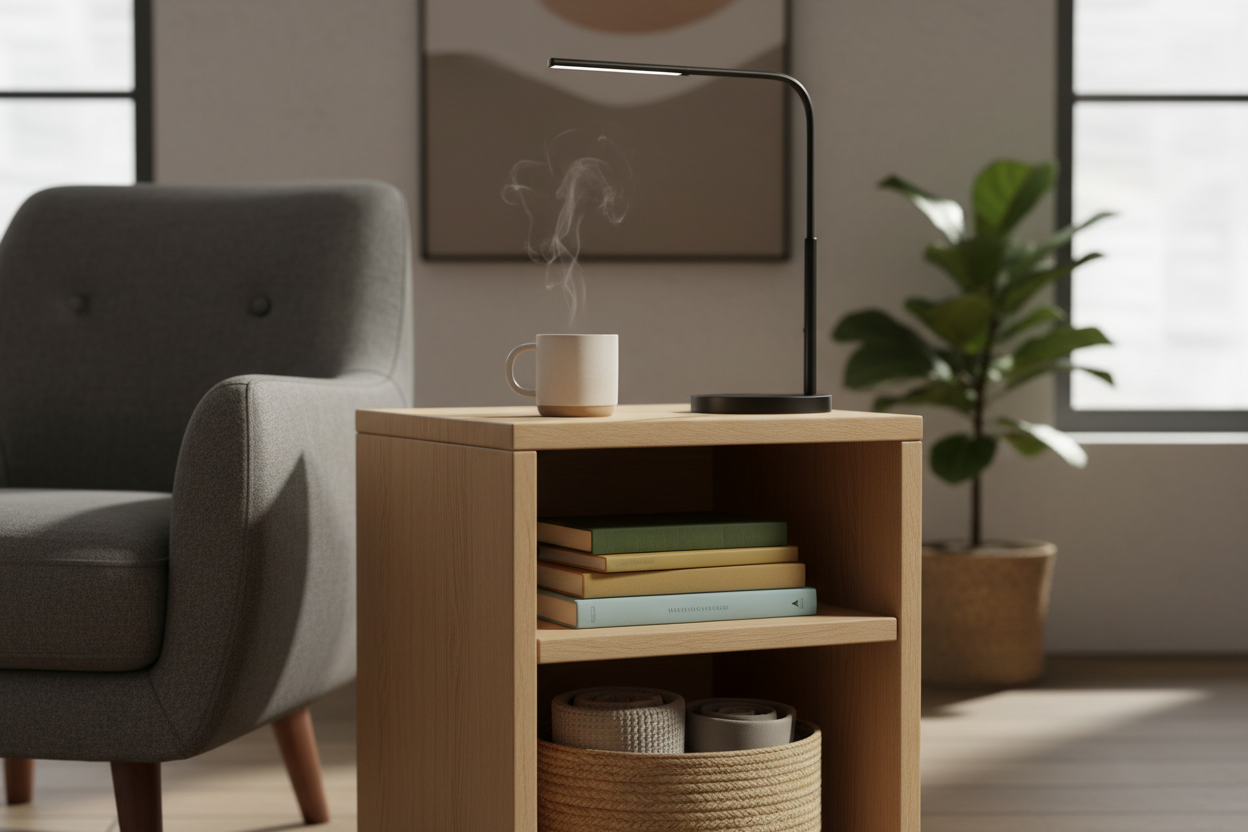
You just sat down with a steaming cup of coffee and your favorite book, ready to relax. You reach out to set your mug down, only to realize the coffee table is too far away, and the floor is definitely not an option. This specific moment of inconvenience is exactly why a table for chairside use is essential. Unlike a standard coffee table that services the whole sofa, or a decorative end table that might be too wide for a cramped corner, a dedicated chairside table is designed to sit snugly against your furniture, offering immediate access to everything you need without forcing you to lean forward or stretch.
I learned the value of these specific pieces of furniture the hard way. For years, I relied on a bulky square end table next to my recliner. It looked fine, but it was essentially a landing pad for clutter. It was too low to reach comfortably while reclining, and it was so wide that it blocked the walking path to the kitchen. Swapping it out for a narrow chairside storage table with a built-in drawer and a lower shelf completely changed the flow of the room. Suddenly, my remotes had a home, my charging cables weren't sprawling across the surface, and I reclaimed about six inches of valuable floor space.
Understanding the Chairside Difference
Many people use the terms "end table" and "chairside table" interchangeably, but there are distinct differences in their design and intent. A standard end table is often square or round and requires a bit of breathing room. A table designed specifically for chairside placement typically features a narrower profile, often rectangular or wedge-shaped. The primary goal here is efficiency.
These tables are engineered to fit into the tight "dead space" between a sofa and a wall, or between two armchairs. Because they are often slimmer, they prioritize vertical storage over horizontal surface area. This makes them the ideal solution for smaller apartments or living rooms where every square inch matters. You get the functionality of a surface without the visual weight of a heavy piece of furniture.
Why Storage is the Real Game Changer
A flat surface is great, but a chairside storage table solves the perennial problem of living room debris. We all have those items that need to be close at hand but don't necessarily look good on display. Reading glasses, tablet chargers, coasters, and the three different remotes required to watch TV these days can quickly make a room look messy.
When shopping for these tables, look for varied storage configurations. A unit with a top drawer is perfect for hiding small, unsightly items like batteries or lip balm. Below that, open shelving works well for stacking books or displaying a small decorative basket. Some deeper models even feature a cabinet door, which is excellent for hiding larger items like game controllers or a small throw blanket.
The Rise of the C-Table
One specific variation of the chairside table that has gained massive popularity is the C-table. Shaped literally like the letter C, the base slides under your chair or sofa, allowing the tabletop to cantilever over the armrest and hover right above your lap. This is the ultimate functional upgrade for anyone who works from home or enjoys eating dinner while watching a movie. While many C-tables are minimalist metal frames, newer versions incorporate small storage compartments or magazine pockets on the side, blending the utility of a tray with the organization of a storage unit.
Selecting the Right Materials and Style
Functionality dictates the shape, but material dictates the vibe. Since this piece of furniture sits right next to you, the texture and finish become very noticeable. Solid wood offers a traditional, warm feel and is generally more durable against knocks and bumps. If you have a farmhouse or rustic aesthetic, look for reclaimed wood with visible grain.
For modern or industrial spaces, mixed materials are a smart choice. A metal frame with a wood or glass top keeps the look airy. Glass tops are particularly good for small rooms because they allow light to pass through, tricking the eye into thinking the furniture takes up less space than it actually does. However, if you are looking for a true chairside storage table meant to hide clutter, an opaque material like wood or painted MDF is superior to glass, as it conceals the contents of the drawers or shelves.
Getting the Height Right
Nothing is more annoying than a table that is significantly higher or lower than your armrest. Ergonomics play a huge role in how much you will enjoy this furniture. The golden rule for sizing is that the table surface should be within two inches of your chair's armrest height. If the table is too high, you risk knocking your elbow against it. If it is too low, setting down a drink becomes an awkward, reaching motion.
Measure your furniture before you start browsing. Standard armrest heights vary wildly between a low-profile modern sofa and an overstuffed recliner. If you have particularly high armrests, you might need to look at bedroom nightstands as an alternative, as they often stand taller than standard living room tables. Conversely, for low-slung mid-century furniture, ensure the table isn't towering over the seating area.
Modern Features for Connected Living
Furniture manufacturers have realized that our needs have evolved beyond just holding a lamp. The modern chairside storage table often doubles as a power hub. It is becoming increasingly common to find tables with built-in power strips, USB ports, or even wireless charging pads embedded in the surface.
This integration eliminates the need to run extension cords behind the sofa or crawl on the floor to find an outlet. If you choose a table with electrical components, check the cord length of the table itself and ensure you have a floor outlet nearby. This feature transforms a simple piece of wood into a functional command center for your digital life.
Making the Final Choice
Ultimately, the best table for chairside use is one that balances your storage needs with the physical constraints of your room. Don't be afraid to use painter's tape to mark out the dimensions on your floor before buying. This simple trick helps you visualize the footprint and ensures the table won't impede traffic flow. Whether you choose a slim wooden cabinet or a sleek metal C-table, this small addition will likely become the most used surface in your home.
Frequently Asked Questions
What is the ideal height for a chairside table?
The surface of the table should sit within two inches of your chair's armrest height. Ideally, it should be level with or slightly lower than the armrest to make reaching for items comfortable and to prevent accidental bumps with your elbow.
Can I use a nightstand as a chairside table?
Yes, nightstands often make excellent chairside storage tables, especially if you need drawers to hide clutter. Just be mindful of the height and depth, as nightstands can sometimes be taller and deeper than standard living room end tables.
What is the difference between an end table and a chairside table?
Chairside tables are typically narrower and designed to fit in tighter spaces or directly alongside a recliner, focusing heavily on vertical storage. End tables are generally wider, more decorative, and designed to bookend a sofa with more surface area for lamps and decor.

Leave a comment
This site is protected by hCaptcha and the hCaptcha Privacy Policy and Terms of Service apply.