










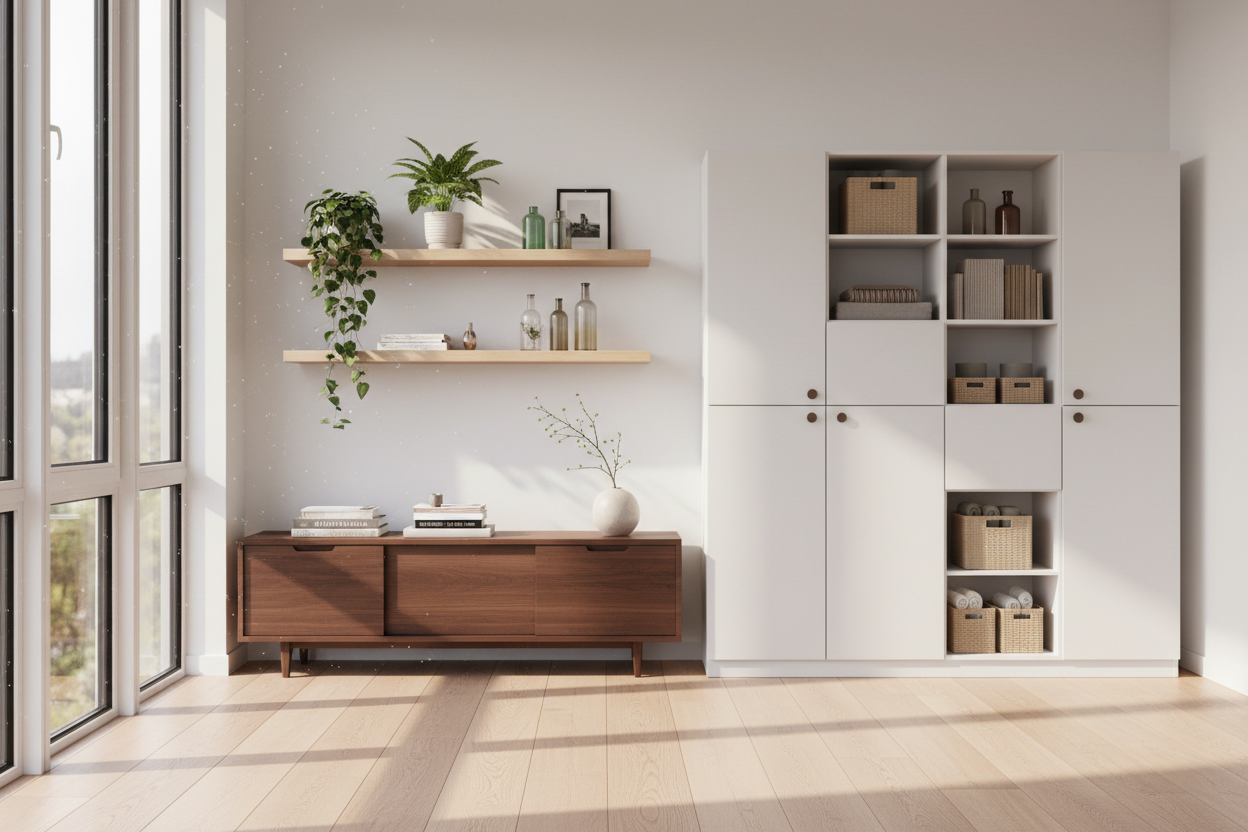
Clutter has a way of creeping up on us. One day you have a clean surface, and the next, it is covered in mail, gadgets, and miscellaneous items that don't seem to have a home. If you are currently looking for storage cabinets to solve this problem, you have likely realized that open shelving often just puts the mess on display rather than hiding it. The right cabinet doesn't just store items; it transforms the flow and feel of a room.
I learned this lesson the hard way in my first apartment. I tried to use open bookcases for everything, thinking it would look airy and modern. Instead, it looked chaotic. I eventually invested in a solid wood sideboard with opaque doors, and the difference was immediate. The visual noise vanished, replaced by a piece of furniture that actually added to the decor. That experience taught me that closed storage is often the unsung hero of interior design.
Understanding Your Space and Needs
Before buying anything, grab a tape measure. It sounds obvious, but people often overestimate how much space they have or underestimate how imposing a large piece of furniture can be. You need to consider not just the width and height, but the depth. A unit that sticks out too far into a hallway or living area will disrupt the traffic flow, making the room feel smaller regardless of how much clutter it hides.
Think about what you are actually storing. Heavy items like vinyl records, dinnerware, or tools require sturdy construction. Many cheap furniture storage cabinets are made of low-density particle board that will bow or crack under significant weight. If you plan to store heavy loads, look for solid wood, metal, or high-grade plywood construction. Check the weight rating for the shelves, not just the unit as a whole.
Navigating the Different Styles
The market is flooded with options, and narrowing down the types of storage cabinets available can be overwhelming. Your choice should depend largely on the room's function and your personal aesthetic.
The Credenza and Sideboard
Low, long cabinets are incredibly versatile. Long cabinets for storage are excellent for dining rooms to hold linens and serving platters, but they work equally well in a living room as a media console. The advantage here is the surface area. You get ample storage inside, plus a long stage on top for lamps, art, or a television. Because they sit lower to the ground, they don't dominate the vertical space, which helps maintain a feeling of openness in rooms with lower ceilings.
The Tall Cabinet and Armoire
When floor space is at a premium, you have to go up. Tall room cabinets utilize vertical space efficiently. These are perfect for bathrooms (for towels and toiletries), pantries, or bedrooms lacking closet space. A tall cabinet with glass upper doors and solid lower doors offers a mix of display and concealment, allowing you to show off your favorite books while hiding the messy paperwork below.
Modular Systems
Sometimes a single piece isn't enough. A modular storage cabinet unit allows you to customize the layout. You might start with a base unit and add stacking components as your collection of stuff grows. This is particularly useful in home offices or playrooms where needs change over time. These units often come with adjustable shelving, which is a lifesaver when you are trying to fit items of odd heights.
Form Meets Function: Making it Look Good
Utility doesn't have to mean ugly. You might be hunting for a strictly functional piece for the garage, but for interior spaces, you want a cool storage cabinet that acts as a statement piece. Industrial metal lockers have become trendy in modern living spaces for a vintage, eclectic look. Alternatively, mid-century modern pieces with tapered legs and walnut finishes bring warmth and character.
Don't be afraid of color. While white and wood tones are safe, a painted cabinet in navy, forest green, or even a bold terracotta can anchor a room. If you find a vintage piece with good bones but a terrible finish, a weekend of sanding and painting can result in a stunning, one-of-a-kind item.
Specific Considerations for Utility Areas
Garage and basement storage is a different beast entirely. Here, aesthetics take a backseat to durability and protection. You aren't just hiding clutter; you are protecting gear from dust, moisture, and pests. Heavy-duty cabinet storage cabinets made of steel or reinforced resin are standard here. Look for lockable doors if you are storing chemicals or power tools, especially if children are in the house.
For these utility areas, getting the cabinets off the floor is often a smart move. Wall-mounted units prevent water damage in case of minor flooding and make it easier to sweep the floor beneath. If wall mounting isn't an option, look for cabinets with adjustable leveling feet to keep the unit stable on uneven concrete floors.
Quality Indicators to Watch For
Regardless of the style you choose, inspect the hardware. The hinges and drawer slides are usually the first things to fail on budget furniture. Soft-close hinges are a nice touch that prevents doors from slamming, preserving the structure of the cabinet over time. For drawers, full-extension slides allow you to access the very back of the drawer, ensuring you don't lose items in the dark abyss behind the cabinet face.
Back panels also tell a story about quality. High-end cabinets will have a solid or thick plywood back. Cheaper units often use a thin piece of cardboard or fiberboard tacked on with small nails. While the back doesn't seem important, it provides crucial structural rigidity, preventing the cabinet from racking or wobbling side-to-side.
Final Thoughts on Organization
Buying the cabinet is only half the battle. How you organize the interior dictates how useful it remains. Use bins, baskets, or shelf risers inside the cabinet to keep small items contained. Without internal organizers, a large cabinet just becomes a cavern where things go to get lost. Labeling bins might seem excessive, but it saves time when you are frantically looking for batteries or a specific cable.
Investing in the right storage solution is an investment in your peace of mind. Clearing the visual clutter allows you to relax in your home rather than feeling constantly reminded of pending chores. whether it's a sleek media console or a rugged garage unit, the right cabinet makes all the difference.
Frequently Asked Questions
How do I choose between open shelving and closed cabinets?
Choose closed cabinets if you want to hide clutter, protect items from dust, or store miscellaneous objects that don't stack neatly. Open shelving is better suited for displaying decorative items, books, or frequently used items that need to be grabbed quickly, provided you can keep them organized.
What is the best material for a storage cabinet in a humid room like a bathroom?
Solid wood can warp in high humidity, and particle board may swell if the veneer is breached. For bathrooms, engineered wood with a high-quality waterproof seal, metal (powder-coated to prevent rust), or marine-grade plywood are the most durable options.
Can I use kitchen cabinets for storage in other rooms?
Absolutely. Stock kitchen wall cabinets can be mounted low to create a floating sideboard in a dining room or used in a laundry room for detergent storage. They are often more durable and cost-effective than storage units specifically marketed for living rooms or offices.

Leave a comment
This site is protected by hCaptcha and the hCaptcha Privacy Policy and Terms of Service apply.