










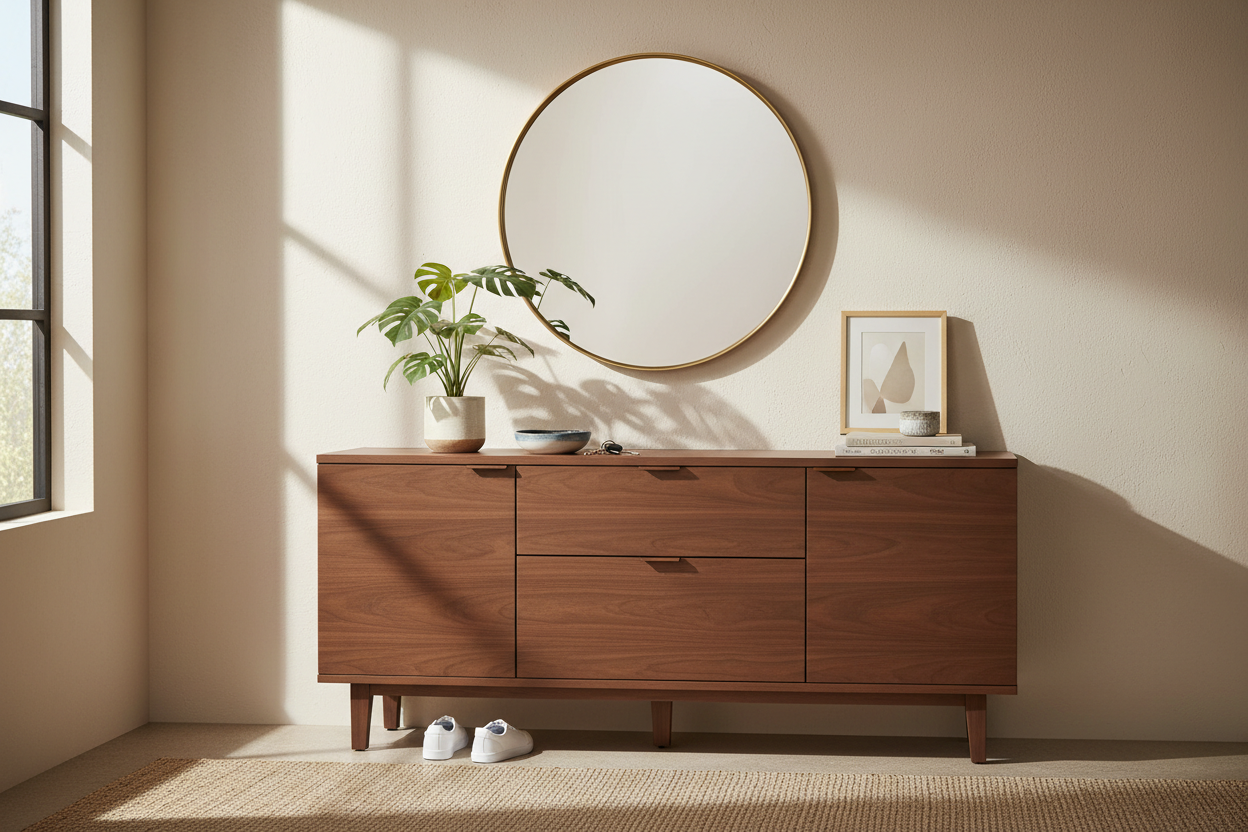
The hallway is often the most neglected space in a home, yet it shoulders the heavy burden of first impressions. It is the landing strip for keys, the dumping ground for mail, and the primary storage point for shoes. Without the right hallway cabinet, this transitional space quickly descends into chaos. Finding the right furniture isn't just about aesthetics; it is a tactical exercise in reclaiming square footage. Whether you are dealing with a sprawling corridor or a cramped vestibule, the right cabinet for hallway organization can transform a clutter magnet into a functional design feature.
Mastering the Narrow Corridor
Most homes suffer from narrow corridors, making standard furniture impossible to use without blocking the flow of traffic. This is where the narrow hallway cabinet becomes essential. Standard cabinets usually have a depth of 40cm or more, but a dedicated slimline hallway cabinet often reduces this to 25cm or even 15cm. If you are shopping for a skinny hall cabinet, pay close attention to the internal mechanisms. Many thin cabinet for hallway designs utilize tip-out drawers for shoes, which allows items to be stored vertically rather than horizontally, saving precious floor space.
A narrow cabinet for hallway use doesn't have to sacrifice style for utility. I once made the mistake of buying a vintage dresser for a corridor that was barely a meter wide. I spent two years turning sideways to get to the kitchen and constantly bruising my hip on the corner. Replacing it with a slim hallway cabinet—specifically a narrow hallway cabinet with drawers that was only 20cm deep—changed the entire flow of the house. It taught me that in a hallway, depth is the single most critical dimension. If you have a particularly tight squeeze, look for a thin hallway cabinet that mounts directly to the wall to keep the floor visible, creating an illusion of more space.
Doors, Drawers, or Open Shelves?
Visual clutter is the enemy of a peaceful home. While open shelving looks great in catalogs, a hallway cabinet with doors is often the practical choice for real life. Hall cabinet doors allow you to hide the less photogenic items like dog leads, reusable shopping bags, and mismatched umbrellas. A hallway storage cabinet with doors provides a clean, flat surface that calms the eye as soon as you walk through the front door.
However, doors aren't always enough. A hallway cabinet with drawers is superior for organizing the "micro-clutter" that accumulates daily. Keys, wallets, loose change, and sunglasses need a dedicated home. A hall cabinet with drawers prevents these small items from being swept onto the floor or lost in a deep cupboard. For the best of both worlds, look for a hallway storage unit that combines a top row of drawers with bottom cupboards. This hybrid hall unit with storage offers a place for everything, keeping surfaces clear.
Vertical Solutions for Compact Spaces
When you cannot spread out, you must go up. A tall narrow hall cabinet utilizes the vertical volume of the room, offering maximum storage with a minimal footprint. A tall narrow hallway cabinet is perfect for storing items you don't need daily, such as seasonal hats or bulk supplies. These units often act as a hallway cupboard, functioning almost like a mini-closet in spaces that lack built-in storage.
Alternatively, hallway wall cabinets free up floor space entirely. By lifting the storage furniture for hallways off the ground, you make cleaning easier and prevent the hallway from feeling boxy. A floating hallway unit can be mounted at any height, allowing you to place a shoe rack or a bench underneath. This layering technique is a favorite trick of interior designers to store hallway essentials without overwhelming the room.
Choosing the Right Size for Your Home
Not every hall requires a floor-to-ceiling solution. A small hall cabinet might be all you need for a compact apartment entrance. A small hallway cabinet can serve as a simple landing pad—a place to drop keys and check your reflection in a mirror above it. Even a small hall storage cabinet can be surprisingly efficient if it has adjustable shelves. When selecting a small hallway storage cabinet, look for pieces with legs. Furniture that sits directly on the floor can look heavy in a small space, whereas a cabinet raised on legs feels airier.
Conversely, if you are blessed with a long hallway cabinet space, you have the opportunity to create a gallery effect. A long, low hallway unit with storage can run the length of a wall, providing immense storage capacity while offering a surface for art, lamps, and plants. This type of hall storage furniture turns a dead corridor into a destination.
Materials and Durability
Hall cabinets take a beating. They are bumped by groceries, kicked by muddy boots, and leaned on while taking off shoes. Durability is key. Solid wood or high-quality veneer hall cabinets with doors will withstand the traffic better than cheap particle board. If you are looking for a skinny hallway cabinet in a high-traffic zone, consider metal or hard-wearing laminate finishes that resist scratches.
Regardless of the material, safety is paramount with hall storage cabinets. Because a narrow hall cabinet with doors is often top-heavy, especially when loaded, it must be anchored to the wall. This is non-negotiable for a tall narrow hall cabinet or any hall storage unit in a home with children or pets.
The Final Touch: Styling Your Unit
Once you have selected your hallway storage units, styling helps integrate the piece into your home. A hall cabinet narrow enough for the space can still hold a lamp and a catch-all tray. If you have chosen a hallway shelf unit, use baskets to corral loose items so the open shelves don't look messy. Whether you choose a robust hall unit or a delicate storage cabinet for hallway display, the goal is to balance function with form. The right storage for hall areas should make leaving the house smoother and coming home more relaxing.
Frequently Asked Questions
What is the minimum depth for a functional hallway cabinet?
For a cabinet to store shoes horizontally, you typically need a depth of at least 30-35cm. However, specialized tip-out shoe cabinets can be as shallow as 15-18cm, making them the ideal choice for extremely narrow corridors where every centimeter counts.
Should I choose a cabinet with doors or open shelving for a small hallway?
In small spaces, cabinets with doors are generally better because they hide clutter, making the space feel larger and calmer. Open shelving requires constant organization to look tidy; if you prefer open storage, use matching baskets to maintain a clean visual line.
How do I prevent a tall hallway cabinet from making the hall feel cramped?
Choose a cabinet that matches your wall color to help it blend in, or opt for a unit with mirrored doors to reflect light and create the illusion of more space. Ensuring the cabinet is shallow and anchoring it securely to the wall will also help maintain an open feel.

Leave a comment
This site is protected by hCaptcha and the hCaptcha Privacy Policy and Terms of Service apply.