










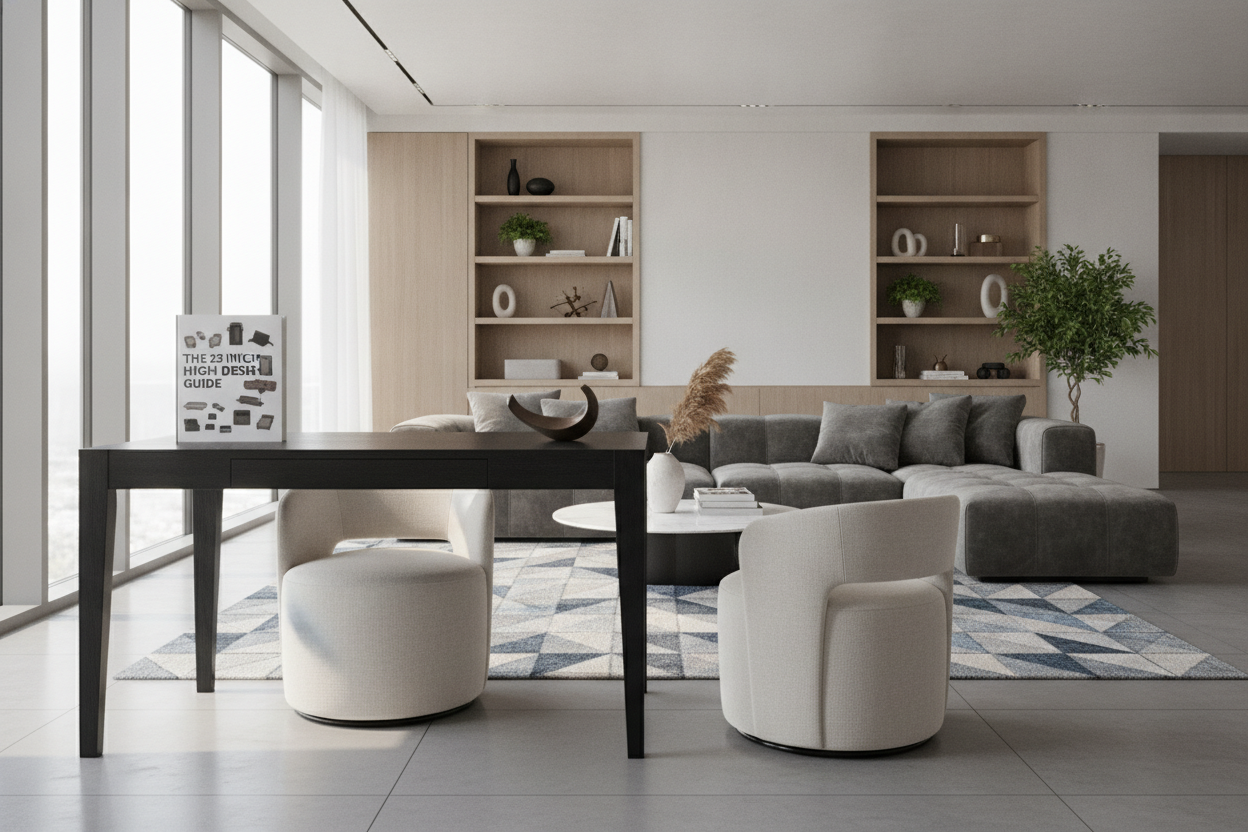
When planning a functional workspace, standard adult desktop elevations do not always fit every demographic or interior layout. A 23 inch high desk occupies a specialized niche within interior design, bridging the gap between conventional coffee tables and standard adult workstations. Understanding how this specific height profile operates within daily routines allows homeowners, parents, and hobbyists to create purposeful, ergonomic zones across compact or multi-use rooms.
Understanding the 23 Inch High Desk: Use Cases and Functions
A desktop standing around twenty-three inches from the floor offers distinct advantages for specific user groups and specialized activities. Rather than serving as an all-purpose adult office workstation, a 23 inch height desk excels in targeted roles:
- Youth Study and Craft Stations: For growing children and junior learners, standard thirty-inch desks create awkward shoulder elevation and dangling feet. A lower surface establishes comfortable forearm resting angles and natural floor contact.
- Low-Profile and Floor-Seated Workspaces: Enthusiasts of Japanese-inspired minimalist interiors or relaxed floor seating often prefer lower work surfaces paired with floor cushions, zafu pillows, or low kneeling benches.
- Dedicated Hobby and Craft Tables: Detailed activities like scale modeling, sewing machine operation, or botanical potting often benefit from a lower surface that allows the user to look downward with relaxed neck and shoulder postures.
- Compact Grooming and Vanity Corners: When fitted with mirrors and tabletop organizers, lower desks function smoothly as compact grooming stations, complementing flexible options like adjustable vanity desk solutions in multi-functional dressing areas.
Seating Pairings and Vertical Clearance Planning
Achieving ergonomic comfort at a lower desk depends on selecting compatible seating that maintains adequate vertical leg clearance while preserving relaxed posture. The distance between the seat pan and the desktop underside must allow thighs to slide underneath without pinching.
When pairing traditional chairs with a 23-inch desktop, standard eighteen-inch dining or task chair seat heights are typically too elevated. Instead, consider:
- Low-Seat Stools and Benches: Look for seating surfaces positioned comfortably lower than standard office chairs to maintain balanced elbow angles and thigh clearance.
- Adjustable Youth Chairs: Chairs featuring customizable seat pans and foot rings ensure younger users can position their elbows level with the working surface.
- Floor Cushions and Tatami Mats: For casual or mindful work corners, dense memory foam pads or firm floor cushions offer supportive bases for floor-level tasks.
- Transitioning Between Surface Heights: If your room layout combines multiple low surfaces, comparing desk clearances with low-profile accent table planning helps maintain visual cohesion across seating tiers.
Room Fit and Aesthetic Integration in Living Spaces
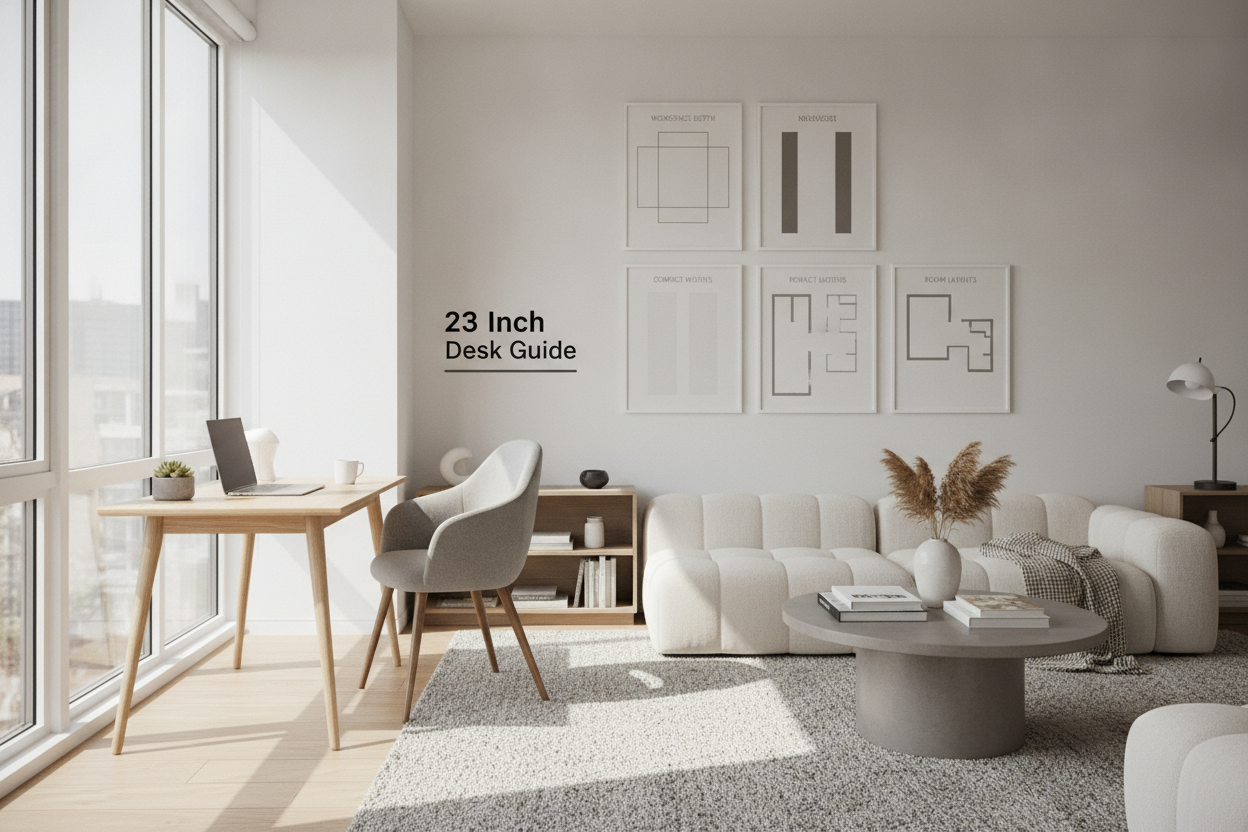
Lower profile furniture maintains open sightlines, making rooms feel more spacious and airy. Because a low-profile desk sits below standard windowsill and chair-rail heights, it integrates easily beneath windows, under sloped attic ceilings, or along half-walls.
To incorporate a lower desk naturally into your living area or bedroom:
- Anchor with Vertical Art and Shelving: Prevent the lower desk from feeling isolated by framing the space with gallery wall arrangements, vertical board panels, or floating open shelves above the desktop.
- Align with Ambient Light Sources: Positioning a lower work table beneath low-silled windows takes advantage of natural light without obstructing outdoor views.
- Harmonize with Soft Furnishings: Layering low-pile rugs, textured floor pillows, and warm table lamps provides an intentional, curated look. For creative inspiration on balancing furniture accents, explore aesthetic desk styling ideas.
- Balance Scale Across the Room: While full-scale office setups may rely on spacious corner desk workstations for sprawling enterprise setups, compact low-height desks preserve physical pathways in smaller secondary rooms.
Storage Solutions and Organization for Low-Profile Workstations
Because low-profile desks offer reduced under-desk vertical clearance compared to full-sized furniture, organizing supplies requires smart spatial planning. Deep hanging pedestals or bulky under-mount drawers can restrict knee movement.
Effective storage strategies for lower desks include:
- Shallow Desktop Trays: Utilize low-profile pen organizers, monitor risers with sliding trays, and divided drawer inserts that keep daily essentials accessible without consuming tabletop space.
- Adjacent Low Credenzas or Side Bins: Place rolling utility carts or low modular cubby units beside the workstation to hold books, crafting bins, and electronic accessories.
- Wall-Mounted Vertical Storage: Install pegboards, hanging metal rails, or modular wall pockets directly above the desk surface to lift clutter off the main work plane entirely.
- Cable Concealment Channels: Route power cords and charging cables along frame legs or into discreet adhesive channels to keep floor-level footwells clear and tidy.
Materials, Frame Rigidity, and Assembly Considerations
Structural stability is essential for any work surface. Although lower desks carry a naturally lower center of gravity—reducing sway compared to taller frames—durability remains tied to frame materials and joinery design.
Key material and construction elements to evaluate include:
- Engineered Wood Tops with Melamine or Veneer: Engineered composite surfaces offer smooth, uniform planes that resist daily wear, making them ideal for writing, drawing, and junior homework routines.
- Solid Wood Legs and Stretchers: Hardwood framing provides timeless warmth and rigidity, particularly when reinforced with under-table apron stretchers or corner bracing blocks.
- Powder-Coated Steel Frames: Metal tubular legs deliver high structural strength while keeping visual mass minimal, supporting heavier hardware or hobby equipment with ease.
- Leveling Glides: Adjustable leveling feet on desk legs help compensate for uneven flooring, ensuring a stable, wobble-free surface on rugs and hard floors alike.
Evaluating Fixed Low Desks vs. Adjustable Height Alternatives
Choosing between a fixed low-profile unit and a flexible alternative depends on how long the furniture is expected to remain in that configuration and who will use it.
Fixed Low Desks provide dedicated, wobble-free simplicity with unified aesthetics and straightforward assembly. They serve as reliable, permanent fixtures in playrooms, floor-sitting reading areas, or junior bedrooms.
Adjustable Alternatives, including multi-position height adjustable desks, allow the surface to transition between low-profile seating, standard chair heights, and full standing modes. If a single workstation must accommodate both adults and younger family members over time, height-adjustable frames offer long-term versatility.
By matching your intended use case with appropriate seating heights, strategic vertical storage, and durable frame materials, a 23-inch high desk creates a comfortable, purposeful workspace that complements your home's layout.

Leave a comment
This site is protected by hCaptcha and the hCaptcha Privacy Policy and Terms of Service apply.