










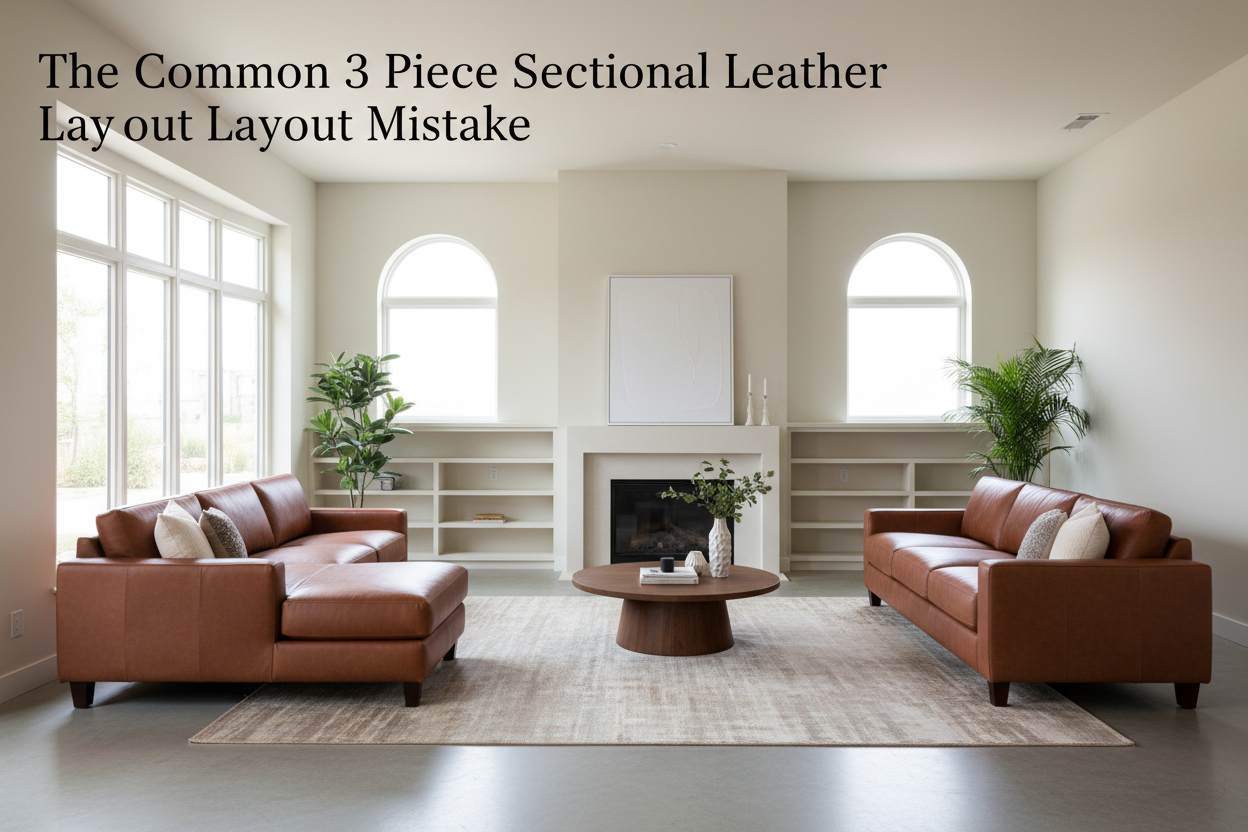
There is a specific gravity to leather furniture that few other materials possess. It commands a room. However, many homeowners fall into the trap of purchasing a massive seating arrangement without understanding how it dictates the flow of a living space. A 3 piece sectional leather sofa is not just a place to sit; it is a structural element that anchors your entire aesthetic. If chosen poorly, it can make a spacious room feel claustrophobic or a modern room feel dated. This guide cuts through the showroom lighting to help you select a piece that offers both architectural beauty and enduring comfort.
Key Features to Look For
- Leather Grade: Prioritize Full-Grain or Top-Grain leather. Avoid "bonded" leather, which peels over time.
- Frame Construction: Look for kiln-dried hardwood frames rather than plywood or particleboard to prevent warping.
- Suspension System: 8-way hand-tied springs or heavy-gauge sinuous springs offer the best longevity.
- Cushion Fill: High-resiliency foam wrapped in down feathers provides the balance of structure and sink-in comfort.
- Connector Hardware: Ensure heavy-duty metal alligator clips or brackets are present to keep the three pieces from drifting apart.
Decoding Leather Quality and Grain
When selecting a three piece leather sectional, the terminology can be intentionally vague. As a designer, I urge clients to look past the word "genuine." Full-grain leather retains the hide's natural markings and develops a rich patina—a soft sheen that develops through use and exposure—over time. It tells a story. Conversely, corrected-grain or pigmented leathers offer a uniform look and higher stain resistance, which is often pragmatic for households with pets or children, but they lack that buttery, organic hand-feel.
The Silhouette and Space Planning
The footprint of a leather 3-piece sectional is deceptive. In a showroom with twenty-foot ceilings, these pieces look modest. In your living room, they can overwhelm the space. The most critical consideration is the "corner" piece. A curved wedge corner takes up significantly more usable floor space than a 90-degree square corner.
Visual Weight and Balance
Leather is visually heavy. To prevent your room from feeling like a darkly lit cigar lounge (unless that is the goal), you must counterbalance the visual weight. If you choose a dark cocoa or cognac 3 piece leather sectional sofa, pair it with legs that lift the frame off the floor. This "negative space" underneath the sofa allows light to travel, making the room feel airier.
Styling for Warmth and Texture
A common complaint about a 3-piece sectional leather couch is that it can feel cold to the touch or slippery. This is where layering becomes non-negotiable. You need to introduce contrasting textures to break up the vast expanse of hide.
Think in terms of tactile opposition. If the leather is smooth and cool, your throw pillows should be nubby wool, boucle, or velvet. A high-pile rug is essential to soften the acoustics of the room, as leather does not absorb sound the way fabric upholstery does.
Lessons from My Own Projects
I want to share a specific reality check from a project I managed in a downtown loft. We ordered a stunning, Italian-tanned cognac sectional. It was beautiful, but I overlooked a small, unpolished detail: the friction—or lack thereof.
The client called me two weeks later. "We love the look," she said, "but the throw pillows end up on the floor every time we sit down." Because we had chosen a high-sheen, semi-aniline finish and paired it with silk-blend pillows, there was zero grip. Everything just slid off.
Furthermore, we realized that the connector brackets underneath—the metal teeth that hold the three pieces together—were plastic on this specific model, not metal. Every time her husband flopped down on the chaise end, it drifted two inches away from the center wedge. We ended up having to install aftermarket rubber grippers on the feet and heavy-duty metal brackets to keep the configuration tight. When you are buying, get on the floor. Check the brackets. Check the grip. It sounds trivial until you are pushing a 200-pound sofa piece back into place every evening.
Conclusion
Investing in leather furniture is a commitment to the future of your home. The right piece will not only survive the wear and tear of daily life but will look better for it five years down the road. Focus on the frame, respect the scale of your room, and embrace the natural aging process of the hide.
Frequently Asked Questions
How do I maintain a leather sectional to prevent cracking?
Regular maintenance is key. Dust the leather weekly with a microfiber cloth to prevent abrasive particles from settling in the grain. Apply a high-quality leather conditioner every 6 to 12 months to keep the hide supple and prevent drying or cracking, especially if the sofa is near a heat source or direct sunlight.
Can I separate the pieces of a 3-piece sectional?
It depends on the design. Some modular sectionals are finished on all sides, allowing you to use the pieces as standalone chairs or loveseats. However, many traditional sectionals have unfinished sides (often covered in black muslin) where the pieces connect. Always check if the sides are fully upholstered if you plan to separate them.
What is the best rug size for a large leather sectional?
Avoid the "floating island" look where the rug is too small. For a large sectional, ensure the rug is large enough that at least the front legs of all three pieces rest on it. Ideally, the rug should extend 6 to 10 inches beyond the ends of the sofa to ground the space effectively.


Leave a comment
This site is protected by hCaptcha and the hCaptcha Privacy Policy and Terms of Service apply.