










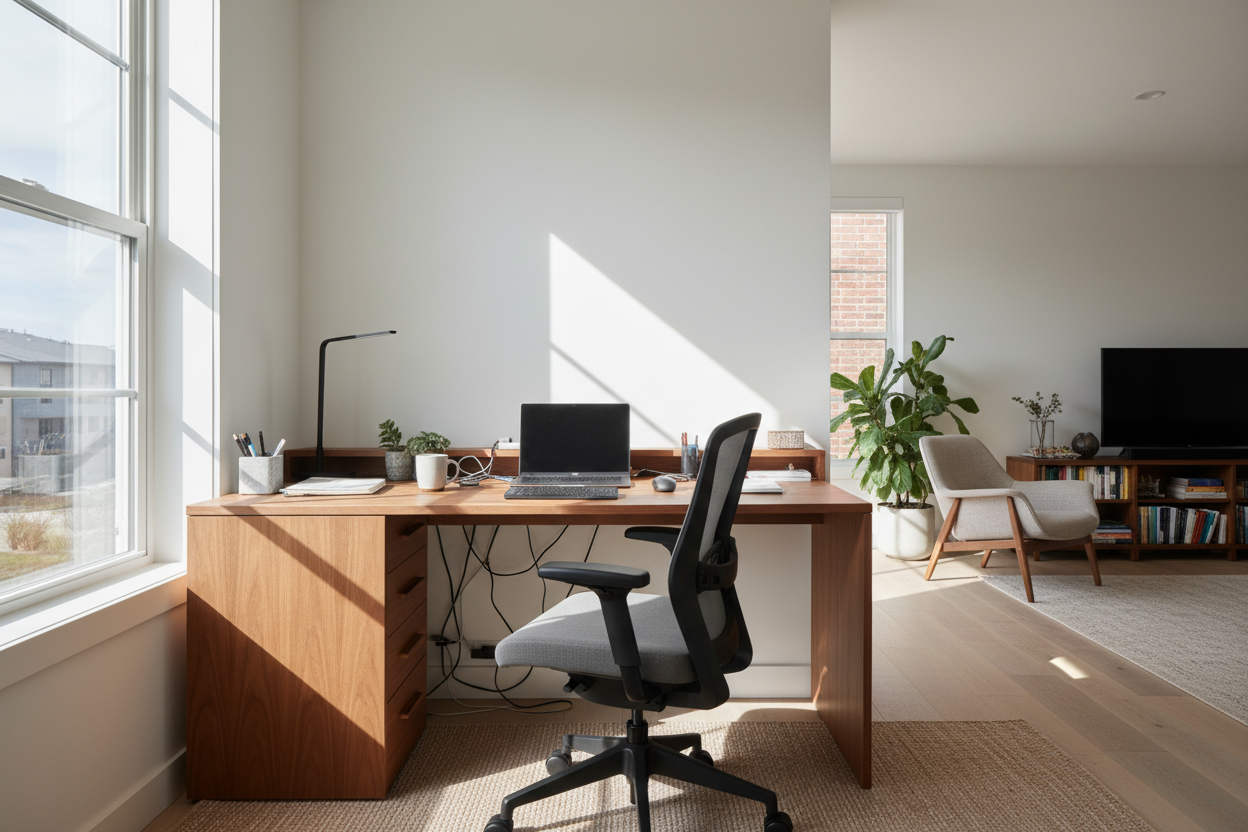
We often treat our workspaces as afterthoughts—a spare corner of the dining table or a cramped nook under the stairs. As an interior designer, I see clients investing in expensive chairs yet placing them in environments that sabotage productivity. Creating a functional environment requires more than just a laptop; it demands a curated selection of furniture and tools that support your body and mind. If you are wondering what is essential for home office design to bridge the gap between professional functionality and residential comfort, you have come to the right place.
Quick Decision Guide: Key Features to Look For
Before purchasing furniture or tech, evaluate these core factors to ensure longevity and comfort:
- Ergonomics Over Aesthetics: Does the chair offer lumbar support and seat depth adjustment?
- Material Tactility: Avoid cold glass desks; opt for solid wood or high-grade veneer for a warmer, quieter work surface.
- Lighting Layers: Ensure a mix of ambient (overhead) and task lighting (focused) to reduce eye strain.
- Acoustic Control: Incorporate soft furnishings (rugs, curtains) to dampen echo during calls.
- Vertical Storage: Utilize wall height to keep the immediate work surface clear of clutter.
Establishing the Foundation: Desk and Seating
The core of your wfh setup essentials lies in the interplay between your desk and chair. The biggest mistake I see is prioritizing style over the biomechanics of sitting. When looking for the best home office essentials, start with a chair that supports the S-curve of your spine. While a mid-century modern bucket seat looks stunning in a portfolio, it is rarely suitable for an eight-hour shift.
For the desk, consider the "visual weight" of the piece. In smaller rooms, a desk with open legs (like a trestle or Parsons style) makes the room feel larger than a heavy pedestal desk. However, ensure the surface area is sufficient. One of the things needed for a home office that is often overlooked is depth; a desk under 24 inches deep will force your monitor too close to your face, causing digital eye strain.
Lighting: The Invisible Essential
Lighting is not just about visibility; it is about mood and energy. Home office basics must include a dedicated task lamp. Avoid relying solely on overhead recessed lighting, which casts shadows on your work surface. I recommend an articulated arm lamp with a Color Rendering Index (CRI) of 90 or higher. This ensures that the colors of your physical documents or fabric samples look accurate and vibrant.
Ambient Control
If your room gets direct sunlight, essential home office items include window treatments that diffuse light without blocking it entirely. Solar shades are excellent office space essentials as they cut glare on screens while maintaining your view of the outdoors.
Tech Integration and Cable Management
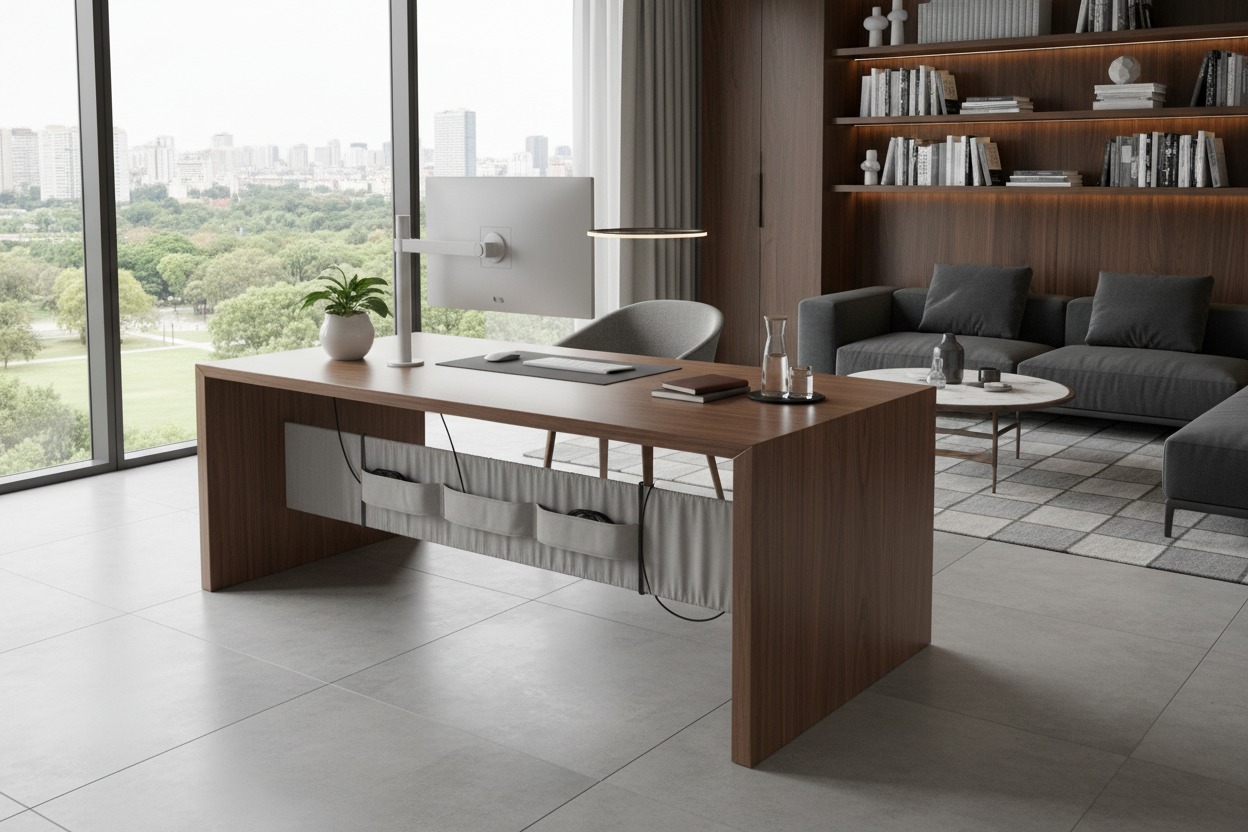
Nothing ruins the sophisticated silhouette of a walnut desk faster than a nest of black cables. When compiling your home office list, cable management solutions are non-negotiable. Look for wfh desk essentials like under-desk trays, vertebrae spines for standing desks, and fabric cable sleeves.
Furthermore, regarding best office equipment for working from home, elevate your screen. Whether you use a laptop stand or a VESA-mounted monitor arm, getting your screen to eye level is critical. This is one of those must have items for home office setups that prevents the dreaded "tech neck."
Organization and The "Luxury" of Space
Clutter competes for your attention. The best products for home office organization are those that hide chaos elegantly. I frequently advise clients to invest in home office luxury items like leather desk blotters or solid brass trays. These work from home comfort items add a tactile richness to the space.
For storage, think beyond the filing cabinet. Floating shelves or a credenza behind the desk can hold supplies for home office use—printer paper, reference books, and tech accessories—while serving as a beautiful backdrop for video calls.
My Personal Take on essential for home office
I learned the hard way that "commercial grade" doesn't always mean "home appropriate." A few years ago, I specified a high-end, mesh-backed task chair for my own study. It was technically one of the best wfh products on the market. However, I failed to account for the specific fabric texture. It was so abrasive that it actually pill the fabric of my softer knit sweaters within weeks.
Another lesson came from desk finishes. I love the look of matte black laminate—it photographs beautifully. But in a real-world scenario, it is a nightmare for oil maintenance. Every time I rested my forearms on the desk, it left a smudge. Now, I always steer clients toward textured wood grains or linoleum tops (like Forbo furniture linoleum) for remote office essentials. It feels softer to the touch, hides fingerprints, and adds a warmth that sterile office furniture lacks.
Conclusion
Building the perfect environment is an investment in your career and your well-being. By focusing on ergonomic support, proper lighting, and materials that age gracefully, you transform a simple room into a productivity powerhouse. Don't just buy things to work from home; curate a space that inspires you to do your best work.
Frequently Asked Questions
What do I need for my home office if I have a very small space?
If square footage is limited, the best things for your home office are vertical solutions. Use a wall-mounted drop-leaf desk or a ladder desk system. Prioritize a high-quality compact chair and use wall sconces instead of floor lamps to save floor space.
Is a standing desk a must-have for at home office setups?
While not strictly mandatory, a sit-stand converter or desk is highly recommended among work from home necessary items. The ability to change posture reduces fatigue. If a full desk isn't in the budget, a high-quality riser is a great alternative.
What are the best office supplies for working at home regarding acoustics?
If you don't have carpet, acoustic panels are things every home office needs. You can buy art-printed acoustic panels that look like decor but function to absorb sound, ensuring your conference calls sound professional and crisp.

Leave a comment
This site is protected by hCaptcha and the hCaptcha Privacy Policy and Terms of Service apply.