










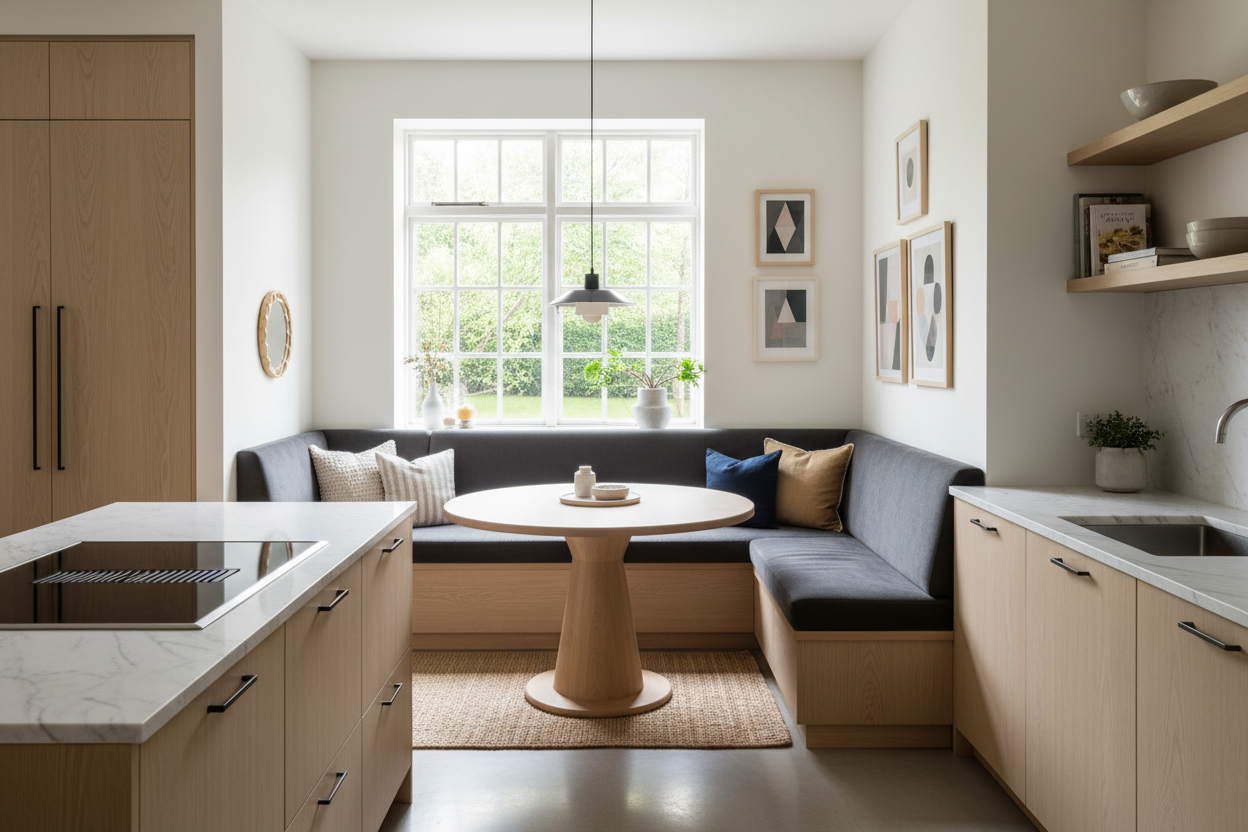
One of the most frequent dilemmas clients bring to me isn't about the living room sofa; it's about the eat-in kitchen. You want the comfort of a lounge area but the functionality of a dining room, often in a footprint that refuses to accommodate standard chairs. This is where a well-designed kitchen sectional bridges the gap. It is not merely a space-saver; it is an architectural decision that alters the flow and intimacy of your home's busiest gathering spot.
Key Features to Look For
Before visiting a showroom or commissioning custom joinery, consider these non-negotiable elements to ensure longevity and comfort:
- Performance Upholstery: Look for solution-dyed acrylics or Crypton fabrics that offer high stain resistance and scrubbability.
- Seat Height & Depth: Dining requires a higher, firmer seat (approx. 18-19 inches high) compared to lounging sofas to ensure proper posture while eating.
- Base Construction: Ensure the frame is kiln-dried hardwood to prevent warping from kitchen humidity and temperature fluctuations.
- Pedestal Table Pairing: Always pair banquettes with pedestal tables to allow leg clearance for sliding in and out.
Mastering Space Planning and Layout
The success of kitchen sectional seating relies entirely on proportion. Unlike a standalone dining set, a sectional is static. It anchors the room. When planning the layout, I always advise clients to measure the "slide zone." You need enough clearance between the edge of the table and the seating backrest to allow someone to scoot in without hitting the table edge, yet close enough to eat comfortably.
The Visual Weight
Because these pieces are often placed in corners or against windows, they carry significant visual weight. To keep the kitchen feeling airy, opt for a silhouette with legs rather than a solid base that goes all the way to the floor. If you require storage and opt for a box base, ensure the finish matches your cabinetry to create a built-in, cohesive aesthetic.
Material Selection: Durability is Luxury
In a kitchen environment, fragility is not an option. However, durability does not mean sacrificing texture or luxury.
Fabric vs. Leather
While genuine leather is a classic choice that develops a beautiful patina over time, it can be susceptible to scratches from rivets on jeans or pet claws. For high-traffic family kitchens, I frequently specify high-performance velvets or flat-woven poly-blends. These mimic the hand-feel of natural fibers but can withstand the inevitable coffee spill or dropped utensil.
Foam Density Matters
The interior construction is just as vital as the exterior. For dining, you want High Resiliency (HR) foam wrapped in Dacron. Avoid down-filled cushions for the seat; they require constant fluffing and compress too much during a meal, leaving diners feeling like they are sinking below the table level.
Lessons from My Own Projects
I learned the hard way about the importance of the "toe kick" early in my career. I designed a stunning, floor-to-ceiling upholstered kitchen sectional for a client in a compact urban condo. We built the base solid to the floor to maximize storage drawers underneath.
Within a week of installation, the client called. Every time they tried to stand up or sit down, their heels would strike the upholstered base. It was awkward and scuffed the fabric immediately. We had to retrofit the piece, cutting out a recessed 3-inch toe kick—similar to what you see under kitchen cabinets. It was a dusty, expensive fix. Now, whenever I design a box-base banquette, I insist on a recessed plinth or an angled base. It’s a subtle ergonomic detail that saves your upholstery and your guests' comfort.
Elevate Your Dining Experience
Investing in a sectional for your kitchen is about reclaiming space and inviting connection. When executed with the right dimensions and materials, it becomes the favorite seat in the house—perfect for morning coffee, homework sessions, and late-night conversations. Prioritize structure over softness, and your kitchen will thank you.
Frequently Asked Questions
What is the ideal seat height for a kitchen sectional?
The standard dining seat height is between 18 and 19 inches from the floor. This is higher than a living room sofa (usually 16-17 inches) to ensure you are at the correct ergonomic height relative to a standard 30-inch dining table.
Can I use a regular sofa as a kitchen sectional?
Generally, no. Regular sofas are too deep, too low, and too soft for dining. You will find yourself leaning forward to reach your plate, which causes back strain. Kitchen sectionals are purpose-built with a more upright pitch and firmer cushioning.
How much overhang should the table have over the bench?
Ideally, the table edge should overlap the sectional seat by about 3 to 4 inches. This minimizes the gap food can fall through and allows you to sit back comfortably while still being close to your plate.


Leave a comment
This site is protected by hCaptcha and the hCaptcha Privacy Policy and Terms of Service apply.