










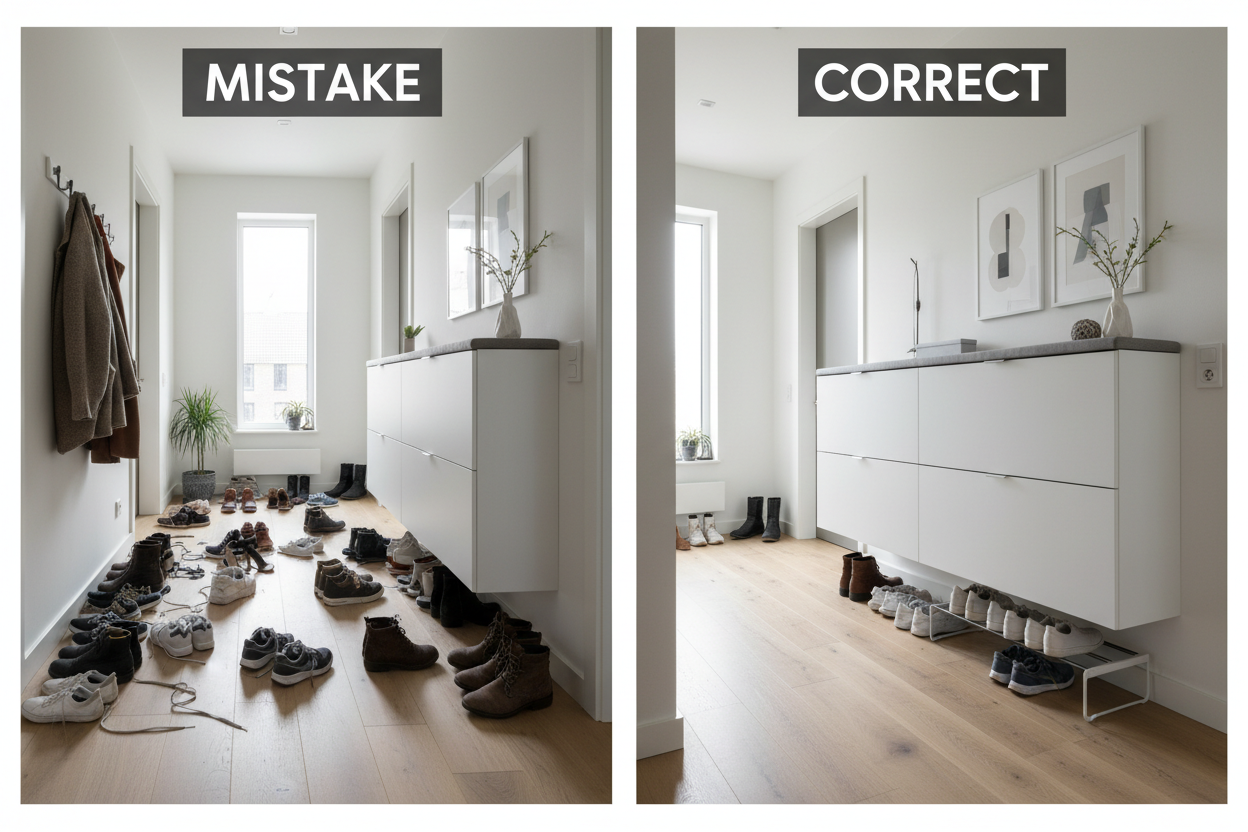
The entryway is the handshake of your home; it sets the tone for everything that follows. Yet, nothing disrupts a serene welcome quite like a cluttered floor or a bulky piece of furniture impeding traffic flow. The challenge lies in balancing the necessity of utility with the desire for a sophisticated aesthetic. Effective hallway shoe storage is not merely about hiding clutter; it is about reclaiming your floor space and creating a seamless transition from the chaotic outdoors to your curated interior.
Key Features to Look For
- Depth Profile: For narrow corridors, opt for tipping cabinets (approx. 15-25cm depth) over standard cupboards to preserve walkway clearance.
- Ventilation: Look for slatted doors, open backs, or breathable materials like rattan to prevent moisture buildup and odors.
- Material Durability: Solid wood or high-grade plywood withstands daily impact better than particle board, which often chips at the edges.
- Adjustable Shelving: Essential for accommodating varying heights, from flat sandals to high-top sneakers or ankle boots.
Mastering Spatial Flow and Layout
The most frequent error I encounter in residential projects is the selection of a shoe cabinet hallway unit that is too deep for the corridor. In design terms, we must maintain a minimum clearance width for comfortable passage. If your hall is narrow, a standard swing-door shoe cupboard for hallway use will feel oppressive.
Instead, consider verticality. A tall, slim hallway shoe rack storage system draws the eye upward, making the ceiling appear higher while utilizing dead wall space. For tighter footprints, wall-mounted floating units are superior. By keeping the floor visible beneath the shoe storage cabinet for hallway, you create an optical illusion of more square footage.
Choosing the Right Material and Finish
Your front hall shoe storage should harmonize with your existing architecture, not fight against it. If your home features period details, a shoe organizer hallway unit in solid oak or walnut adds warmth and gravity. For contemporary, minimalist apartments, I often recommend high-gloss or matte lacquer finishes that reflect light, helping the unit disappear into the walls.
The Debate: Open vs. Closed Storage
While an open shoe rack for hallway access offers convenience, it demands discipline. Unless your footwear collection is pristine and curated, visible shoes create visual noise. A closed hallway shoe cupboard or a sleek shoe storage entrance hall console hides the chaos, providing a surface for styling a tray, a lamp, or a mirror, effectively turning a utility item into a focal point.
Ergonomics and Daily Function
Design is useless if it doesn't work. When selecting a shoe rack in hallway setups, consider the "drop zone" psychology. If the mechanism of a hallway shoe holder is difficult to open or if the shelves are too high, family members will revert to kicking their shoes off on the mat.
Look for soft-close hinges and ergonomic handles. If you are opting for a shoe rack for hall benches, ensure the upholstery is performance-grade fabric or leather that can be easily wiped down, as this area sees high traffic and grit.
Lessons from My Own Projects
I recall a specific renovation for a client in a narrow Victorian terrace where we installed a popular, off-the-shelf tipping hallway shoe storage cabinet. On paper, the dimensions were perfect. However, once installed, we realized a critical flaw that specs rarely mention: the internal pivot mechanism.
The client had size 12 feet, and the standard tipping drawer wouldn't close without crushing the heels of his leather brogues. We ended up having to modify the back panel, cutting out sections of the backing to allow the extra inch of clearance needed. It taught me to always measure the internal depth of a shoe organizer for hallway units, not just the external footprint. Furthermore, I noticed that on cheaper laminate units, the area around the handle starts to show "grease shadows" from hand oils within months. Now, I always insist on hardware with a decent projection or a finish that forgives fingerprints.
Conclusion
Investing in the right shoe cabinets for hallway organization is an investment in your peace of mind. By prioritizing slim silhouettes, durable materials, and closed storage, you transform a cluttered thoroughfare into a welcoming gallery. Measure twice, account for shoe size, and choose a piece that elevates your home's architecture.
Frequently Asked Questions
What is the minimum depth for a narrow hallway shoe cabinet?
For tight spaces, look for "tipping" or drop-down shoe racks for hallways. These can be as slim as 17cm to 25cm (7-10 inches) deep, whereas standard cabinets usually require at least 35cm (14 inches).
How do I prevent odors in a closed shoe cupboard?
Ventilation is key. Choose a hallway shoe rack with slatted doors or a mesh back. Alternatively, placing cedar blocks or charcoal bags inside the shoe storage hall unit helps absorb moisture and neutralize smells naturally.
Can I use a bench for shoe storage in a small hall?
Yes, a shoe rack for hallway bench is excellent for dual functionality. However, ensure it doesn't block the walkway. Look for a bench with a sliding door or open shelf underneath to keep the entry hallway shoe storage efficient without a large swinging door radius.


Leave a comment
This site is protected by hCaptcha and the hCaptcha Privacy Policy and Terms of Service apply.