










Understanding Warehouse Retail Automatic Standing Desks: Core Formats and Everyday Utility
Warehouse retailers frequently introduce convenient, flat-packed height-adjustable tables to help shoppers upgrade their remote workspaces. When evaluating an automatic standing desk Costco shoppers often encounter distinct design families tailored either for quick convenience or broad equipment layouts. Understanding these underlying architectures helps clarify how an automatic desk Costco option fits into your long-term daily routine.
Integrated Compact Models vs. Modular Open-Frame Systems
Retail warehouse models often showcase integrated designs, frequently featuring tempered glass tops, shallow front pull-out drawers, and embedded side-charging ports. While these all-in-one models offer rapid assembly and a clean footprint, their structural design can limit aftermarket additions like heavy clamping monitor arms or under-desk accessory tracks. In contrast, modular open-frame workstations utilize solid engineered wood or multi-piece laminate tops mounted to standalone steel lifting columns, granting complete freedom to modify your work surface over time.
Single vs. Dual Motor Drive Systems and Daily Travel Dynamics
Electric standing desks rely on internal drive motors housed either within a central drive rod or directly inside each lifting column. Single-motor mechanisms synchronize the telescoping legs through a rotating hex shaft, which serves everyday computing needs effectively. Dual-motor systems assign a dedicated motor to each leg, providing smooth, synchronized vertical travel and resilient operation when supporting broader desktop surfaces loaded with multiple screens and desktop peripherals.
Spatial Geometry and Desktop Sizing Tiers for Home Workspaces
Selecting the right desk scale requires balancing your physical workflow demands against the available perimeter clearance in your room. Exploring elevate your space designer ideas for standing desk layouts can help you visualize how dynamic vertical movement interacts with surrounding windows, door swings, and natural walking paths.
Compact Workstations (48 to 54 Inches) for Multi-Use Rooms
For home offices sharing square footage with guest bedrooms or living spaces, intermediate sizes provide ample space for a full-sized monitor, laptop dock, and essential peripherals without dominating the room. A well-proportioned option such as an standing desk product balances surface utility with compact room integration, allowing smooth height transitions through intuitive programmable memory buttons.
Wide-Format Desktops (60 Inches and Above) for Multi-Monitor Layouts
Multi-display workflows, audio interfaces, and creative project setups benefit significantly from expansive surface dimensions. Choosing a broad workstation like the super sized standing desk with electric lift 63x31 5pc desktop accommodates side-by-side displays alongside reference documents. For dedicated executive environments requiring uncompromising span, a 71 w height adjustable standing desk establishes a commanding command center with generous clearance for desktop audio gear and desktop organizational trays.
Frame Stability, Weight Distribution, and Dynamic Travel Clearances
The structural rigidity of an electric desk influences comfort during seated typing and standing tasks alike. Assessing the frame architecture ensures your screen and work tools remain stable throughout everyday height adjustments.
Eliminating Wobble Across Stature Heights and Desktop Loads
As telescoping leg stages extend upward, lateral leverage increases. High-quality desks counter this through precision steel tolerances, broad footplates, and reinforced top support brackets. Ensuring your desktop hardware is centered over the frame prevents uneven balance, while finely adjusting the threaded leveling glides beneath the feet prevents micro-rocking on uneven hardwood or carpeted floors.
Managing Perimeter Wall Clearance and Cord Slack
Because an automatic desk moves dynamically through vertical space, maintaining sufficient clearance from wall baseboards, window ledges, and shelving is critical. Fasten power strips directly beneath the desktop frame, allowing a single heavy-duty extension cord to travel downward to the wall outlet with generous slack. This dynamic cable loop prevents snagging or disconnected plugs during continuous elevation cycles.
Solving the Storage Deficit: Coordinating Under-Desk and Modular Office Furniture
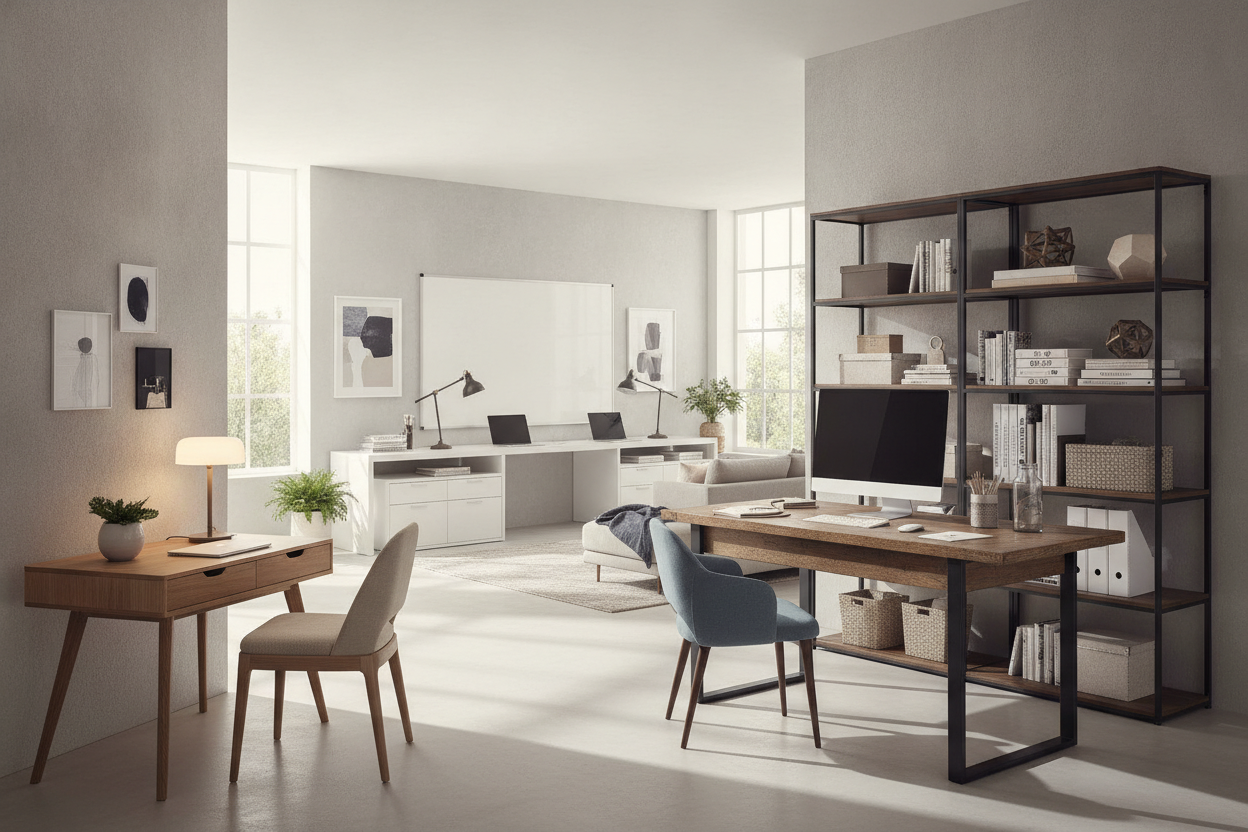
A frequent challenge with minimalist motorized desks is the absence of integrated pedestals and deep drawers. Balancing functional utility with aesthetic harmony is easier when reviewing designing a standing desk setup that actually looks good to create a cohesive office environment.
Mobile File Cabinets and Low-Profile Pedestals
Mobile pedestals on smooth-rolling casters provide convenient filing and office supply storage without anchoring directly to the elevating frame. Ensure the height of your mobile cabinet remains lower than your lowest seated desk height setting to preserve full downward travel clearance without collision risks.
Wall-Mounted Shelving and Lateral Bookcases for Clean Sightlines
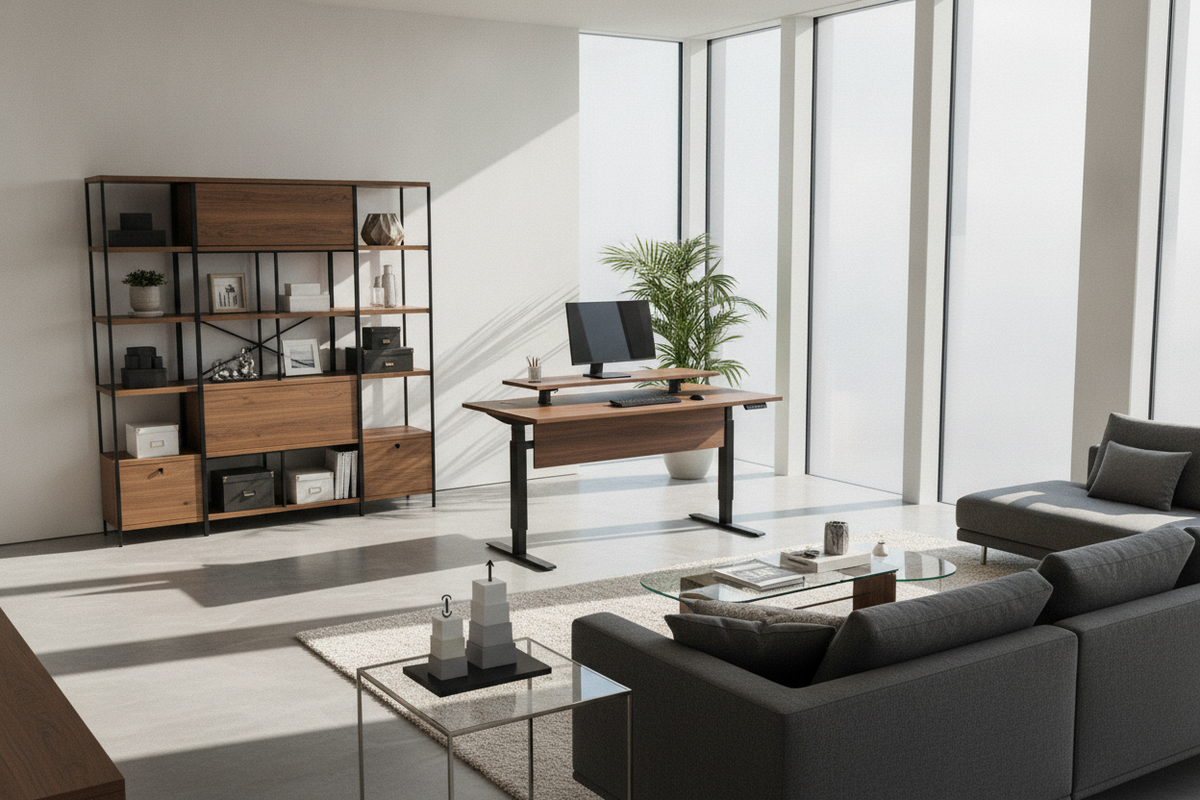
Surrounding your motorized desk with matching lateral bookcases, credenzas, or wall-mounted open shelving draws clutter off the main work surface. This maintains a clean desktop aesthetic while keeping project binders, reference literature, and ambient decor within arm's reach.
Assembly, Electronics Calibration, and Daily Operation Best Practices
Proper initial assembly and regular calibration keep motorized lifting frames running smoothly over years of daily transitions.
Initial Handset Calibration and Memory Preset Programming
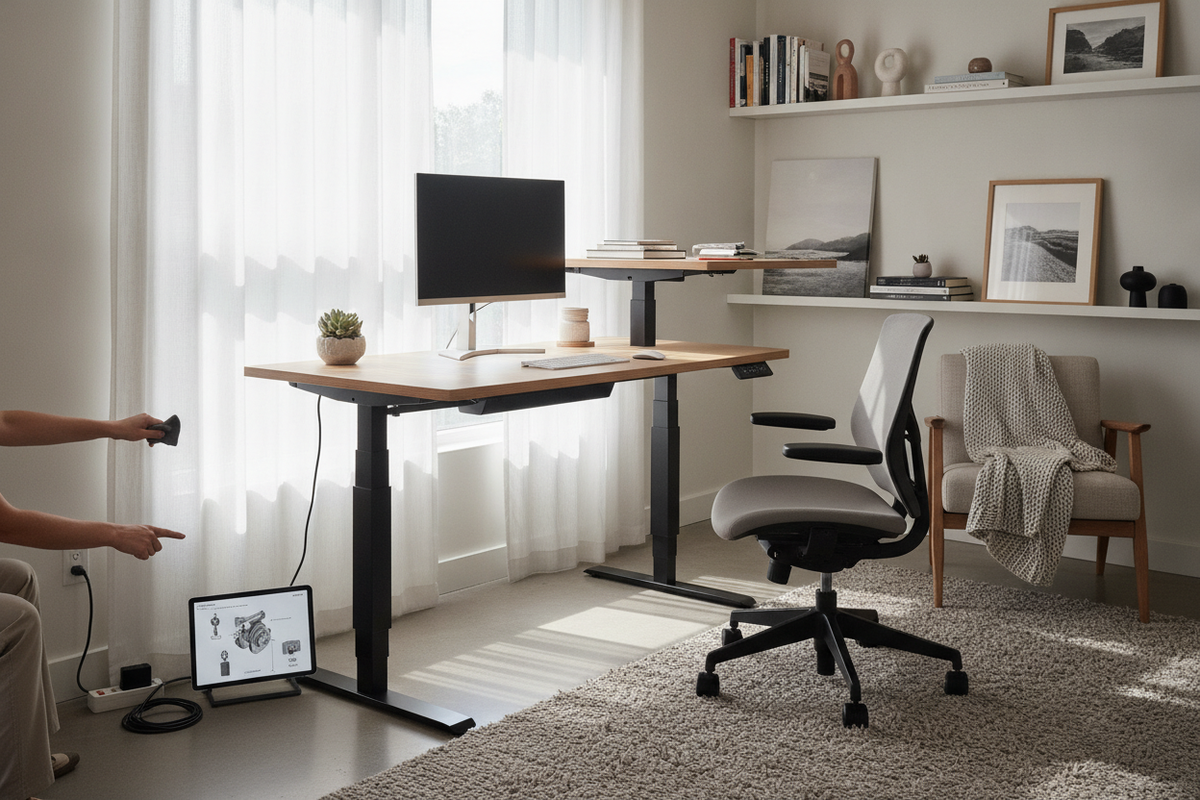
Upon completing hardware assembly, perform a system reset according to your control box instructions—typically by driving the frame to its lowest physical stop. Once synchronized, set ergonomic presets matching your natural elbow angle when seated upright and when standing with relaxed shoulders.
Routine Fastener Checks and Anti-Collision Sensitivity Setup
Periodic thermal expansion and normal movement can gradually loosen frame hardware. Periodically inspect and hand-tighten frame bolts and leg fasteners during routine cleaning. Additionally, test and configure your controller's built-in anti-collision sensitivity to ensure the motors halt automatically if an obstruction is encountered during travel.
Buyer Decision Framework: Evaluating Warehouse Desks vs. Dedicated Workstations
- Desktop Customization: Warehouse desks generally come in pre-packaged sizes and finishes, whereas modular ergonomic desks allow customizable widths, colors, and surface materials.
- Monitor Mounting Compatibility: Verify whether the desktop features open edge access for standard C-clamp monitor arms or if under-frame rails obstruct third-party hardware.
- Dynamic Travel Range: Confirm that the minimum and maximum height ranges comfortably match the ergonomic standing and seated heights of all intended household users.
- Peripheral Furniture Harmony: Plan complementary storage solutions, like mobile pedestals and accent bookcases, to maintain an organized and visually unified workspace.

Leave a comment
This site is protected by hCaptcha and the hCaptcha Privacy Policy and Terms of Service apply.