










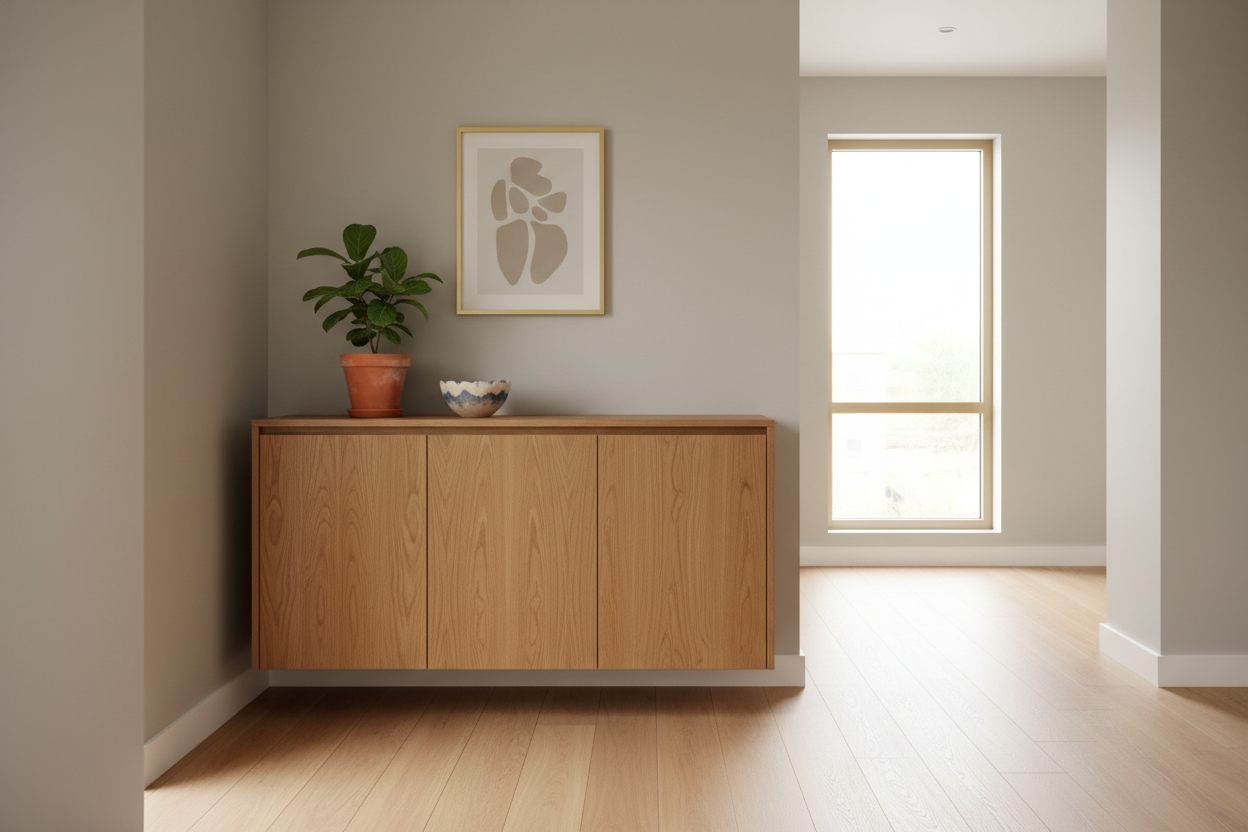
Walking down a long, empty corridor often feels like navigating a tunnel with no destination. The walls stretch on, and the blank wall at the terminus creates an abrupt, unfinished stop to the visual journey. The most effective way to resolve this architectural awkwardness is by installing an end of hall cabinet. This single piece of furniture acts as a visual anchor, drawing the eye forward while providing a practical solution to the perennial lack of household storage. It turns a transitional space you simply walk through into a designed space that contributes to the home's character.
Why the End of the Hall Needs an Anchor
Interior design relies heavily on focal points. Without something to land on, your gaze wanders aimlessly, making a hallway feel longer and narrower than it actually is. Placing a substantial piece of furniture at the end creates a destination. An end of hallway cabinet interrupts the tunnel effect, foreshortening the perspective and making the corridor feel wider and more inviting.
Beyond the visual trickery, the utility of this spot is often overlooked. Hallways are prime real estate for overflow storage. Whether you need a place for extra linens, board games, or seasonal decor, a cabinet with closed doors hides the clutter that open shelving would expose. It keeps the walkway serene while working hard behind the scenes.
Getting the Scale Right
Selecting the wrong size furniture is the most common mistake homeowners make in narrow spaces. If the piece is too deep, it encroaches on the walkway and makes the area feel claustrophobic. If it is too small, it looks like a toy floating in a void. Proportions are everything here.
For most standard corridors, you should look for a cabinet depth between 12 and 16 inches. This slim profile allows you to stand in front of the unit and open the doors without backing into the side walls. Height is equally important. A low-slung unit might get lost if you have high ceilings, while a tall armoire can feel looming. A waist-high or chest-high console cabinet usually strikes the best balance, leaving wall space above for art or a mirror.
A Lesson from My Own Renovation
I learned the importance of this specific design element the hard way in my second home. We had a hallway upstairs that connected three bedrooms and a bath. It was dark, windowless, and ended in a flat, beige wall. For months, it felt like a depressing dormitory corridor. We tried hanging art on the side walls, but it only made the space feel more cluttered.
Eventually, I found a vintage mid-century record cabinet at an estate sale. It was shallow—only about 14 inches deep—but had a warm walnut tone. I placed it as an end of hall cabinet, hung a large, round brass mirror above it, and placed a small table lamp on top. The transformation was immediate. The light from the lamp reflected in the mirror, bouncing illumination back down the dark hall. The warm wood broke up the beige monotony. It wasn't just a place to store spare towels anymore; it became a vignette that made the whole upstairs feel finished.
Styling the Space
Once you have the furniture in place, styling is what integrates it into the rest of your home. Since hallways often lack natural light, lighting becomes a priority. If you don't have a hardwired sconce on the back wall, a small table lamp or a rechargeable picture light can add a necessary glow. This creates a warm ambiance in the evenings, serving as a nightlight for the household.
Mirrors are the best companion for an end of hallway cabinet. Because the mirror reflects the corridor back onto itself, it creates an illusion of infinite space and bounces available light around. If you prefer art, choose a single, large-scale piece rather than a gallery wall. A gallery wall can look busy from a distance, whereas one bold image acts as a clear stop sign for the eye.
Built-ins vs. Freestanding Pieces
While hunting for a vintage or retail piece is easier, sometimes the dimensions of a hallway are too quirky for standard furniture. If you are dealing with a corridor that is exceptionally narrow or has obstructions like baseboard heaters, a custom built-in might be the only route.
Built-ins allow for floor-to-ceiling usage, maximizing every cubic inch of the dead space. They can be painted to match the trim, making them recede visually so the hallway doesn't feel crowded. However, a freestanding end of hall cabinet offers flexibility. You can take it with you when you move, and it often adds a layer of texture—like wood grain, metal, or lacquer—that a painted built-in cannot mimic. If your budget allows, a freestanding piece usually adds more personality and warmth to the space.
Traffic Flow and Clearance
Before purchasing anything, use painter's tape to mark the footprint of the potential cabinet on the floor. Open the nearest bedroom or bathroom doors to ensure they don't swing into the cabinet area. You need to ensure that the cabinet doors can swing open fully without hitting the doorframes of adjacent rooms. If the space is incredibly tight, consider a piece with sliding doors or open shelving with baskets. This eliminates the need for door-swing clearance entirely while still providing the visual weight needed to ground the space.
Frequently Asked Questions
How much walking space do I need in front of the cabinet?
Ideally, you should maintain at least 36 inches of clearance for a comfortable walkway, though 30 inches can work in older, tighter homes. If the cabinet is at the very end of a dead-end hall, you only need enough room to comfortably stand and access the drawers or doors.
Can I use a tall bookcase instead of a cabinet?
Yes, a tall bookcase works well to draw the eye upward, making ceilings appear higher. However, ensure the bottom shelves are used for heavier items or baskets to ground the piece visually, so it doesn't feel top-heavy or cluttered.
What is the best color for a cabinet at the end of a dark hallway?
Lighter colors or mirrored finishes are excellent for reflecting light and brightening a dark space. However, if you want to create a dramatic focal point that draws the eye immediately, a dark navy, charcoal, or natural wood tone creates a sophisticated contrast against light walls.

Leave a comment
This site is protected by hCaptcha and the hCaptcha Privacy Policy and Terms of Service apply.