




Standard office desks and worktables are frequently manufactured to fixed standardized dimensions that may not accommodate individual posture preferences, tall seating profiles, or specialized under-desk storage units. Introducing dedicated blocks to raise desk legs offers a structural method to fine-tune working heights without replacing solid casegoods or heritage furniture. Selecting the appropriate desk elevator blocks requires careful assessment of leg profiles, weight distribution, floor surfaces, and spatial proportions.
Understanding Desk Elevation Mechanics: Footprint Geometry and Leg Contact Profiles
The interface between a desk leg and an elevation block determines the overall structural integrity of the elevated workstation. Desks present diverse foundation styles, ranging from square solid timber posts and slender cylindrical dowels to angled mid-century tapers and continuous metal sled bases. Using an ill-fitting desk blocks riser can lead to point loading, slippage, or localized stress on furniture joints.
Recessed pocket depth is a primary consideration when evaluating desk elevator blocks. A perimeter retention rim helps contain the foot of the desk, preventing lateral shifting during everyday use. For square or round timber posts, deep circular or square recesses ensure full contact across the base of the foot. For wider rectangular bases or desks with broad metal footprints, oversized platforms or interlocking modular risers provide the necessary surface area to support the load evenly across the entire contact zone.
Elevation Tiers: Categorizing Height Adjustments for Ergonomics and Clearance
Elevating a workstation serves dual purposes: optimizing upper-body positioning during task work and expanding lower clearance. Categorizing height requirements into functional tiers allows users to select appropriate desk height adjustment blocks without creating disproportionate lateral leverage on the furniture framework.
- Micro-Correction Tier: Subtle elevation lifts a desk just enough to align forearm angles with keyboard trays or relieve minor knee clearance constraints against front drawer aprons.
- Standard Ergonomic Tier: Moderate elevation accommodates higher executive seating, tall task chairs with elevated armrests, or active sit-stand stools.
- Extended Clearance Tier: Higher elevation transforms standard tables into standing perches or opens significant vertical room beneath the desk frame for specialized equipment.
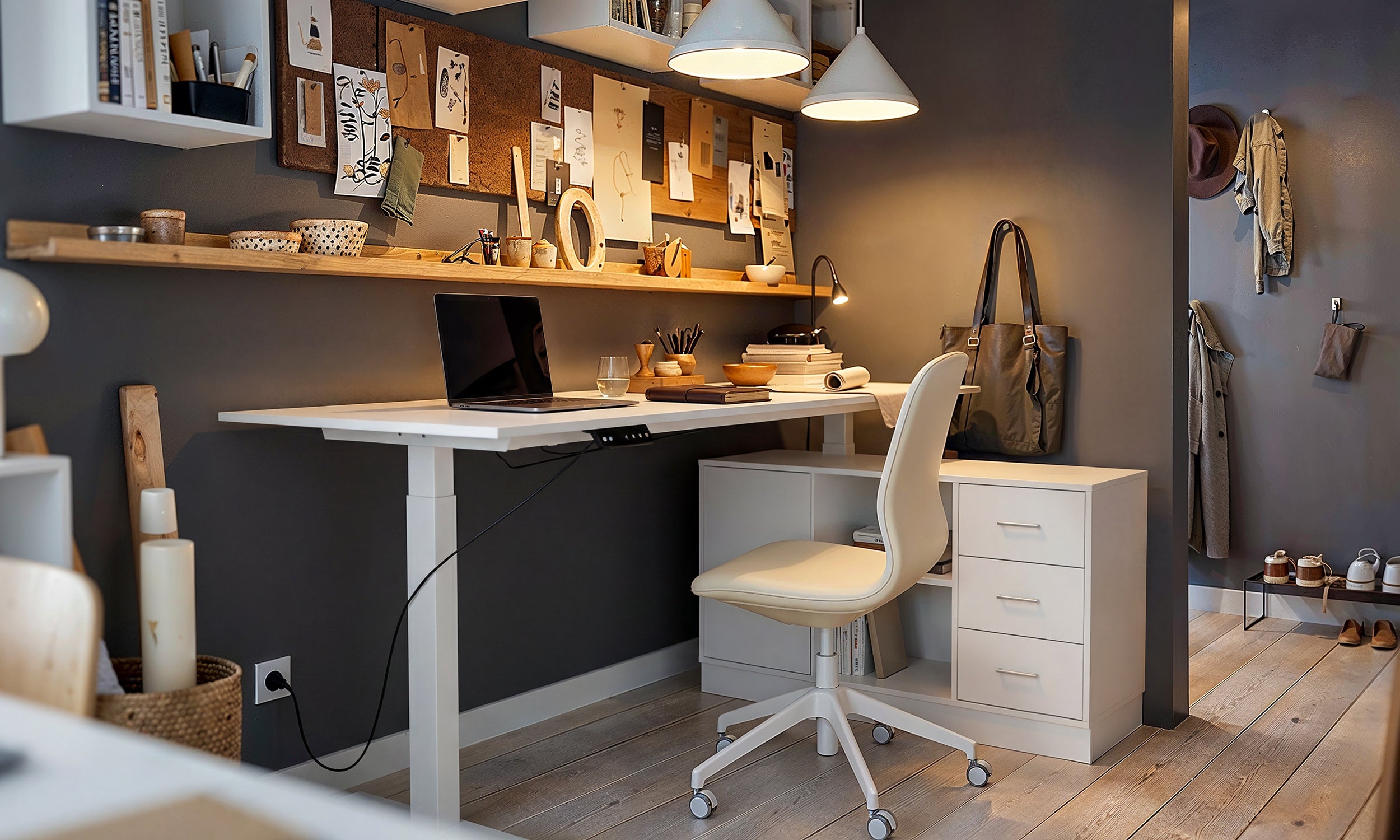
When planning workspace zoning, balancing lower clearance with upper surface organization creates an efficient workstation. Coordinating elevated desk legs alongside structured wall systems, as explored in our desk office guide, ensures that vertical proportions remain balanced across the room.
Material Selection Tiers: Solid Hardwood, Molded Polymers, and Recessed Metal Elevator Blocks
The structural material of desk lift blocks influences both the visual presentation of the office and the mechanical stability of the setup. Matching the material of the riser to the desk frame preserves aesthetic harmony while delivering dependable load support.
Solid Hardwood Blocks
Hardwood risers milled from oak, walnut, or beech blend naturally with traditional wood casegoods and modern solid timber tables. Hardwood provides dense compressive strength, resisting deformation under heavy executive furniture while maintaining a cohesive, intentional appearance in executive suites and home studies.
High-Density Molded Polymers
Reinforced polymer blocks are engineered with interior ribbing and interlocking stacking geometries. These desk raising blocks are lightweight, moisture-resistant, and adaptable, often allowing users to customize elevation incrementally by stacking secure interlocking modular units.
Recessed Cast Metal and Steel Sleeves
Heavy-gauge metal elevator cups and steel sleeves offer a clean, industrial profile that integrates seamlessly with minimalist metal-frame workstations. Metal sleeves encase the bottom perimeter of the leg, providing clean sightlines and high structural rigidity for open-frame computer desks.
Under-Desk Storage Integration: Leveraging Elevated Clearance for Modular Cabinetry
One of the primary functional advantages of utilizing office desk riser blocks is reclaiming underutilized vertical volume beneath the tabletop. Standard casegoods often restrict the height of mobile filing pedestals, rolling drawer carts, and CPU towers, forcing secondary storage to occupy surrounding floor space.
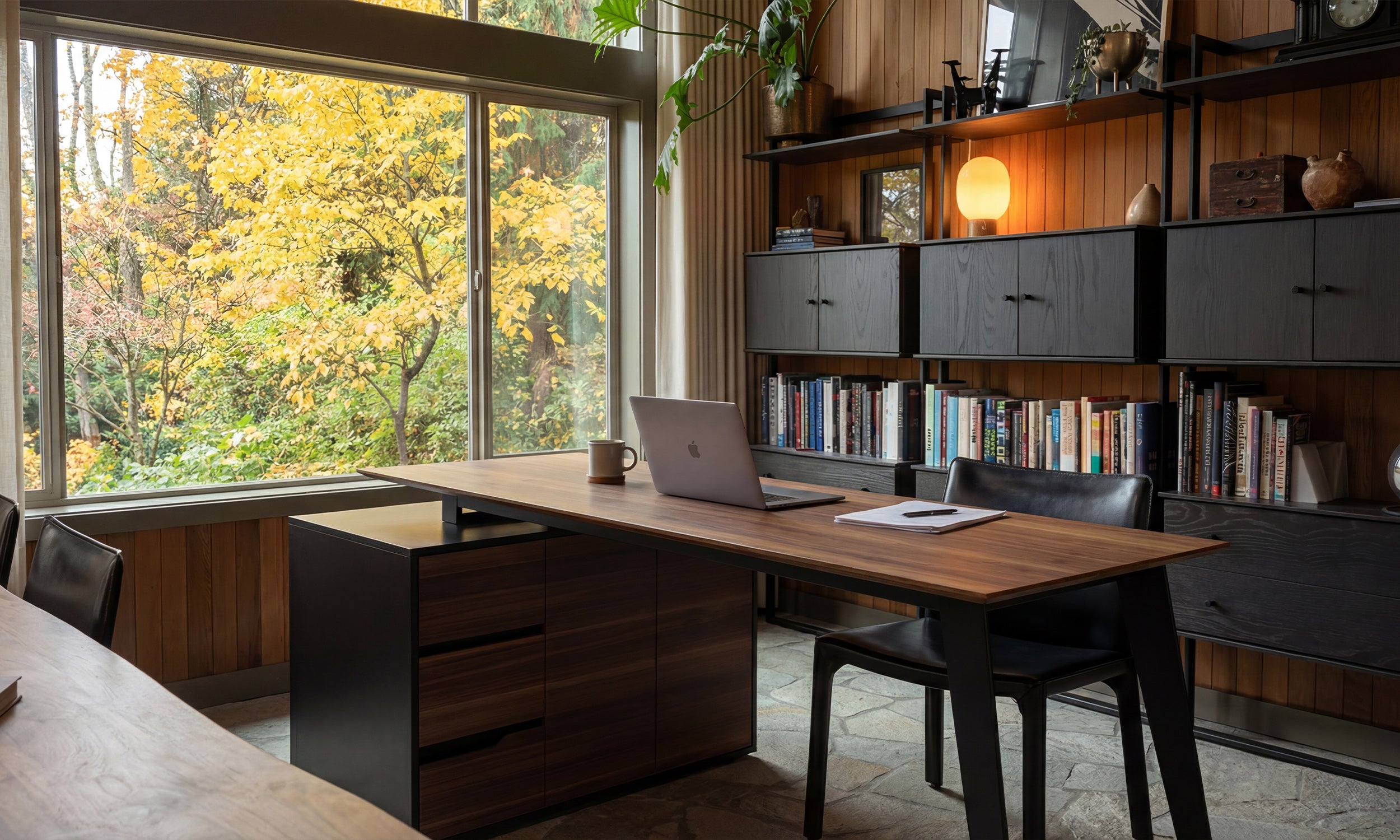
By installing sturdy table riser blocks, homeowners and remote professionals can easily slide multi-tier drawer pedestals directly beneath the desktop apron. For complex setups involving integrated credenzas and hybrid cabinetry, such as an office desk product, understanding vertical clearances ensures that supplementary mobile units glide smoothly without scraping lower edges. In compact rooms or multipurpose studios, integrating enclosed desks or compact armoires, highlighted in our desk office guide, benefits substantially when base clearances are precisely matched to floor-standing modular organizers.
Stability Dynamics and Flooring Pairings: Hardwood, High-Pile Carpet, and Low-Profile Tile
Floor texture and density dictate how elevated furniture interacts with room surfaces. Because lifting a desk inherently raises its center of gravity, selecting blocks with flooring-appropriate base textures is essential for preventing unwanted movement or surface gouging.
- Hardwood and Engineered Flooring: Dense non-marking rubber pads or thick felt underlays applied to the base of the riser prevent scratches and damp vibration caused by typing or equipment operation.
- Low-Profile Commercial Carpeting: Broad-flange flat bottoms distribute weight evenly, avoiding deep permanent indentations in tight carpet weaves.
- High-Pile or Plush Carpeting: Elevated risers require a broader base footprint to mitigate tilt caused by plush carpet padding compressing unevenly under load.
- Tile and Stone Floors: Textured elastomer bases offer superior friction against smooth glazed finishes, preventing horizontal desk drift during active daily use.
Decision Matrix: Desk Riser Blocks Versus Full Dynamic Height Adjustability
While blocks to raise desk setups offer a reliable, cost-effective static solution, evaluating long-term operational needs helps determine whether static blocks or dedicated adjustable mechanisms are most suitable for your space.
Static risers excel when preserving existing heritage desks, solid wood heirloom tables, or specific aesthetic configurations that motorized frames cannot replicate. They provide dependable fixed support without electronic components or mechanical maintenance.
Conversely, users who frequently alternate between seated postures and full standing workflows throughout the day may benefit from purpose-built dynamic options. Investing in a dedicated height desk lift product provides continuous, motorized vertical transitions at the touch of a button. Similarly, multi-functional spaces requiring rapid surface adjustments, such as a specialized desk height product, demonstrate how built-in height versatility supports diverse daily tasks.
By evaluating leg geometries, load materials, and under-desk storage plans, selecting the correct desk elevator blocks ensures a stable, functional, and visually cohesive office environment.


Leave a comment
This site is protected by hCaptcha and the hCaptcha Privacy Policy and Terms of Service apply.