










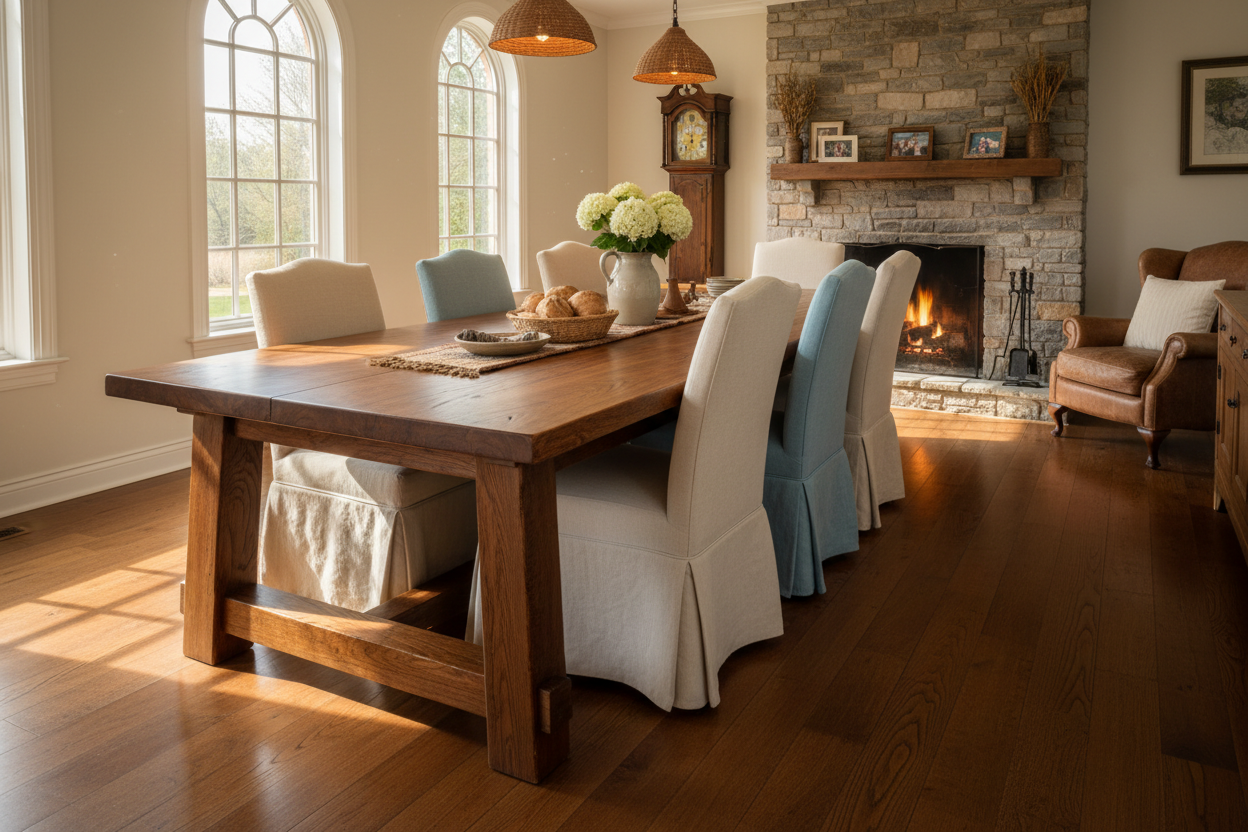
Choosing the right centerpiece for your dining space isn't just about aesthetics; it is an architectural decision that dictates how people move and interact in your home. A substantial table anchors the room, serving as a workstation, a dining spot, and a gathering place. When selecting a dining room table wooden construction remains the gold standard for longevity and character. To make the right choice, you must balance the physical footprint of the table with the visual weight of the wood, ensuring you have at least 36 inches of clearance on all sides for chairs to slide out comfortably.
Why Weight and Material Matter
There is a distinct satisfaction in sitting down at a table that doesn't budge when someone leans on it. I vividly recall the first time I invested in a solid oak piece. It was a nightmare to move into the house—we actually had to take the door off the hinges—but that stability changed the entire feel of the room. Unlike particle board or hollow-core options, heavy wood dining tables bring a sense of permanence. They don't wobble when you cut a steak, and they absorb the chaos of daily life without shifting.
This weight usually indicates solid hardwood construction. Woods like maple, walnut, and oak are dense and resistant to deep scratches. While pine is popular for a rustic look, it is softer and will dent easily. If you are looking for a large dining table wood choice that can survive toddlers and dinner parties alike, hardwoods are the practical route. The density of the wood also affects how the table takes stain and ages over time, often developing a patina that looks better in year ten than it did in year one.
Sizing: The Appeal of the Long Table
Visualizing a long wood dining room table in a showroom is very different from seeing it in your actual space. Showrooms have high ceilings and massive square footage that trick the eye into thinking a 10-foot table is modest. In a residential home, a long wooden table commands attention. It creates a banquet-hall atmosphere that encourages lingering after meals.
For those with open floor plans, a long wood kitchen table can effectively divide the room, separating the culinary workspace from the living area without the need for walls. This layout often works best with a trestle base rather than legs at the four corners. Trestle bases allow you to squeeze in extra chairs along the sides without anyone straddling a table leg, maximizing the utility of a long dining table wood surface during holiday feasts.
Kitchen vs. Formal Dining
The line between a formal dining room and a kitchen eat-in area has blurred, but the requirements for the tables differ slightly. A large wood kitchen table often sees more moisture, heat, and non-food messes like glitter or glue. For these high-traffic zones, the finish is just as important as the wood species. A polyurethane or catalyzed varnish finish will protect the grain from water rings better than a simple oil or wax finish, which might be better suited for a seldom-used formal room.
If you have a narrow breakfast nook or a galley-style layout, a long wooden kitchen table that is narrower than the standard 40 inches—perhaps around 30 to 32 inches wide—can provide seating surface without choking the walkway. These narrower refectory-style tables offer the charm of wood without dominating the floor plan.
Navigating the Market
When you start looking for wood kitchen tables for sale, you will encounter a wide range of price points. The disparity usually comes down to three factors: wood species, joinery, and origin. Mass-produced tables often use veneers over MDF, which looks like a large wood table from a distance but cannot be refinished if it gets damaged. True solid wood tables are an investment. You are paying for the ability to sand that table down in twenty years and make it look brand new again.
Inspect the underside of the table. A quality piece will have allowances for wood movement. Wood expands and contracts with humidity; if the top is screwed tightly to the apron without room to move, it will eventually crack. Look for "buttons" or metal clips that hold the top down while allowing it to breathe. This engineering is crucial for any large wood table, as the wider the planks, the more significant the expansion and contraction will be.
Styling and Aesthetics
The style of the wood sets the tone for the decor. A raw, unfinished look fits perfectly in a farmhouse or industrial setting, while a highly polished mahogany or cherry wood leans traditional. Recently, the trend has shifted toward matte finishes that highlight the natural grain rather than hiding it under high gloss. This aesthetic works particularly well for a long wood kitchen table, making it feel less like a museum piece and more like a functional part of the home.
Don't be afraid to mix and match chairs. A heavy, substantial table can look fantastic with lighter, modern chairs, creating a contrast that keeps the room from feeling stuffy. Bench seating is another excellent option for a long wooden kitchen table, as it allows you to tuck the seating completely under the table when not in use, opening up the walkways.
Final Thoughts on Selection
Buying a table is a tactile experience. Run your hand across the surface. Lean on it. Check the clearance for your legs. Whether you choose a refined walnut piece or a rustic reclaimed oak slab, the goal is to find a surface that invites connection. A well-chosen table isn't just furniture; it is the backdrop for your life's most important conversations.
Frequently Asked Questions
How much space do I need for a long dining table?
You need a minimum of 36 inches between the edge of the table and the nearest wall or piece of furniture. Ideally, 42 to 48 inches is better, as it allows people to walk behind seated guests without having to squeeze through or ask them to scoot in.
What is the most durable wood for a kitchen table?
Hardwoods like Maple, Oak, and Hickory are among the most durable options for kitchen tables. They score high on the Janka hardness scale, meaning they resist dents and scratches much better than softwoods like Pine or Alder.
Can I mix wood tones between my table and my floors?
Yes, mixing wood tones adds depth and prevents the room from looking flat. A good rule of thumb is to ensure the undertones (warm, cool, or neutral) complement each other, or use a rug to create a visual break between the table legs and the flooring.


Leave a comment
This site is protected by hCaptcha and the hCaptcha Privacy Policy and Terms of Service apply.