










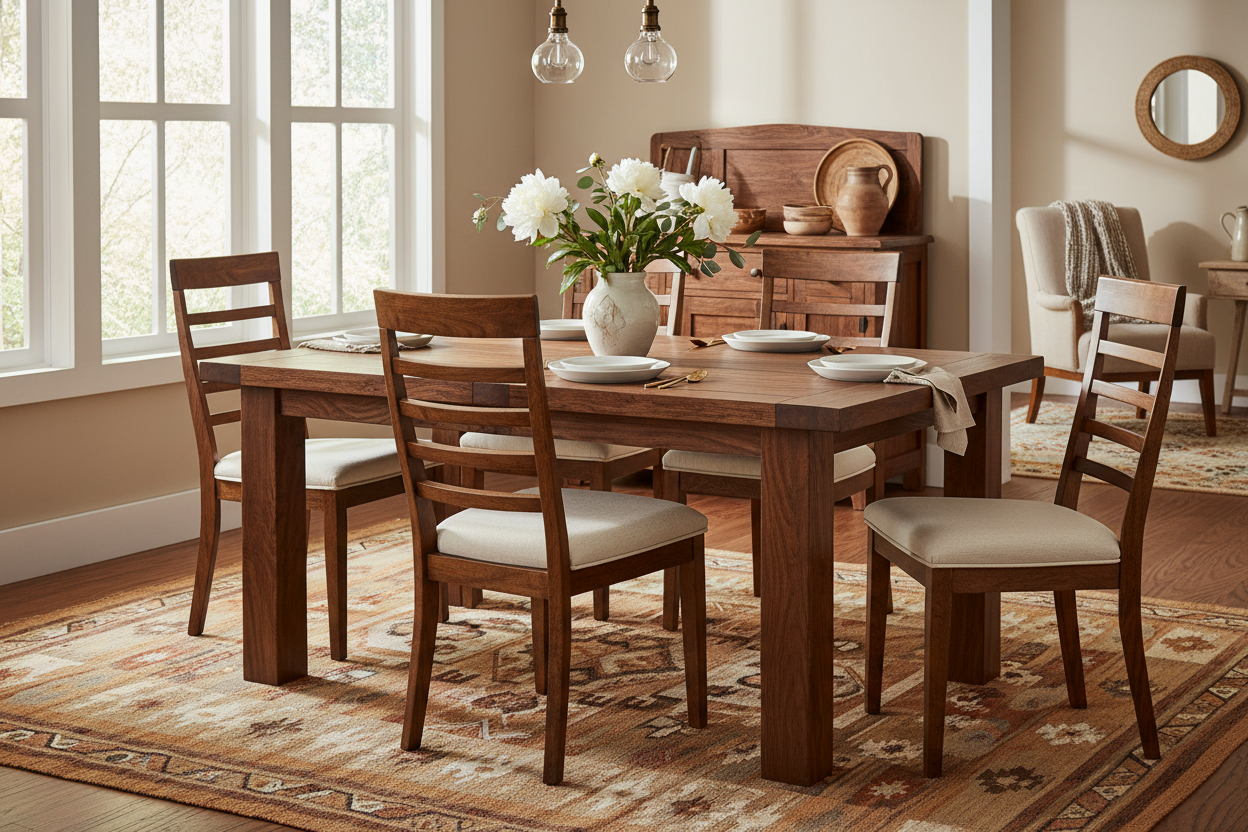
Choosing the right furniture for your gathering space isn't just about aesthetics; it is about finding a piece that can withstand the daily rhythm of life. A high-quality wood dining room table and chairs should anchor your home, serving as the backdrop for homework sessions, holiday feasts, and morning coffee. To make a choice you won't regret in five years, prioritize kiln-dried hardwoods like oak, maple, or walnut, and look for construction details like mortise-and-tenon joinery rather than simple screws or glue. These elements ensure stability and longevity, separating heirloom pieces from disposable furniture.
Understanding Wood Types and Durability
Not all wood is created equal. I learned this the hard way with my first apartment purchase. I bought a soft pine table because it was affordable and had a charming rustic look. Within six months, it was a map of dents from dropped forks and scratches from sliding plates. While pine has its place, it is often too soft for a high-traffic surface unless you specifically want that distressed character.
For long-term resilience, hardwoods are the superior choice for dining room sets wood manufacturers offer. Maple is incredibly hard and resists scratches well, making it ideal for families with young children. Oak is another powerhouse; its prominent grain pattern can actually help hide minor wear and tear that accumulates over decades. Walnut offers a richer, darker aesthetic that feels more formal, though it is slightly softer than maple. Understanding the Janka hardness scale—a measurement of a wood's resistance to denting—can save you a lot of heartache. If you want a table that looks pristine for years, aim for woods higher on this scale.
Solid Wood vs. Veneer
There is a common misconception that veneer is always synonymous with low quality. That is not necessarily true. High-end veneers applied over stable core materials can prevent the warping and cracking that sometimes plagues solid wood in fluctuating humidity. However, if you are looking for a table you can refinish twenty years down the road, solid wood is the only option. A solid wood dining room table with chairs allows you to sand down the surface and re-stain it if tastes change or if the finish wears through. With veneer, once you sand through that thin top layer, the piece is effectively ruined.
Pairing the Right Chairs
The table is the star, but the chairs determine how long your guests will want to stay. When shopping for a dining table with wooden chairs, comfort must balance with style. Wooden chairs are easier to clean—a quick wipe removes spillages—but they can be hard on the body during long dinner parties. If you love the look of an all-wood set, consider the seat contour. A scooped seat, often called a saddle seat, distributes weight much better than a flat plank.
Mixing and matching is another approach that has gained traction. You don't always need to buy a pre-packaged suite. Pairing a heavy farmhouse table with lighter, spindle-back chairs can keep a room from feeling too heavy. Conversely, if you have a sleek, mid-century modern table, pairing it with chairs that feature organic curves can soften the architectural lines. Just ensure the seat height is compatible with the table apron; you generally want about 12 inches of clearance between the seat and the tabletop for adequate legroom.
Sizing for Your Space
A beautiful table that doesn't fit the room is a functional nightmare. You need at least 36 inches of clearance on all sides of the table to allow people to push their chairs back and walk behind seated guests. If your space is tight, round tables are often more forgiving than rectangular ones because they lack sharp corners that interrupt the flow of traffic.
For more casual areas, wood kitchen dining sets are often designed with smaller footprints in mind. These might feature drop-leaves or butterfly extensions that allow the table to grow only when necessary. I once lived in a narrow row house where a drop-leaf table was the only way we could have a sit-down dinner. Most days it was a console against the wall; on Sundays, it was a dining table for six. Versatility is a key factor if your square footage is limited.
Finishes and Maintenance
The finish on your wood dining room table and chairs dictates how you will interact with it daily. An oil finish provides a natural, matte look that brings out the depth of the grain, but it requires maintenance. You will likely need to re-oil it once or twice a year to keep the wood nourished and water-resistant. Lacquer or polyurethane finishes create a hard shell on top of the wood. This is practically zero-maintenance and highly resistant to stains, but it can look a bit more "plastic" and is harder to repair if chipped.
Regardless of the finish, water and heat are the enemies. Always use coasters and trivets. I have seen beautiful antique tables ruined by a hot pizza box placed directly on the wood, leaving a cloudy white heat mark that is difficult to remove. Treat the wood like a living material; keep it away from direct heat sources like radiators and try to avoid placing it in direct sunlight, which can bleach the color unevenly over time.
Styling Your Wood Set
Wood is a neutral foundation. A heavy, dark wood dining room table with chairs can look traditional with a Persian rug and crystal chandelier, or it can look industrial with a bare floor and metal lighting fixtures. The versatility is unmatched. If you feel your room is looking too brown or heavy, break it up with textiles. A linen runner, colorful placemats, or upholstered seat cushions can introduce color and texture without hiding the beauty of the wood.
Ultimately, purchasing a wood dining set is an investment in future memories. It is where you will likely celebrate birthdays, announce big news, and solve world problems over coffee. By focusing on hardwood construction, appropriate sizing, and a finish that matches your lifestyle, you ensure that your table remains a centerpiece rather than becoming a burden.
Frequently Asked Questions
How do I fix white heat rings on a wood table?
White rings indicate moisture trapped in the finish, not damage to the wood itself. You can often remove them by gently ironing a clean towel placed over the spot on a low, non-steam setting, or by massaging the area with a mixture of baking soda and non-gel toothpaste, though you should test a hidden area first.
Can I mix different wood tones in the dining room?
Yes, mixing wood tones creates a layered, designer look, provided the undertones match. Try to keep warm woods (like cherry or mahogany) with other warm woods, and cool woods (like ash or weathered oak) together, using a rug to bridge the visual gap between the floor and the furniture.
What is the best way to clean a wood dining table daily?
Avoid harsh chemical cleaners or vinegar, which can dull the finish over time. A soft, slightly damp microfiber cloth is usually sufficient for daily wiping, followed immediately by a dry cloth to prevent moisture from sitting on the surface.


Leave a comment
This site is protected by hCaptcha and the hCaptcha Privacy Policy and Terms of Service apply.