










The Ergonomic and Spatial Architecture of the L-Shaped Standing Desk
Modern remote work and intensive digital workflows demand more than a single rectangular desktop. The l-shaped standing desk has emerged as a cornerstone of high-efficiency workspace design, uniting the generous surface area of a corner layout with the dynamic flexibility of active height adjustment. By establishing two distinct functional surfaces, an adjustable desk l shape configuration separates primary computing tasks from secondary reference zones, document review areas, or auxiliary hardware hubs.
In a standard rectangular setup, users frequently shuffle accessories across a single horizontal plane, which can lead to cluttered work surfaces and awkward posture. An l-shaped sit stand desk addresses this by placing equipment within natural horizontal reach zones. The primary wing accommodates your main display monitors, input devices, and central focus area, while the return wing provides dedicated space for drawing tablets, printouts, audio interfaces, or peripheral computers. Transitioning between seated and standing postures throughout the day encourages movement and variation, helping professionals avoid prolonged static sitting while keeping expansive project surfaces accessible.
Whether positioned inside an architectural corner or oriented outward as a room-defining peninsula, a thoughtfully chosen standing l desk anchors the room with purpose, utility, and refined visual balance.
Dimensional Tiers and Return Wing Configurations
Selecting the right height adjustable l shaped desk starts with understanding dimensional scale, desktop depth, and room flow. Corner workspaces range from space-conscious units designed for bedroom alcoves to expansive multi-section executive stations.
- Compact Corner Tiers: Designed for tighter floor plans, a small l shaped standing desk pairs a streamlined primary desk with a short return. This footprint provides essential dual-surface functionality without encroaching on surrounding walkways or entryways.
- Mid-Range Workstations: Suitable for dedicated home offices, these balanced platforms provide ample primary desktop depth for standard multi-monitor arms, leaving the return wing open for side tasks and desk lighting. When planning display setups, evaluating desktop surface depth and auxiliary display elevation helps ensure comfortable viewing angles and ample clearance for keyboards and writing pads.
- Large Executive Formats: A large l shaped standing desk offers generous surface area across both wings, accommodating multiple heavy displays, desktop computer towers, document trays, and analog drafting tools simultaneously.
Another crucial layout factor is wing orientation. While some designs feature a fixed left-hand or right-hand return, a reversible l shape standing desk allows you to install the return wing on either side during assembly. Reversible frames offer long-term versatility, adapting effortlessly if you reconfigure your room, move to a new home, or shift your primary power supply orientation.
Lifting Mechanics, Multi-Leg Synchronization, and Structural Frame Stability
The structural demands of an l-shaped electric standing desk differ significantly from standard two-leg desks. Because the desktop spans two perpendicular axes, the frame must support asymmetrical weight distribution while maintaining smooth, level vertical travel.
Most robust corner sit-stand systems employ multi-column lifting systems where each telescopic leg contains a dedicated motorized drive. A centralized electronic control box synchronizes these lifting columns, ensuring the primary surface and return wing raise and lower in perfect harmony. Incorporating an electric lift system with programmable height presets enables seamless transitions between customized sitting and standing elevations at the touch of a button, preventing the micro-distractions of manual adjustments.
Stability at full standing height depends on heavy-duty steel framing, reinforced corner brackets, and solid cross-support members. As an electric l shaped desk elevates, lateral sway and torsional stress increase. Quality frame designs use precision telescoping column tolerances, wide under-desk mounting plates, and adjustable leveling glides on every foot to ensure a steady, wobble-free foundation across hardwood, tile, or carpeted floors.
Desktop Surface Materials, Core Construction, and Aesthetic Finishes
The desktop surface of an l shaped corner standing desk determines not only its visual presence in your room but also its durability, structural rigidity, and weight distribution across the motorized columns.
High-density engineered wood cores layered with high-pressure laminate or scratch-resistant melamine offer a dependable, low-maintenance foundation. These materials resist warping under fluctuating humidity levels, clean easily, and provide uniform density for secure under-desk mounting of cable trays and power strips. For those who appreciate classic architectural warmth, a solid wood l-shaped standing desk or natural wood veneer brings distinctive grain character, organic texture, and substantial tactile presence to an office.
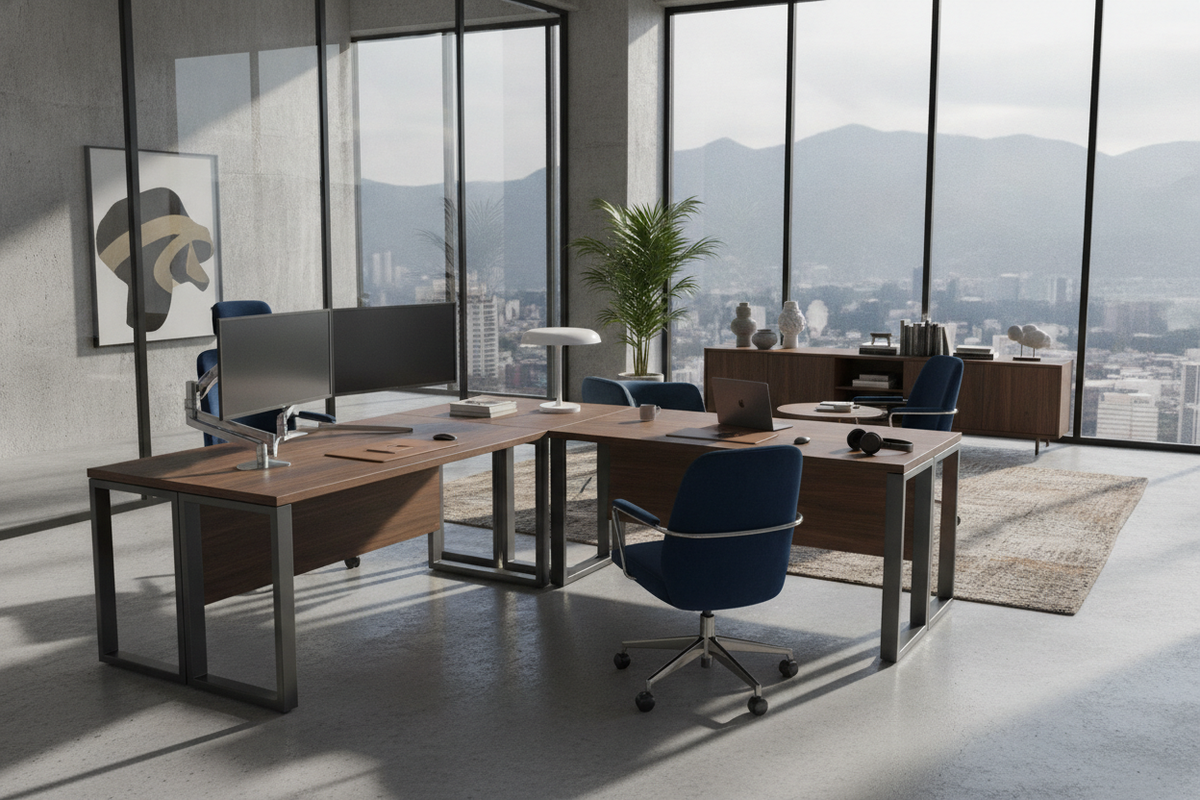
Aesthetic coordination is equally vital when integrating a large corner desk into an existing interior palette. Pair warm timber tones with dark steel legs when contrasting natural wood finishes with sleek dark furniture frames across the wider room, or select all-white surfaces and brushed metallic bases to keep a smaller room feeling open, light, and airy.
Dynamic Cable Management and Storage Architecture for Corner Workstations
Managing power cords, display cables, and data connections on a height-adjustable corner desk requires thoughtful planning. Because the entire desktop surface travels vertically, wiring must accommodate elevation changes without pulling taut or tangling around structural frame members.
- Under-Desk Cable Trays: Mount wide horizontal raceways along the underside of both the main desktop and the return wing. These channels keep bulky power bricks, surge protectors, and extra cord lengths off the floor.
- Articulated Cable Spines: A flexible, floor-to-desktop cable vertebra neatly bundles power leads from the wall outlet up to the moving frame, shielding cords and preventing pinch points during movement.
- Decoupled Mobile Storage: Rather than attaching heavy drawers directly to the lifting frame, pair your l-shaped desk that raises and lowers with rolling under-desk filing pedestals or freestanding credenzas. This approach preserves motor longevity, avoids knee obstruction, and keeps frequently referenced materials within easy reach.
For extensive book collections, storage boxes, and office hardware, coordinating with adjacent modular adjustable shelving storage solutions ensures your overall office remains organized and serene while keeping the moving desk frame free from excess static weight.
Room Fit Blueprint: Layout Strategies, Wall Clearance, and Assembly Best Practices
Proper spatial planning ensures your sit stand l shaped desk integrates seamlessly into your daily routine without restricting room traffic or risking collisions with walls and nearby furniture.
1. Perimeter Clearance and Wall Buffers
When positioning an L-shaped desk directly into a room corner, maintain a slight perimeter buffer between the desktop edges and the walls. Baseboard trim, window sills, low-hanging wall art, and electrical faceplates can create accidental catch points when the desk raises or lowers. Leaving a modest gap allows unobstructed vertical movement and provides clear pathways for monitor arm clamps and down-dropped power lines.
2. Peninsula and Open-Room Placement
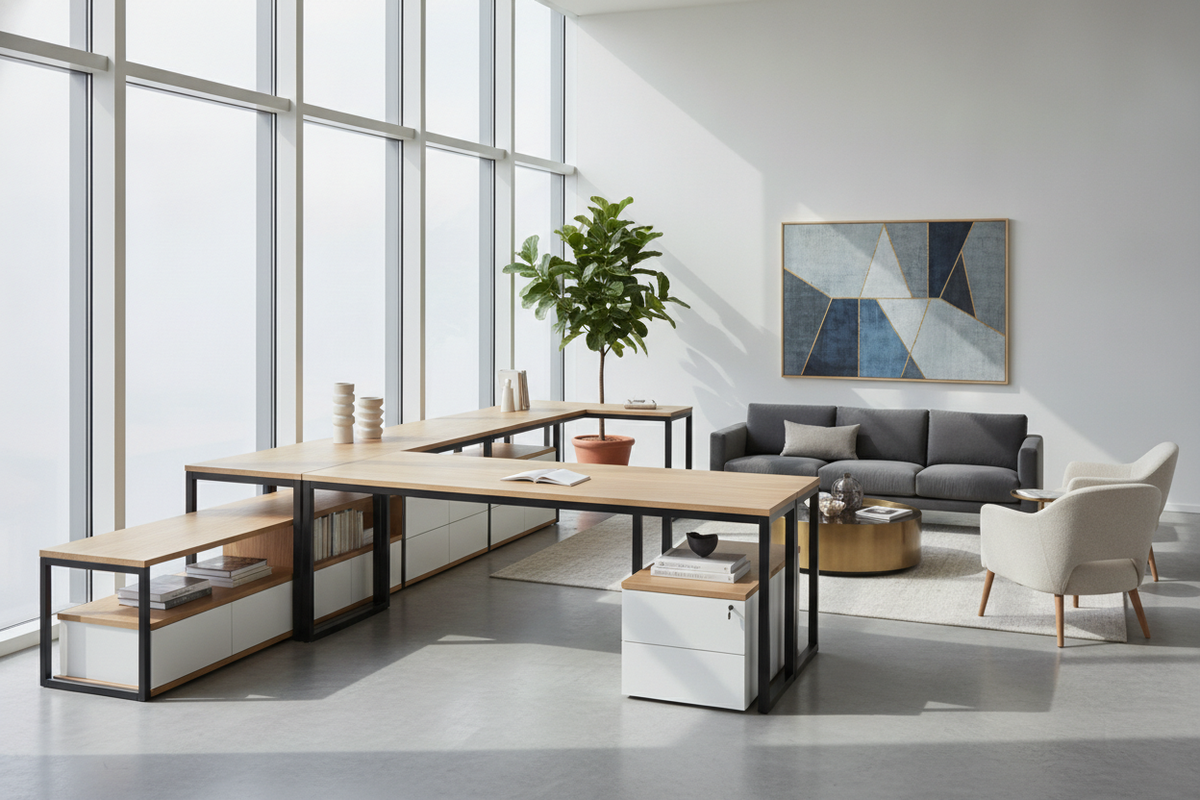
If you prefer not to face a corner wall, consider orienting the primary desk facing into the room while anchoring the return wing along a side wall. This peninsula layout creates an inviting executive command station that defines the workspace within an open-concept living area or shared home library.
3. Assembly and Calibration Sequence
Assembling a multi-piece l-shaped rising desk requires systematic care. Lay down a soft blanket to protect desktop surfaces during frame attachment. Fasten all corner connection plates loosely before securing mounting screws, ensuring tight, flush seam alignment between the main top and the return section. Once upright, level all adjustable feet thoroughly before running an initial reset cycle on the motor controller to calibrate synchronized leg travel across the entire frame.

Leave a comment
This site is protected by hCaptcha and the hCaptcha Privacy Policy and Terms of Service apply.