










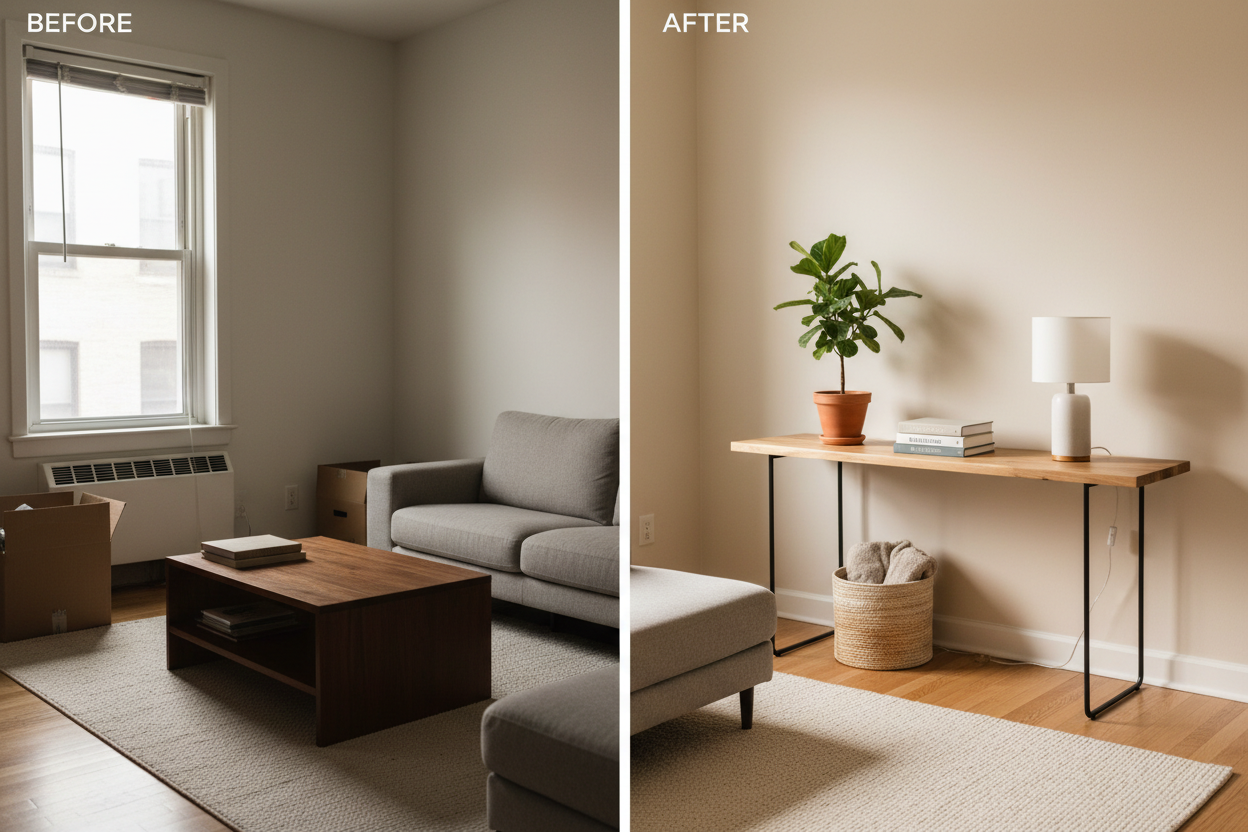
Living in a 450-square-foot studio taught me that furniture doesn't need to be bulky to be functional. A cheap skinny table became my secret weapon for creating usable surfaces without sacrificing precious floor space. These narrow pieces of furniture have completely changed how I think about small-space living, and they might do the same for you.
The beauty of a skinny short table lies in its versatility. Unlike traditional furniture that demands significant real estate, these slim profiles slip into spaces you didn't even know existed. That awkward gap behind your sofa? Perfect for a narrow console. The dead zone in your hallway? An ideal spot for a thin entry table. I discovered this after months of frustration trying to fit standard-sized furniture into my apartment, constantly rearranging and never quite getting it right.
What Makes a Table "Skinny" Anyway?
Most furniture retailers consider a table skinny when its depth measures 12 inches or less. Compare this to standard console tables that typically run 15-18 inches deep, or dining tables that can exceed 36 inches. A short thin table combines narrow depth with lower height, usually under 30 inches tall, making it perfect for tucking under windows or creating layered spaces.
The dimensions matter more than you might think. I learned this the hard way when I ordered what I thought was a slim table online, only to have it arrive and still feel too bulky for my entryway. Now I always measure twice: depth, width, and height. The sweet spot for most small spaces is 8-10 inches deep, 36-48 inches wide, and 28-32 inches tall.
Where These Tables Shine
Behind a couch is probably the most popular placement, and for good reason. A skinny short table creates a landing spot for drinks, phones, and remote controls without pushing your sofa away from the wall. This setup saved me about eight inches of floor space compared to using a traditional side table.
Entryways and hallways benefit enormously from narrow tables. You get a surface for keys, mail, and decorative items without creating an obstacle course. I positioned a cheap skinny table in my 36-inch-wide hallway, and there's still plenty of room to walk past comfortably. Before this, I had nothing there because everything else felt too intrusive.
Bedroom solutions also come to mind. A short thin table works beautifully as a nightstand alternative, especially in rooms where traditional bedside tables would block closet doors or create awkward traffic patterns. The narrow profile means you can slide it partially under the bed frame if needed, pulling it out only when you want the surface area.
Materials and Construction
Budget-friendly options typically feature engineered wood or MDF with laminate finishes. These materials keep costs down while providing adequate durability for light use. I've had a particle board skinny table for three years now, and it's held up perfectly well for holding lamps, books, and decorative objects.
Metal frames with wood or glass tops offer a more industrial aesthetic and often provide better weight capacity. The open frame design also creates visual breathing room, which helps small spaces feel less cluttered. These usually cost more but tend to last longer and support heavier items.
Solid wood construction represents the premium tier. While you'll pay more upfront, these tables develop character over time and can handle daily wear better than cheaper alternatives. For a cheap skinny table that doesn't sacrifice quality entirely, look for acacia or rubberwood options from budget furniture retailers.
Shopping Smart on a Budget
Big-box retailers like Target, Walmart, and IKEA stock numerous affordable narrow table options. I found my current favorite—a 10-inch-deep console table—at Target for under $60 during a seasonal clearance. The key is shopping during transition periods when stores make room for new inventory.
Online marketplaces offer even more variety, though shipping costs can eat into your savings. Always factor in delivery fees when comparing prices. I've found that tables under 40 inches wide often qualify for free shipping, while longer pieces might add $30-50 to your total.
Thrift stores and estate sales occasionally yield vintage skinny tables with far better construction than modern budget pieces. Last summer, I spotted a mid-century narrow table at an estate sale for $25. It needed minor refinishing, but the solid wood construction would have cost $200+ new.
Assembly Considerations
Most inexpensive narrow tables require assembly, which ranges from "attach four legs" to "decipher cryptic diagrams for an hour." Read reviews specifically mentioning assembly difficulty before purchasing. Tables with fewer parts and simpler designs typically take 15-20 minutes to put together, while complex pieces with drawers or shelves might require 45 minutes and a second person.
I've assembled probably a dozen flat-pack tables at this point, and my advice is simple: lay out all parts before starting, hand-tighten everything initially, then go back and fully tighten once you're sure everything aligns correctly. This approach has saved me from several frustrating do-overs.
Styling Your Narrow Space
The limited depth of a skinny short table means you need to think vertically. Tall, narrow decorative items work better than wide, squat ones. A slim vase with branches, a tall candle, or a vertical picture frame creates visual interest without overwhelming the small surface.
Layering also helps maximize the space. I use a small tray to corral everyday items like keys and sunglasses, which keeps the table looking intentional rather than cluttered. Behind the tray, I lean a piece of artwork or a mirror to add depth without requiring additional surface area.
Lighting transforms a short thin table from purely functional to a design feature. A slim lamp adds ambiance and makes the table feel like a deliberate choice rather than a space-saving compromise. Battery-operated LED options work great if you don't have nearby outlets.
Common Mistakes to Avoid
Overloading a cheap skinny table is the fastest way to compromise its stability. These pieces aren't designed to support heavy objects or withstand leaning pressure. I learned this when my first budget console table started wobbling after I stacked too many hardcover books on it. Now I distribute weight carefully and anchor taller pieces to the wall when possible.
Ignoring the room's proportions can make a narrow table look out of place. In a room with heavy, substantial furniture, a very thin table might appear flimsy or temporary. Conversely, in a minimalist space, even a skinny table can provide the right visual weight. Consider your existing furniture before committing to a purchase.
Forgetting about wall clearance causes problems too. If you're placing a table against a wall with baseboards, measure from the baseboard out, not from the wall itself. I once ordered a table assuming I had 12 inches of clearance, only to realize the 2-inch baseboard reduced my actual space to 10 inches.
Real-World Durability
Budget tables won't last forever, but with reasonable care, they can serve you well for several years. My cheapest purchase—a $40 particle board table—has survived three moves and four years of daily use. The finish shows some wear, but it remains structurally sound.
The main vulnerability is moisture damage. Engineered wood swells and warps when exposed to water, so wipe up spills immediately and avoid placing drinks directly on the surface. Coasters and placemats aren't just decorative—they're essential protection for inexpensive furniture.
Tightening hardware periodically extends the life of any assembled furniture. I check and tighten the bolts on my tables every few months, which takes maybe five minutes but prevents the wobbling that leads to joint failure.
FAQ
What's the difference between a console table and a skinny table?
Console tables are a specific furniture category, typically 30-36 inches tall and designed for entryways or behind sofas. A skinny table simply refers to any table with a narrow depth, usually 12 inches or less. All narrow console tables are skinny tables, but not all skinny tables are console tables—the term can include coffee tables, side tables, or desks with slim profiles.
Can a short thin table work as a desk?
It depends on your needs. For laptop work or writing, a narrow table can function adequately if it's at least 24 inches wide and positioned at proper desk height (28-30 inches). However, if you need space for monitors, keyboards, and other equipment, the limited depth becomes restrictive. I've used a 10-inch-deep table for occasional laptop work, but it wouldn't suit full-time desk use.
How do I keep a lightweight skinny table stable?
Anchor taller tables to the wall using furniture straps or L-brackets, especially if you have children or pets. Place heavier items on lower shelves if your table has them, which lowers the center of gravity. Avoid placing tables on thick rugs, which can create instability—if you must use a rug, choose low-pile options. Adding felt pads to the feet can also help grip smooth floors better.


Leave a comment
This site is protected by hCaptcha and the hCaptcha Privacy Policy and Terms of Service apply.