










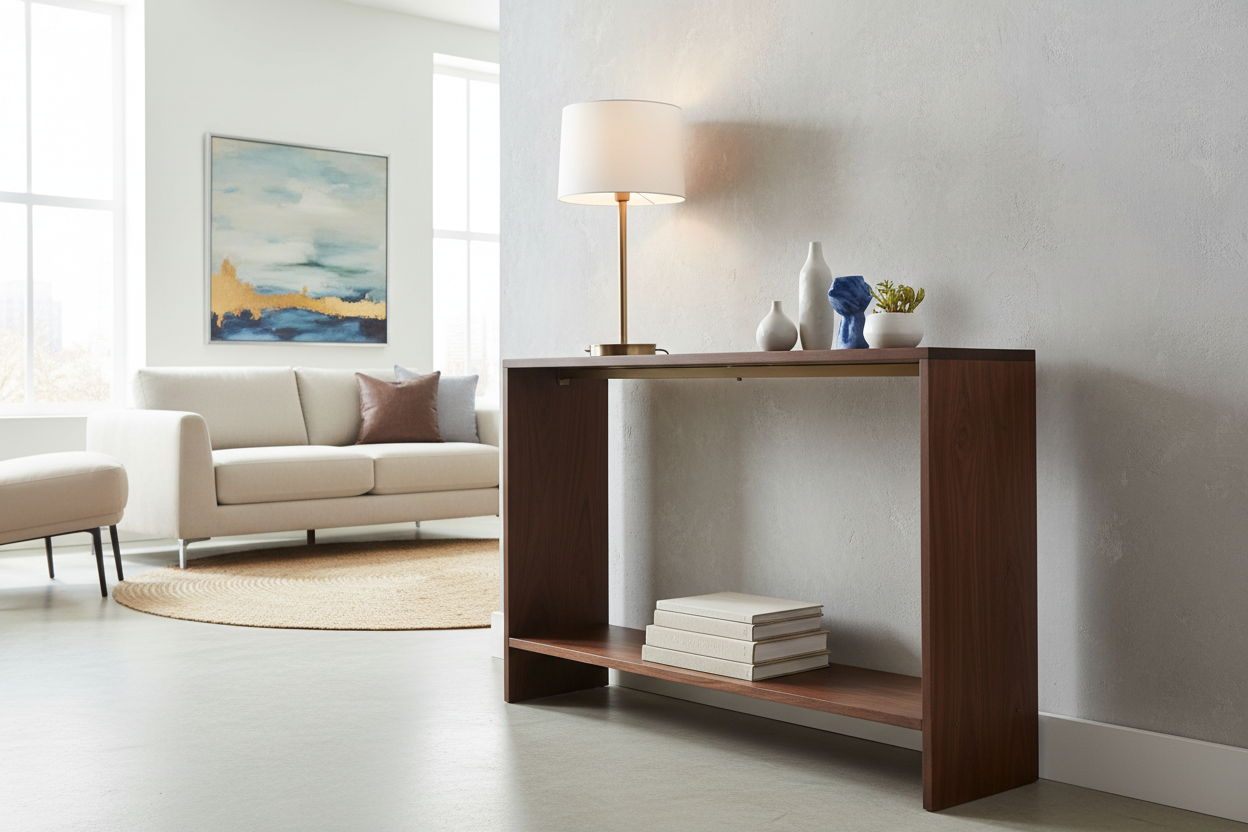
Living in a home where every inch counts has taught me something valuable: furniture should work for your space, not against it. A narrow side table can be the difference between a cluttered room and a functional, stylish living area. Whether you're trying to squeeze a table between your couch and wall or need a slim surface for a lamp and coffee cup, finding the right skinny side table transforms how you use your space.
The beauty of a thin side table lies in its ability to provide surface area without eating up your floor space. These pieces typically measure 10-15 inches in depth, compared to standard side tables that can extend 20-24 inches into your room. That might not sound like much, but those extra inches make a huge difference in how you move through your living room.
Why Your Living Room Needs a Narrow Side Table
Most apartments and homes built in the last few decades have smaller living rooms than their mid-century counterparts. Yet we still need places to set down drinks, phones, books, and remote controls. A narrow side table for living room use solves this problem elegantly. You get the functionality of a traditional side table without sacrificing precious walking space or making your room feel cramped.
I learned this lesson the hard way after buying a beautiful but oversized side table for my first apartment. It looked perfect in the showroom but dominated my small living room. After stubbing my toe on it for the third time in a week, I switched to a skinny side table for couch placement. The difference was immediate—I could actually walk past my sofa without turning sideways.
Understanding Different Styles of Slim Side Tables
Not all narrow side tables are created equal. A narrow side table for sofa placement might look different from a narrow lamp table designed to hold lighting and decorative items. The key is matching the table's purpose to your needs.
Narrow wood side table designs remain popular because wood adds warmth without bulk. A wood narrow side table in walnut or oak can anchor a room while maintaining a light footprint. For modern spaces, a narrow modern side table with clean lines and metal accents complements contemporary furniture beautifully.
Height matters too. A short narrow side table works well beside low-profile sofas or as a plant stand, while taller versions align better with standard couch arm heights. Most narrow side table couch pairings work best when the table sits at or slightly below the arm height of your sofa.
Storage Solutions in Compact Designs
One concern people have about switching to a thin side table for couch use is losing storage space. Fortunately, many narrow side tables with storage incorporate shelves, drawers, or lower tiers. A narrow storage side table might feature an open shelf perfect for magazines or books, while a slim side table with storage could include a small drawer for remotes and chargers.
I currently use a narrow side table with shelf design in my living room. The top holds my reading lamp and current book, while the lower shelf stores a basket with throw blankets. This vertical storage approach maximizes function without expanding the table's footprint.
Measuring Your Space for the Perfect Fit
Before shopping for a skinny sofa side table, measure your available space carefully. Start with the gap between your couch and the nearest wall or obstacle. Subtract at least 2-3 inches to ensure comfortable movement around the table. This gives you your maximum depth.
For very tight spaces, consider an extra narrow side table or even a super narrow side table measuring just 8-10 inches deep. These very narrow side table options work beautifully in hallways, behind sofas, or in studio apartments where every square foot counts.
Length is another consideration. A long narrow side table can serve multiple purposes, acting as both a side table and a display surface for photos or plants. Some long skinny side table designs extend 40-50 inches, making them ideal for placement behind a sofa or along a wall.
Material Choices That Make a Difference
The material of your narrow small table affects both its durability and visual weight. A skinny wood side table in light-colored oak or ash feels airy and Scandinavian. Darker woods like mahogany or espresso create a more traditional, grounded look.
Metal and glass combinations work well for modern slim side table designs. The transparency of glass makes even a standard-depth table feel less imposing, while metal frames in gold, black, or chrome add architectural interest. For industrial or farmhouse styles, reclaimed wood with metal accents creates character without bulk.
Matching Your Existing Furniture
Your thin sofa side table doesn't need to match your other furniture exactly, but it should complement the overall aesthetic. In eclectic spaces, a slender side table in an unexpected finish can add visual interest. In more cohesive rooms, choosing a narrow occasional table that echoes existing wood tones or metal finishes creates harmony.
The side table skinny profile also makes it easier to mix styles. Because these pieces take up less visual space, you can be bolder with design choices. A very skinny side table with unique details won't overwhelm a small room the way a larger statement piece might.
Practical Placement Tips
A skinny couch side table works best when positioned for easy reach from your primary seating position. For a narrow side table for couch placement, align it with the middle or end of your sofa where you sit most often. This ensures you can comfortably set down items without stretching or leaning.
In multipurpose rooms, a narrow long side table behind a sofa can define zones while providing surface space. This works especially well in open-plan living areas where you want subtle separation between the living and dining areas.
Corner spaces benefit from small narrow side table designs. A triangular or wedge-shaped table maximizes an otherwise awkward spot, while a very thin side table can fit in the narrow gap between a chair and wall.
Styling Your Narrow Side Table
The limited surface area of a small slim side table requires thoughtful styling. Choose one or two key items rather than cluttering the space. A lamp and a small plant work beautifully. Or try a stack of books topped with a decorative object.
For a slim side table for living room use, consider the table's purpose. If it's primarily functional—holding your coffee cup and phone while you watch TV—keep styling minimal. A coaster and perhaps a small tray to corral items might be all you need.
Super skinny end table designs offer less surface area but can still make a statement. A single sculptural lamp or a tall, slender vase with branches creates vertical interest without overwhelming the narrow footprint.
Shopping Considerations for Long-Term Satisfaction
Quality matters more than you might think with a slim sofa side table. Because these pieces are narrower, they can be less stable if poorly constructed. Look for solid construction with reinforced joints. A skinny small side table should feel sturdy, not wobbly, when you set items on it.
For a narrow side table wood construction, check that shelves and tops are thick enough to support weight without sagging. Particle board can work for very light use, but solid wood or quality plywood lasts longer and handles daily use better.
Consider your lifestyle too. Homes with children or pets benefit from a narrow low side table that's harder to tip. A super narrow side table might work perfectly in an adult-only space but could be risky with active kids running around.
Budget-Friendly Options
You don't need to spend a fortune on a thin long side table. Many affordable options exist, especially if you're willing to assemble furniture yourself. Look for sales at major furniture retailers, or consider secondhand shops where you might find a solid wood narrow side table at a fraction of retail price.
DIY enthusiasts can create a custom narrow side table for sofa use with basic woodworking skills. Simple designs using boards and hairpin legs create a modern slim side table for under $50 in materials.
Making the Most of Small Spaces
A sofa side table for small spaces does more than hold your coffee cup—it can make your entire room feel more organized and intentional. The right thin couch side table creates a landing spot for everyday items, reducing clutter on coffee tables and floors.
In studio apartments or small condos, multiple side tables narrow in profile can replace a single large coffee table. This arrangement offers more flexibility in furniture placement and makes the room easier to navigate. You can position a slim side table for couch use on either end of your sofa, creating balanced surface space without a bulky centerpiece.
The narrow side end table has evolved from a purely functional piece to a design element that can enhance your living space. Whether you choose a minimalist modern design or a rustic wooden piece, the right table brings both style and practicality to your home. The key is finding that sweet spot between narrow enough to fit your space and functional enough to serve your daily needs.
Frequently Asked Questions
How narrow is too narrow for a side table?
Tables narrower than 8 inches can become unstable and impractical for everyday use. The ideal depth is 10-15 inches, which provides enough surface area for a lamp, drink, and book while maintaining stability. Consider what you'll actually place on the table—if you only need space for a phone and remote, 8-10 inches works fine.
Can I use a narrow side table as a nightstand?
Absolutely. Narrow side tables work beautifully as nightstands, especially in small bedrooms. Look for options with at least one shelf or drawer for bedside essentials. Just ensure the height aligns with your mattress height—typically 24-28 inches tall for standard beds.
What's the best way to secure a very narrow side table?
For extra stability, especially with very narrow designs, consider using furniture anchors to attach the table to the wall. This prevents tipping and is particularly important in homes with children or pets. Non-slip pads under the legs also help keep the table in place on hardwood or tile floors.

Leave a comment
This site is protected by hCaptcha and the hCaptcha Privacy Policy and Terms of Service apply.