










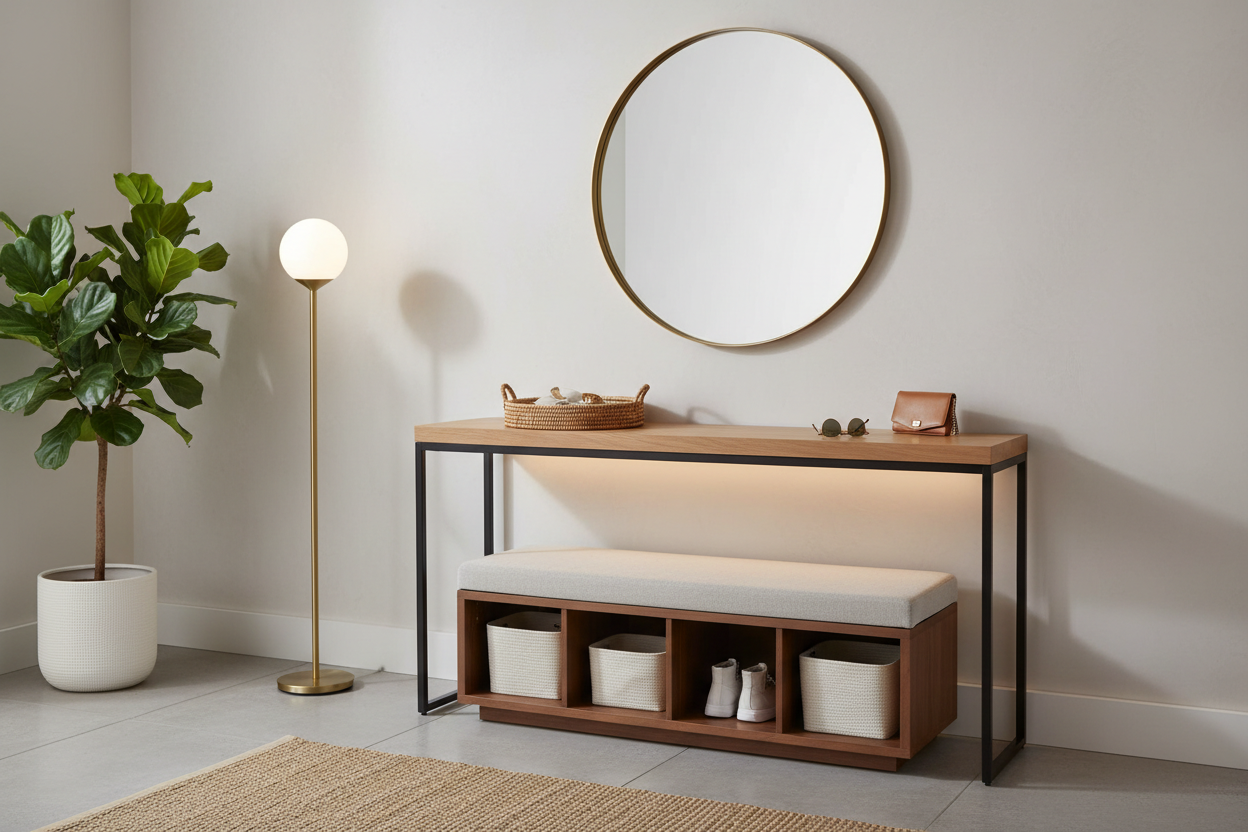
Your home’s entryway is the psychological border between the chaos of the outside world and your personal sanctuary. It is the first thing guests see and the last thing you interact with before leaving for the day. Despite this, the furniture here often gets treated as an afterthought. Finding the right surface—whether it is a full-sized console or a slim shelf—is about balancing traffic flow with the desperate need for a place to drop your keys.
A well-chosen surface anchors the space. Without one, the foyer becomes a nebulous area where clutter migrates to the floor or the nearest dining chair. The goal is to create a functional "drop zone" that doesn't impede movement, especially in tighter architectural layouts.
Why Your Entryway Is Failing You
I learned the hard way that neglecting the entrance creates a ripple effect of mess throughout the house. In my previous apartment, the front door opened directly into a narrow corridor. I convinced myself that I didn't have room for furniture. The result was a permanent pile of mail on the kitchen counter and keys that vanished daily. Eventually, I hunted down a shallow, vintage demilune table. It was barely ten inches deep, but it completely changed my morning routine. Having a dedicated spot for outgoing items stopped the clutter before it entered the main living space.
If you find yourself constantly losing your sunglasses or tripping over shoes the moment you walk in, the issue usually isn't a lack of discipline; it's a lack of infrastructure. You need a designated front door table to catch the debris of daily life.
Navigating the Narrow Hallway
Many homes, particularly urban apartments or older builds, feature a long, slender corridor rather than a grand foyer. This presents a challenge: how do you add function without creating a hip-bruising obstacle course? The key here is depth. A standard front hallway table should generally not exceed 12 to 15 inches in depth if the walkway is tight.
Visual weight matters as much as physical dimensions. In a cramped hallway entrance table scenario, opt for pieces with open legs or glass tops. These designs allow light to pass through, tricking the eye into thinking the space is larger than it is. Avoid heavy, blocky cabinets that sit flush against the floor, as they can make a corridor feel like a tunnel.
You also need to consider the "swing zone." Ensure that your entry door table is positioned far enough away from the door's arc so that you aren't banging the handle into the wood every time you come home with groceries.
The Console: A Versatile Standard
When space permits, a front door console is the gold standard for entryways. These tables are typically taller than a sofa table or a desk, usually standing around 30 to 36 inches high. This height is ergonomic; it allows you to drop mail or keys without stooping. Because they are wider, they offer ample room for styling—a lamp on one side, a catch-all bowl in the center, and perhaps a sculptural element on the other.
Consoles also offer the benefit of storage potential underneath. If you have a family that kicks shoes off immediately, a console with an open bottom allows you to tuck woven baskets underneath. This keeps the footwear contained but accessible, maintaining the clean lines of your tables for entrance areas while hiding the mess.
Creative Solutions for Tricky Layouts
Sometimes the architecture fights you. You might have a radiator, a low window, or a door that opens flush against a wall. In these instances, you have to get creative. If you are dealing with a radiator, you might look for a tall clearance table that fits over the door table hardware or heating elements—essentially bridging the obstacle. While "over the door" usually refers to storage racks, using a table that bridges over a vent or sits high on the wall near the door frame can reclaim dead space.
Another option for the impossible layout is a floating shelf. While not technically a table with legs, a wall-mounted shelf serves the exact same purpose as a table for entrance hallway setups where floor space is non-existent. Mount it at console height, add a mirror above it, and you have achieved the look and function without the footprint.
Styling for Function and Flow
Once you have selected the furniture, the setup determines its success. A bare table attracts clutter; a styled table dictates function. Use the "landing strip" concept. You need three distinct zones on the surface:
- Illumination: A table lamp or a sconce above the table creates a welcoming glow. It prevents the entryway from feeling like a dark cave at night.
- The Catch-All: Never leave the surface completely flat. Place a tray or a ceramic bowl specifically for keys, wallets, and loose change. If you give these items a home, they won't wander.
- Vertical Interest: A mirror is the best companion for any front hallway table. It allows for a last-minute teeth check before you leave, and it reflects light to make the area feel more spacious.
Don't forget the material choice. Entryways see high traffic. Wet umbrellas, muddy bags, and rough keys can wreak havoc on delicate finishes. A distressed wood, stone, or metal entry door table will hide scratches and wear much better than high-gloss lacquer or soft pine.
Making the Final Decision
Measure your space twice. Cut out a piece of cardboard in the dimensions of the furniture you are considering and place it on the floor. Walk past it. Carry bags past it. If you have to turn your shoulders to squeeze by, the piece is too deep. The perfect tables for entrance spaces are the ones you barely notice until you need them. They support your routine seamlessly, blending into the architecture while offering that crucial pause point between the public and private spheres of your life.
Frequently Asked Questions
How much space do I need to walk past an entryway table?
Ideally, you should maintain at least 36 inches of clearance between the edge of the table and the opposite wall. In very tight corridors, you can sometimes get away with 30 inches, but anything less will feel cramped and increase the likelihood of bumping into the furniture.
What is the standard height for a front door console table?
Most console tables stand between 30 and 36 inches tall. This height is visually balanced with most doorways and is ergonomically convenient for dropping off items like keys or mail without having to bend down low.
Can I use a dresser instead of a table in the foyer?
Yes, a small dresser or chest of drawers is an excellent alternative if you need more concealed storage. Just ensure the depth isn't too intrusive, as dressers tend to be deeper than standard console tables, which might choke the flow of a narrow hallway.


Leave a comment
This site is protected by hCaptcha and the hCaptcha Privacy Policy and Terms of Service apply.