










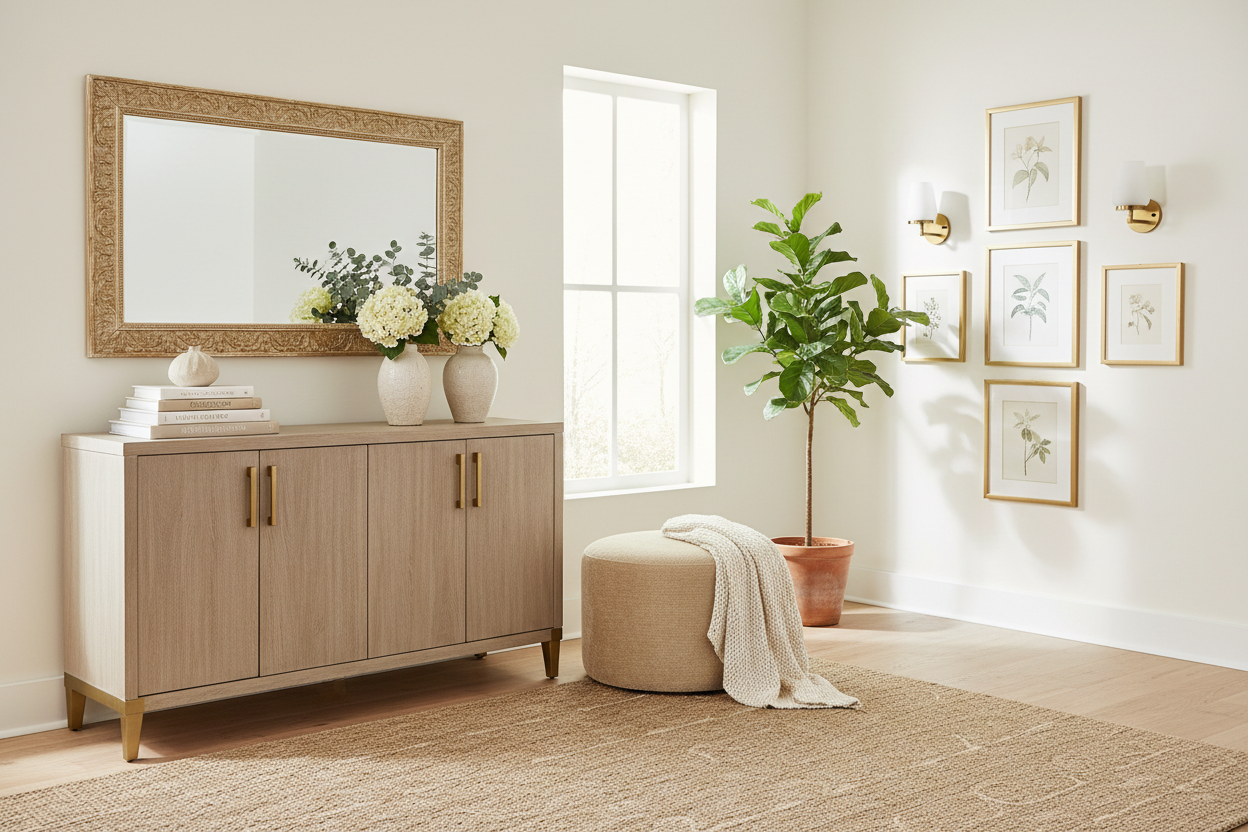
Your front door opens, and the first thing you see sets the tone for the rest of your home. If that view currently consists of a pile of shoes, a scattering of mail, and nowhere to sit to take off your boots, it is time for an upgrade. Finding the right pieces doesn't require a designer's budget, but it does require a bit of strategy. The goal isn't just to find cheap items; it is to locate quality entryway furniture for sale that solves specific storage problems while fitting the unique dimensions of your space.
Many homeowners make the mistake of buying based on aesthetics alone, only to realize the piece blocks the door swing or lacks the durability to handle wet coats and muddy boots. Successful entryway design marries heavy-duty utility with welcoming style. Whether you are working with a sprawling mudroom or a cramped apartment hallway, the right furniture acts as an anchor, keeping the chaos of the outside world contained the moment you step inside.
The Reality of Living with the Wrong Setup
I learned the hard way that impulse buying during a generic entryway furniture sale can lead to regret. In my second apartment, I had a narrow hallway that served as the main entrance. Desperate to hide the clutter, I bought a deep, enclosed cabinet I found on clearance. It looked beautiful online. In reality, it was so deep that I had to turn sideways to shimmy past it to get to the living room. Every time I came home with groceries, I bumped my hip against the corner. It didn't matter that I saved fifty dollars; the piece made my daily life annoying. That experience taught me that flow and clearance are infinitely more important than the discount percentage. Now, I tape out the dimensions on the floor before I even consider clicking "add to cart."
Knowing What Your Space Actually Needs
Before hunting down deals, identify the primary pain point of your entrance. Is it a lack of shoe storage? Is it nowhere to hang a coat? Or is it simply a lack of surface area for keys and mail? Different problems require distinct furniture solutions.
If floor space is at a premium, look for vertical solutions. Tall, narrow hall trees are excellent because they utilize height rather than depth. However, if you have a long, empty wall, a console table with drawers might be the better option to hide small clutter like sunglasses and dog leashes. When you browse listings for entryway furniture for sale, filter by depth. Anything under 12 inches is generally safe for tight corridors, while standard 15 to 18-inch depths require a more open foyer.
The Console Table
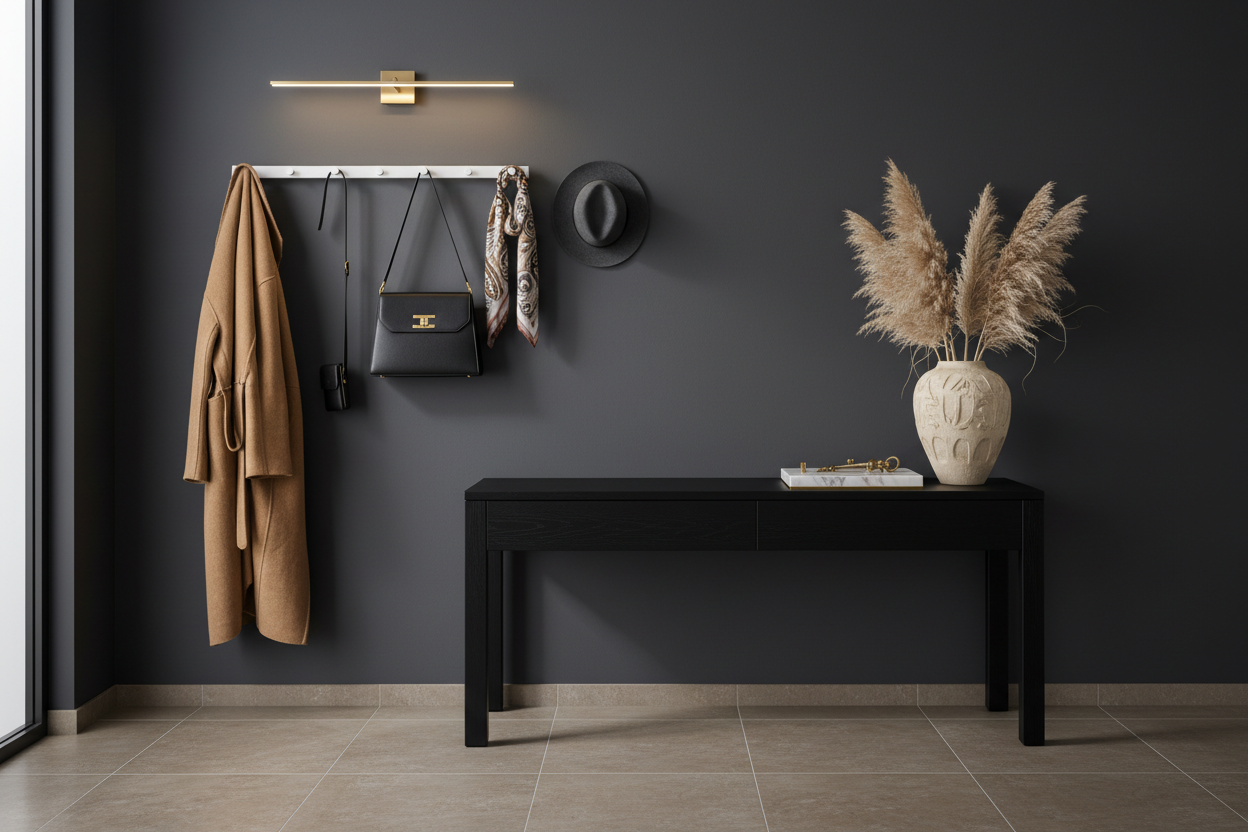
This is the workhorse of the hallway. When shopping, prioritize tables that offer lower shelves or drawers. A simple tabletop is fine for decor, but it won't help you organize. If you find a console table without drawers, you will need to budget for baskets to place underneath to catch the overflow of daily items.
The Storage Bench
A place to sit is a luxury that becomes a necessity if you have children or prefer a shoe-free house. Look for benches with a flip-top lid or cubbies underneath. Be wary of fabric-upholstered benches in high-traffic zones unless the fabric is performance-grade or treated for stain resistance. Wood or leather wipes down much easier after a rainy day.
Timing Your Purchase for the Best Price
Furniture pricing fluctuates throughout the year. While you might find a random entryway furniture sale at any time, the deepest discounts usually align with specific retail cycles. New furniture styles typically hit showroom floors in February and August. This means retailers are desperate to clear out old inventory in January and July. These are the golden months for finding high-quality pieces at a fraction of the cost.
Holiday weekends like Memorial Day, Labor Day, and Black Friday also offer reliable price drops. However, during these high-volume sales, stock can run out quickly. If you have your eye on a specific hall tree or shoe cabinet, sign up for price alerts in advance. This ensures you are ready to buy the moment the price dips, rather than scrambling to find a substitute when your top choice sells out.
Assessing Quality in Online Listings
Since much of our shopping happens online, you have to play detective to ensure you aren't buying wobbly junk. When you see entryway furniture for sale, dig into the specifications. Material composition is the biggest indicator of longevity. Solid wood is ideal but expensive. A good compromise is high-grade MDF with a wood veneer, or metal frames which offer high durability for a lower price.
Check the weight capacity, especially for benches. A bench that looks sturdy but has a weight limit of 150 pounds won't last long in a family home. Furthermore, look at the assembly instructions if they are available to download. If a piece is held together entirely by cam locks and wooden dowels, it may not survive a move to a new house. Reinforced joinery or metal-to-metal connections are signs of a piece that can handle the daily abuse of a busy household.
Styling Your Find for a Cohesive Look
Once you have secured your piece from an entryway furniture sale, the styling brings it to life. A lonely table against a wall looks unfinished. Anchor the furniture with a mirror or a large piece of art hung above it. A mirror is particularly effective in small entryways as it reflects light and tricks the eye into thinking the space is larger than it is.
Lighting is the final component. If your entryway lacks natural light, place a small table lamp on your console or install a wall sconce nearby. This creates a warm, inviting atmosphere that greets you the moment you walk in. Remember, the furniture provides the structure, but the lighting and decor provide the mood.
Making the Final Decision
Revamping your entrance doesn't have to be an overwhelming project. By focusing on measurements first and style second, you avoid the common pitfalls of impulse shopping. Wait for the right seasonal clearance, check the materials, and ensure the piece solves your specific clutter issues. A well-chosen piece of furniture does more than just fill a space; it streamlines your departure in the morning and makes your return home significantly more peaceful.
Frequently Asked Questions
How much walking space do I need to leave in front of entryway furniture?
You should aim to maintain at least 30 to 36 inches of clear walking path. If your entryway is a high-traffic zone where people might be passing each other, try to keep 48 inches of clearance to prevent bottlenecks and bumping into corners.
What is the best material for entryway furniture in a wet climate?
Metal, sealed wood, or engineered wood with a melamine coating are best for wet climates. Avoid untreated wood or particle board with exposed edges, as moisture from wet coats and umbrellas can cause swelling and warping over time.
Can I use a dresser instead of a console table in the entryway?
Absolutely. Using a small dresser is a great hack for maximizing storage, as it provides deep drawers for hats, gloves, and mail. Just ensure the dresser is narrow enough (under 18 inches deep is ideal) so it doesn't encroach too much on the floor space.


Leave a comment
This site is protected by hCaptcha and the hCaptcha Privacy Policy and Terms of Service apply.