










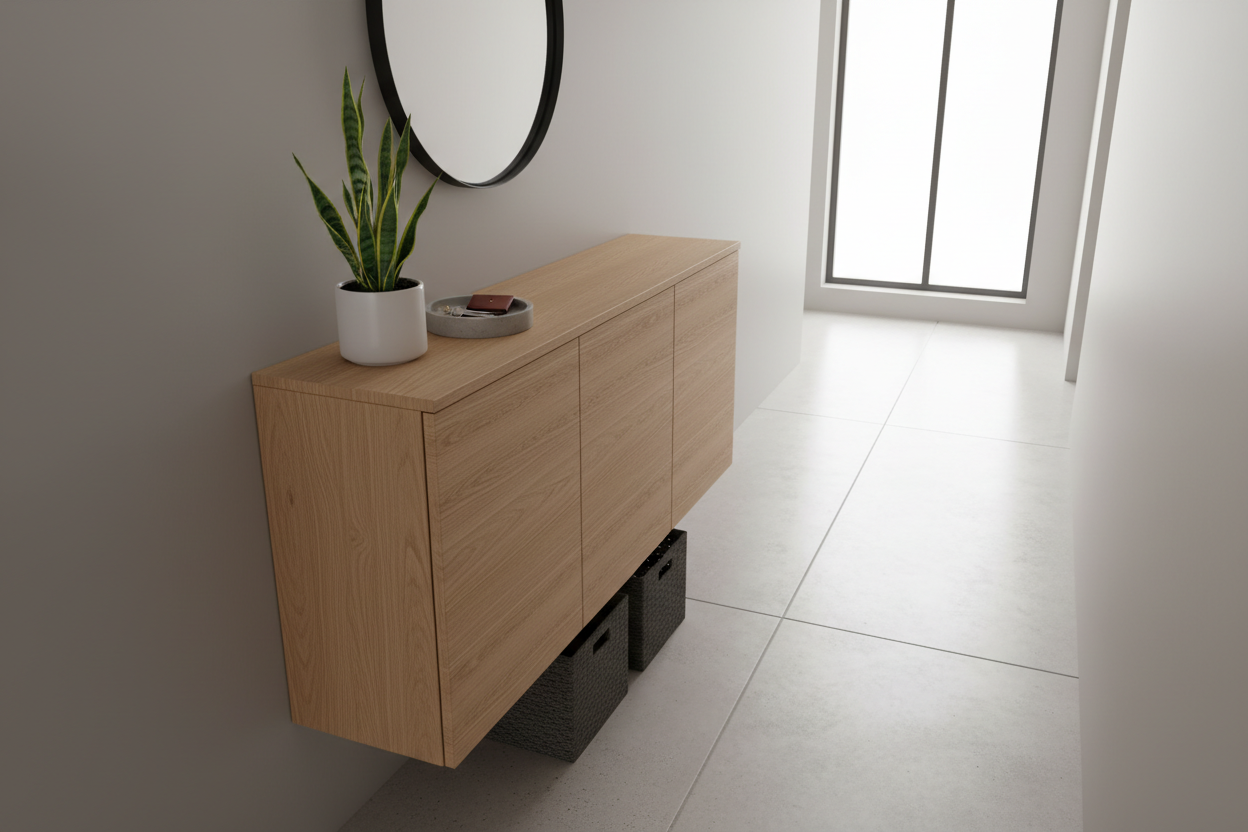
Finding the right balance between storage and walkability in a narrow foyer is one of the most frustrating design challenges homeowners face. You need a place to drop keys, hide mail, and stash shoes, but standard furniture dimensions often protrude too far into the room, creating a bottleneck. The solution usually lies in a specific, often overlooked dimension: the 12 inch deep entryway cabinet. This specific depth is the golden mean for narrow spaces—deep enough to actually hold items like size 11 shoes or a stack of mail, but shallow enough to maintain the critical 36-inch clearance required for comfortable foot traffic.
If you are tripping over boots or piling coats on a banister because your hallway feels too tight for furniture, a slim-profile unit is likely the answer. By prioritizing vertical storage over floor depth, you reclaim your floor plan without sacrificing utility. Let’s look at how to choose, style, and maximize these slender pieces of furniture.
My Battle with the Bulky Console
I learned the importance of depth dimensions the hard way in my second apartment. The entryway was essentially a long corridor that fed directly into the living room. I fell in love with a vintage farmhouse dresser that was 19 inches deep and decided it would be the perfect "statement piece" for the entry. It was a statement alright—mostly a statement of bruises on my shins.
Every time I came home with groceries, I had to turn sideways to shimmy past the dresser. It visually choked the space, making the apartment feel half its size the moment you walked in. After three months of frustration, I swapped it out for a modern, 12 deep entryway cabinet with tilt-out drawers. The difference was immediate. I gained seven inches of walkway, which doesn't sound like much on paper, but in a hallway, it is the difference between a cramped tunnel and an open welcoming passage. That experience taught me that in pass-through areas, depth is the only measurement that truly matters.
Why 12 Inches is the Magic Number
Understanding spatial dynamics helps explain why this specific dimension works so well. Most residential hallways range from 36 to 48 inches wide. Interior design standards suggest maintaining a minimum of 36 inches of clearance for a comfortable walkway. If you place a standard 18-inch deep console table in a 42-inch hallway, you are left with only two feet of walking space. That feels claustrophobic.
A 12 inch deep entryway cabinet preserves that walkway. It sits tight against the wall, offering a surface for decor and internal storage without encroaching on the traffic flow. It is the maximum depth you can get away with while still calling a piece of furniture "slim." Anything shallower than 10 inches tends to become unstable or useless for storing anything other than keys, while anything deeper than 14 inches starts to obstruct movement.
Types of Slim Entryway Storage
Not all shallow cabinets function the same way. Depending on what you need to hide, you have a few distinct options that adhere to this slim profile.
The Tilt-Out Shoe Cabinet
This is the heavy lifter of narrow entryways. Because adult shoes are generally longer than 12 inches, you cannot store them flat in a 12-inch cabinet unless you turn them sideways, which is inefficient. The tilt-out mechanism solves this by storing shoes vertically or at an angle. When you pull the handle, the drawer pivots out, revealing the shoes stored on a slant.
These units are specifically engineered to be thin. Many are actually closer to 10 or 11 inches deep, but they are often categorized alongside the 12 deep entryway cabinet options. They keep floor clutter at zero and usually feature a flat top surface for styling.
The Shallow Console Table with Doors
If shoes aren't your primary concern, a standard cabinet with swinging doors or sliding panels might be better. These are excellent for storing dog leashes, winter gloves, reusable grocery bags, and paperwork. When shopping for these, pay close attention to the internal depth. Sometimes the exterior measures 12 inches, but the back panel and door thickness reduce the usable interior space to 10 inches. Sliding doors are often superior in tight hallways because you don't have to step back to open them.
Open Shelving Units
Open consoles can make a small space feel airier because you can see the wall through the furniture. However, they require discipline. If you are prone to clutter, an open 12 inch deep entryway cabinet will just put your mess on display. These work best if you use baskets to corral loose items on the bottom shelves while keeping the top reserved for a lamp or plant.
Measuring for Your Cabinet
Buying a slim cabinet requires more than just knowing the width of your wall. You need to account for obstructions that could prevent the unit from sitting flush against the wall.
Check your baseboards first. If you have thick, historic baseboards, a cabinet with a solid back that goes all the way to the floor might leave a gap between the top of the unit and the wall. This gap can cause things to fall behind the cabinet constantly. Look for units with "legs" that are high enough to clear the baseboard, or units with a recessed back panel.
Also, consider the swing of your front door. A 12 deep entryway cabinet is slim, but if placed too close to the door frame, it might still prevent the door from opening a full 90 degrees. Measure the distance from the door hinges to where you plan to place the cabinet to ensure you aren't blocking your exit.
Styling a Shallow Surface
Decorating a surface that is only a foot deep presents its own challenges. Standard table lamps often have shades that are 14 to 16 inches wide, which means they will overhang the edge and risk getting knocked over by passing traffic. You have to think vertically rather than horizontally.
Wall sconces are a fantastic alternative to table lamps in this scenario. They provide the light you need without taking up any surface area. If you must use a table lamp, look for "buffet lamps" which typically have tall, slender bases and narrow shades. Alternatively, lean a tall mirror against the wall or mount one above the cabinet. This draws the eye up and reflects light, making the narrow hallway feel wider than it actually is.
Keep the decor minimal. A shallow tray for keys, a vertical vase with tall branches, or a stack of books works well. The goal is to add personality without adding bulk that spills over the edge into your walking path.
Material Matters
In a high-traffic area like a narrow hall, the material of your cabinet impacts durability. Painted wood or laminate is common, but be aware that hips and grocery bags will brush against this furniture frequently. Metal cabinets or those with a durable veneer often hold up better to the wear and tear of a tight corridor.
Choosing a piece that matches your wall color can also be a clever design trick. If you have white walls and choose a white 12 inch deep entryway cabinet, the unit blends into the architecture, reducing its visual weight. Conversely, a dark wood or black metal piece will act as a focal point, grounding the space and defining the entry zone.
Ultimately, the right cabinet transforms a hallway from a simple passage into a functional room of its own. It proves that you do not need square footage to have storage; you just need the right geometry.
Frequently Asked Questions
Can I store men's shoes in a 12-inch deep cabinet?
Yes, but usually not flat. You will need a cabinet with tilt-out drawers that store shoes at an angle, or you will need to place the shoes sideways on the shelves. Standard men's shoes (size 10 and up) are typically longer than 12 inches, so a traditional flat shelf won't allow the doors to close.
How do I secure a narrow cabinet to the wall?
Because these units are tall and shallow, they are prone to tipping over. You should always use the anti-tip hardware included with the furniture, usually involving an L-bracket or strap anchored into a wall stud. If you have thick baseboards, you may need to use spacers to bridge the gap between the cabinet back and the wall for a secure mount.
What is the minimum walkway width I should leave in front of the cabinet?
Aim for at least 36 inches of clearance between the front of the cabinet and the opposite wall. In very tight pinch points, you might get away with 30 to 32 inches, but this will feel cramped when carrying groceries or moving items through the house.


Leave a comment
This site is protected by hCaptcha and the hCaptcha Privacy Policy and Terms of Service apply.