










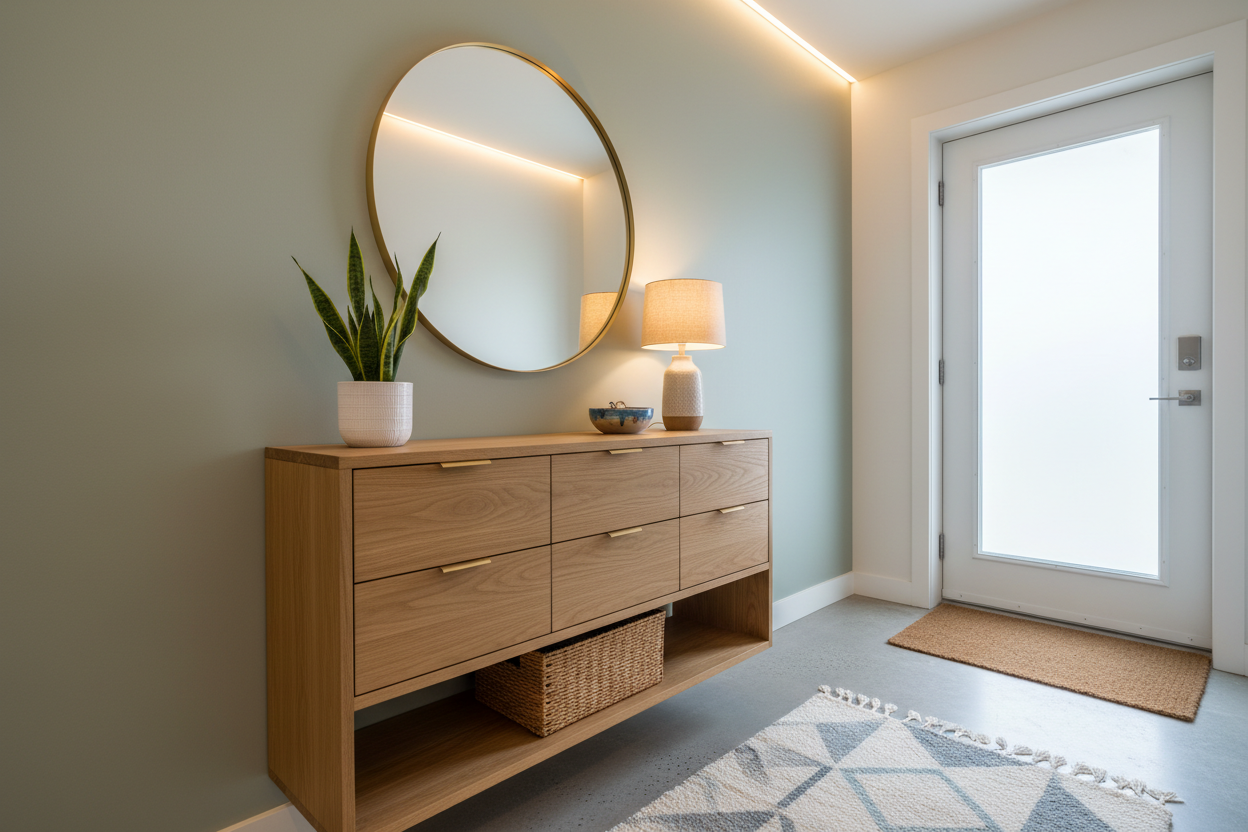
The moment you step through your front door, the atmosphere of your home is set. In a sprawling house, you might have a grand foyer, but for many of us, that first impression happens in a tight hallway or a modest nook. This is where the struggle between functionality and square footage begins. You need a place to drop keys, hide mail, and perhaps stash a pair of shoes, but you cannot afford to block the flow of traffic. The solution lies in selecting the right furniture piece: specifically, a well-proportioned console designed for compact living.
Finding the ideal furniture for a limited space isn't just about picking something small; it is about geometry and visual weight. A great small entryway console cabinet serves as a landing strip for your daily life without acting as a roadblock. The key is prioritizing depth over width. While standard cabinets often protrude 16 to 18 inches from the wall, a slim profile piece—often between 10 to 13 inches deep—can provide the surface area you need without encroaching on your walking path. This ensures that the entry remains welcoming rather than an obstacle course.
A Lesson Learned in Hallway Traffic
I learned the importance of depth the hard way in my second apartment. The hallway was long but incredibly narrow, barely wide enough for two people to walk side-by-side. I fell in love with a gorgeous, vintage oak cabinet at an estate sale. It had beautiful brass handles and ample storage, so I bought it immediately without measuring the hallway clearance. Once I wrestled it inside, the reality set in. The piece stuck out so far that I had to turn my shoulders sideways just to squeeze past it with groceries. It wasn't just inconvenient; it made the whole apartment feel claustrophobic. I eventually replaced it with a sleek, 10-inch deep metal unit. The difference was night and day. The hallway suddenly felt open again, proving that in tight spaces, inches truly matter more than aesthetics.
Measuring for Flow and Function
Before you even look at styles or finishes, get your tape measure out. The golden rule for walkways is to maintain at least 36 inches of clearance for comfortable movement. If your entry hall console cabinet leaves you with anything less than 30 inches of walking space, it is going to feel cramped. In older homes or city apartments, you might have to get creative with this math.
Don't forget to account for the swing of your front door. A common mistake is placing a cabinet too close to the hinge side or the latch side of the door, preventing it from opening fully. Mark the footprint of the potential cabinet on the floor with painter's tape. Leave it there for a few days and walk past it. If you find yourself naturally steering away from the wall or worrying about bumping your hip, the footprint is too big.
Visual Weight and Leg Design
In a small area, how much floor you can see dictates how large the room feels. A solid, blocky cabinet that sits flush against the floor can make a small entry feel heavy and stuffed. Instead, look for an entrance console cabinet with legs. Being able to see the floorboards or tile continuing underneath the furniture tricks the eye into thinking the space is larger than it is. Hairpin legs, slender wooden tapered legs, or an open metal frame base are excellent choices for maintaining an airy vibe while still providing the enclosed storage you need up top.
Storage: Drawers vs. Doors
Since this piece of furniture is likely the only storage you will have by the door, the internal configuration is just as important as the external dimensions. If your primary clutter consists of paper, keys, sunglasses, and dog leashes, look for a unit with shallow top drawers. These act as a "junk drawer" filter, keeping small items off the surface.
However, if your main issue is shoes piling up on the mat, a cabinet with doors is superior. Many modern slim consoles utilize "tip-out" drawers—compartments that hinge at the bottom and tilt out. These are specifically engineered for narrow hallways because they store shoes vertically rather than horizontally, drastically reducing the cabinet's required depth. This style of small entryway console cabinet is a game-changer for keeping floors clear of tripping hazards.
Material Durability in High-Traffic Zones
Your entryway sees more action than almost any other part of the house. Wet umbrellas, muddy boots, and heavy grocery bags all pass through here. Delicate finishes, like high-gloss lacquer or untreated softwoods, might look pristine in a showroom but can quickly show scratches and water rings in a foyer.
Consider materials that can take a beating. Distressed wood is forgiving because new scratches blend in with the existing patina. Metal tops or stone inlays are fantastic for durability and are easy to wipe down if you spill coffee while rushing out the door. If you choose a painted finish, ensure it has a protective topcoat. A glass top can also work well to protect the surface, and it adds a reflective quality that bounces light around, further helping the space feel open.
Styling Your Console to Expand the Space
Once you have selected the right entry hall console cabinet, styling it correctly can further enhance the sense of space. Clutter on the surface defeats the purpose of the cabinet. Use a small tray to corral loose items so the rest of the surface remains clear.
The vertical space above the cabinet is your best asset. Hanging a large mirror directly above the console is the oldest trick in the designer's book for a reason—it works. It reflects light from the door or adjacent rooms, effectively doubling the visual depth of the hallway. If a mirror isn't your style, oversized art can draw the eye upward, distracting from the narrowness of the floor plan. Wall-mounted sconces on either side of the mirror or art can free up surface space that would otherwise be taken by table lamps, keeping your entryway bright and functional.
FAQ
What is the ideal depth for a console cabinet in a narrow hallway?
For narrow hallways, aim for a depth between 10 and 12 inches. Standard consoles are usually 14 to 18 inches deep, which can block traffic flow in tight spaces. Slim or "skinny" consoles are specifically manufactured to fit these constraints while still offering utility.
Can I use a shoe cabinet as an entryway console?
Absolutely. Modern shoe cabinets with tip-out drawers are excellent dual-purpose pieces. They are typically very slim (often under 10 inches deep) and have a flat top surface perfect for keys and decor, effectively functioning as a console while hiding footwear.
How high should a mirror be hung above an entrance console cabinet?
A good rule of thumb is to hang the mirror 6 to 8 inches above the top surface of the cabinet. This connects the two items visually, creating a cohesive vignette rather than two floating objects. Ensure the center of the mirror is at eye level, roughly 60 to 65 inches from the floor.

Leave a comment
This site is protected by hCaptcha and the hCaptcha Privacy Policy and Terms of Service apply.