










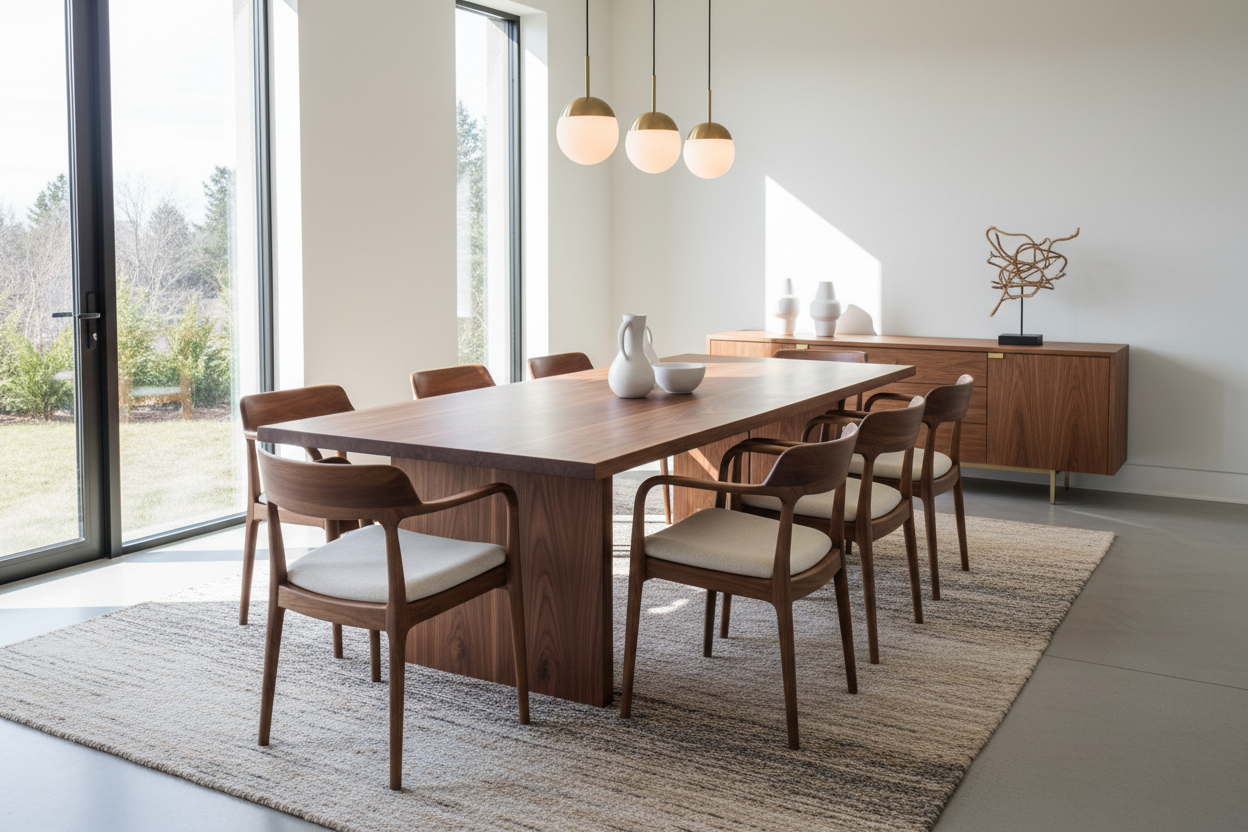
Wood has an uncanny ability to reinvent itself. While glass and metal often dominate the conversation around contemporary furniture, the most enduring pieces in recent years have been modern dining tables wood crafted. There is a misconception that wood belongs strictly in rustic farmhouses or heavy traditional settings, but that couldn't be further from the truth. The current landscape of interior design relies heavily on timber to bring warmth to minimalist spaces, grounding the room without weighing it down.
Choosing the right table isn't just about picking a color; it involves understanding grain patterns, durability, and how a specific silhouette interacts with your available space. Whether you are furnishing a compact apartment or a sprawling open-plan home, the organic texture of wood softens the sharp lines of modern architecture.
The Shift in Modern Wood Esthetics
We have moved past the era of bulky, high-gloss mahogany sets. Today, modern wood dining room tables prioritize matte finishes, natural imperfections, and streamlined profiles. The focus is on the honesty of the material. You will often see designs that highlight the joinery—dovetails or mortise and tenon—serving as both structural necessity and visual detail.
White Oak and Walnut are currently the heavyweights in this category. White Oak offers a lighter, Scandinavian feel that hides dust and scratches reasonably well, making it practical for daily use. Walnut, with its rich, dark chocolate tones, provides instant sophistication and contrasts beautifully in rooms with lighter walls or concrete floors. The key is the cut of the wood; rift-sawn lumber, which produces straight, linear grain patterns, looks significantly more contemporary than the cathedrals and swirls found in plain-sawn wood.
A Lesson Learned: My Battle with "Raw" Finishes
I learned the hard way that "modern" does not always equal "practical" if you ignore the finish. A few years ago, I fell in love with a stunning, architectural oak table that was sold as having a "natural, dry look." It was beautiful—until the first dinner party. A guest set down a condensation-heavy glass of white wine, and despite my frantic coaster usage, the moisture penetrated the wood almost instantly. The table had a soap finish, which is incredibly traditional in Denmark but high-maintenance for a messy eater like me.
Since then, I advise clients and friends to look for modern matte lacquers or hard-wax oils. These finishes preserve the look of raw wood but create a molecular bond that repels water and grease. You get the tactile joy of the timber without the panic every time someone spills a drop of sauce.
Defining the Silhouette: Legs vs. Pedestals
The architecture of the base is what separates a standard piece from a dining table modern design enthusiasts will appreciate. The trend has shifted away from four legs at the corners, which can limit seating capacity and look generic. Central pedestals, trestle bases, or spider-leg configurations are increasingly popular because they solve the "leg-knocking" problem.
A pedestal table, particularly in a round or oval shape, improves flow in a square room. It allows you to squeeze in an extra chair without anyone straddling a table leg. For rectangular rooms, a trestle base set inward from the edge gives the tabletop a floating appearance, contributing to that airy, modern feel. When browsing dining room tables modern design options, look for beveled edges on the tabletop. A "Swiss edge" or a reverse bevel makes a thick slab of wood look paper-thin from the side, adding elegance without sacrificing sturdiness.
Mixing Materials for a Contemporary Look
While the table itself may be wood, the modern aesthetic often involves contrast. A solid wood top on a powder-coated steel base is a classic industrial-modern move. Alternatively, pairing a heavy timber table with acrylic ghost chairs or slim leather cantilever chairs creates a dynamic tension between visual weight and lightness.
If you prefer an all-wood look, ensure there is enough contrast between your floor and the table. Placing a walnut table directly onto walnut flooring can make the furniture disappear into the floor. A rug is usually the best mediator here, but if you prefer bare floors, choose a table wood tone that is at least two shades lighter or darker than your flooring.
Navigating Trends and Longevity
The modern design of dining table options changes subtly every few years. Currently, we are seeing a resurgence of the "Japandi" style—a hybrid of Japanese rustic minimalism and Scandinavian functionality. This translates to low profiles, slatted wood bases, and soft, rounded corners rather than sharp rectangles. These organic shapes are safer for households with children and improve the energy flow of a room by removing harsh angles.
Another rising trend is the extendable table that doesn't look extendable. Modern engineering has allowed for butterfly leaves that fold seamlessly inside the table, maintaining the continuous grain pattern when closed. This is a massive improvement over older styles where the extension leaves were stored in a closet and never quite matched the color of the main table due to uneven sun exposure.
Smart Buying Strategies
Quality furniture is an investment, but finding a modern dining table sale is possible if you know when to look. The furniture industry typically rotates stock in late winter (January/February) and late summer (August/September). This is when showrooms clear out floor models to make room for new collections. Floor models are often the best way to buy high-end wood tables because you can inspect the grain pattern in person—something you cannot do when ordering a boxed item online.
When hunting for deals, verify the construction. Even on sale, a table described as "wood finish" might just be a printed paper laminate over particle board. Always look for terms like "solid wood," "kiln-dried hardwood," or "high-quality wood veneer." A high-quality veneer over a stable core (like MDF or plywood) is actually superior to solid wood in some modern designs because it resists warping and cracking in fluctuating humidity, but it should be priced accordingly.
Final Thoughts on Care
Once you have secured your piece, maintenance is key to keeping that modern aesthetic crisp. Unlike rustic tables that look better with a beating, modern lines rely on clean surfaces. Dust frequently with a microfiber cloth to prevent microscopic scratches. If your table has an oil finish, re-oiling it once a year will keep the grain vibrant and the protection active. With the right selection and care, a wood dining table becomes the anchor of the home, aging gracefully alongside your family.
Frequently Asked Questions
Is solid wood always better than veneer for modern tables?
Not necessarily. While solid wood allows for refinishing, high-quality veneers are often more stable and less prone to warping or splitting in homes with central heating and air conditioning. Many high-end modern designs use veneer to achieve complex shapes that would be impossible or structurally unsound with solid wood.
How do I mix different wood tones in the dining room?
Identify the undertone of your dominant wood (warm/red, cool/gray, or neutral/yellow) and try to stay within that family, even if the darkness varies. Alternatively, use high contrast; a very dark espresso table looks intentional and striking against light oak floors, whereas two woods that are almost the same color often look like a mistake.
What is the best shape for a small modern dining area?
A round table with a pedestal base is generally the most efficient choice for small spaces. It eliminates sharp corners that block flow and allows for flexible seating arrangements since there are no legs at the perimeter to dictate chair placement.

Leave a comment
This site is protected by hCaptcha and the hCaptcha Privacy Policy and Terms of Service apply.