










Have you ever stared at an empty dining room wall, knowing it needs something, but a traditional china cabinet would completely swallow the floor space? It is a common frustration in North American homes where open-concept living means wall space is at a premium. Enter wall hanging display cabinets. These floating pieces offer a brilliant compromise, allowing you to showcase your favorite objects while preserving crucial square footage.
By pulling the furniture off the floor, you create an illusion of a larger room through negative space. But mounting heavy furniture to your drywall comes with its own set of challenges. Whether you are looking to display vintage ceramics or protect a curated book collection, here is what you need to know before drilling into your walls.
Quick Decision Guide
- Always anchor into wall studs. Drywall anchors are never sufficient for the combined weight of heavy glass, wood framing, and ceramics.
- Leave at least 18 inches of clearance between the bottom of the cabinet and any furniture sitting directly below it.
- Choose tempered glass to ensure safety, especially in high-traffic hallways or homes with children and pets.
- Incorporate integrated LED strip lighting to prevent the interior of the cabinet from looking like a dark, shadowy cave.
Space Planning & Layout
Floating a cabinet is an exercise in visual weight. If you are working with a tight dining area or a narrow hallway, wall hung display cabinets keep the sightlines open. Because the floor remains visible beneath the unit, the room feels less crowded, making this an ideal solution for urban apartments and cozy suburban family rooms alike.
Finding the Right Proportion
For a subtle touch, small wall display cabinets work beautifully in pairs flanking a central window or a piece of artwork. If you want a dominant focal point, a large wall display cabinet can anchor a living room just as effectively as a fireplace. In culinary spaces, a kitchen display wall cabinet offers a secure spot for heirloom dishes without eating up your vital countertop prep zones.
Material & Build Quality
When dealing with suspended furniture, the build quality is not just about aesthetics—it is a matter of safety. A wall mounted glass display cabinet requires sturdy joinery, usually solid wood or high-grade plywood framing, to hold the weight of the glass and your displayed items. Engineered wood can work, but the mounting cleat area must be reinforced so the screws do not strip the composite material over time.
Glass and Hardware Choices
If you want maximum visibility, a showcase wall mounted glass display cabinet with minimal framing is ideal. However, pay close attention to the door hinges. A wall display case with glass doors needs heavy-duty pivot or soft-close hinges so the doors do not slam and shatter the panes. Whether you prefer a sleek hanging glass display cabinet or a more traditional wooden wall unit display, always verify the weight rating of the hardware.
Styling and Visual Coordination
The trick to making mounted display cabinets look high-end is intentional curation. Do not treat them as extra storage for random household clutter. These pieces are meant to highlight your favorite objects, adding texture and personality to the room.
Creating Visual Balance
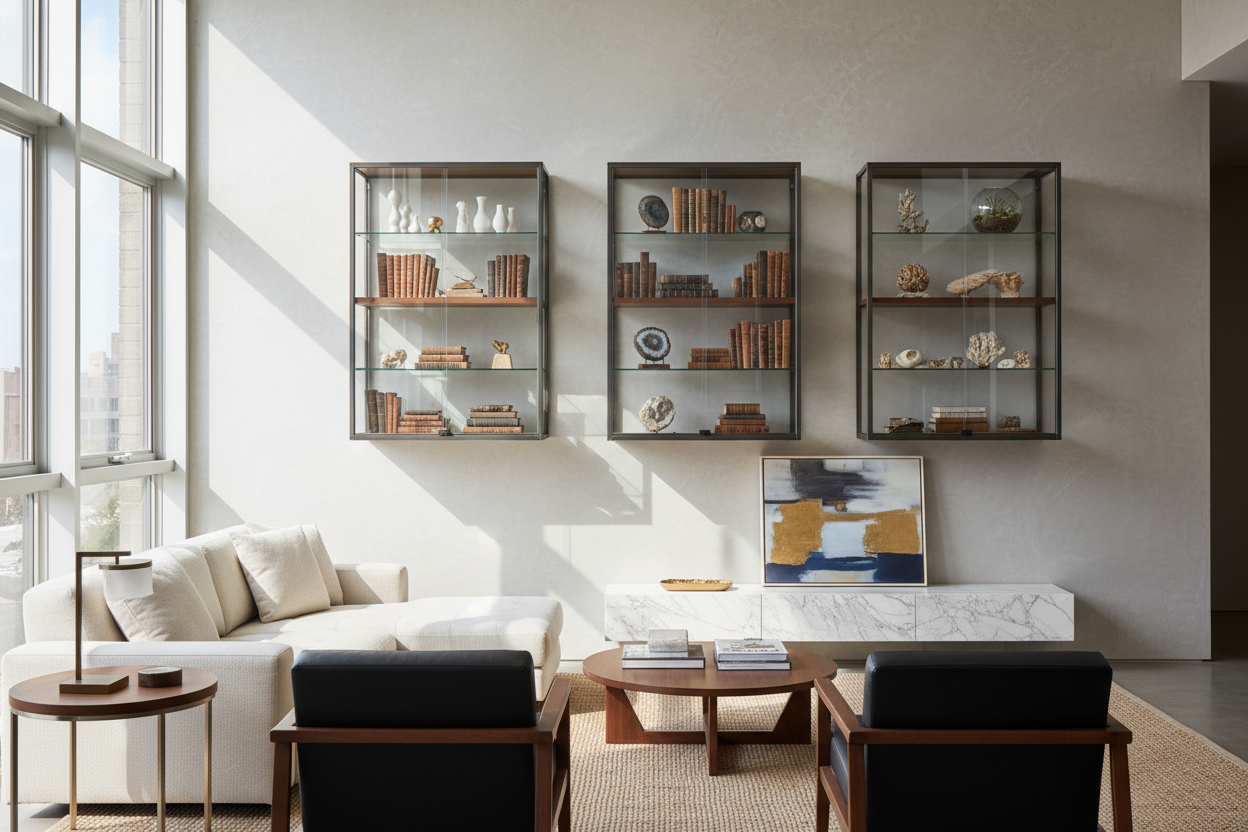
When arranging items in a wall mounted glass door display cabinet, use the rule of thirds. Mix tall, slender vases with low, horizontal stacks of books. If you are designing a full entertainment zone, integrating wall units and display cabinets creates a cohesive, custom built-in look without the exorbitant custom carpentry price tag. A hanging wall display cabinet paired with a floating media console below creates a highly modern, streamlined silhouette.
Designer's Honest Take
Over my 15 years designing residential interiors, I have installed countless floating pieces. But I will be honest: I learned a hard lesson early in my career about display cabinet hanging. I once specified a gorgeous, heavy walnut wall hanging glass display cabinet for a client's mid-century modern living room. It looked incredible on installation day.
But I had not accounted for the sheer weight of the client's vintage ironstone collection. Within two months, the French cleat started pulling away from the drywall because the contractor had only caught one stud and relied on toggle bolts for the rest. We had to take everything down, patch the wall, open it up to add proper wood blocking, and reinstall. The piece was beautiful, but the stress of a sagging cabinet is entirely avoidable. Always over-engineer your mounting hardware, and never trust a drywall anchor for a wall unit display cabinet.
Frequently Asked Questions
How high should I hang a display cabinet?
Aim to have the center of the cabinet at eye level, roughly 57 to 60 inches from the floor. If you are hanging it directly above a credenza or sideboard, leave 18 to 24 inches of breathing room between the two pieces to maintain proper visual proportion.
How much weight can a wall mount display case with glass doors hold?
It depends entirely on the mounting system and wall structure. A properly installed French cleat anchored into two wooden studs can easily hold 100 to 150 pounds. Always check the manufacturer's specifications and weigh your display items before loading the shelves.
How do I keep the glass from constantly looking smudged?
A wall mounted display cabinet is prone to fingerprints, especially on the bottom edge where people naturally grab the doors. Install subtle finger pulls or small metal knobs to keep hands off the glass. Clean the panes weekly with a microfiber cloth and a 50/50 mix of distilled water and white vinegar to avoid streaks.

Leave a comment
This site is protected by hCaptcha and the hCaptcha Privacy Policy and Terms of Service apply.