










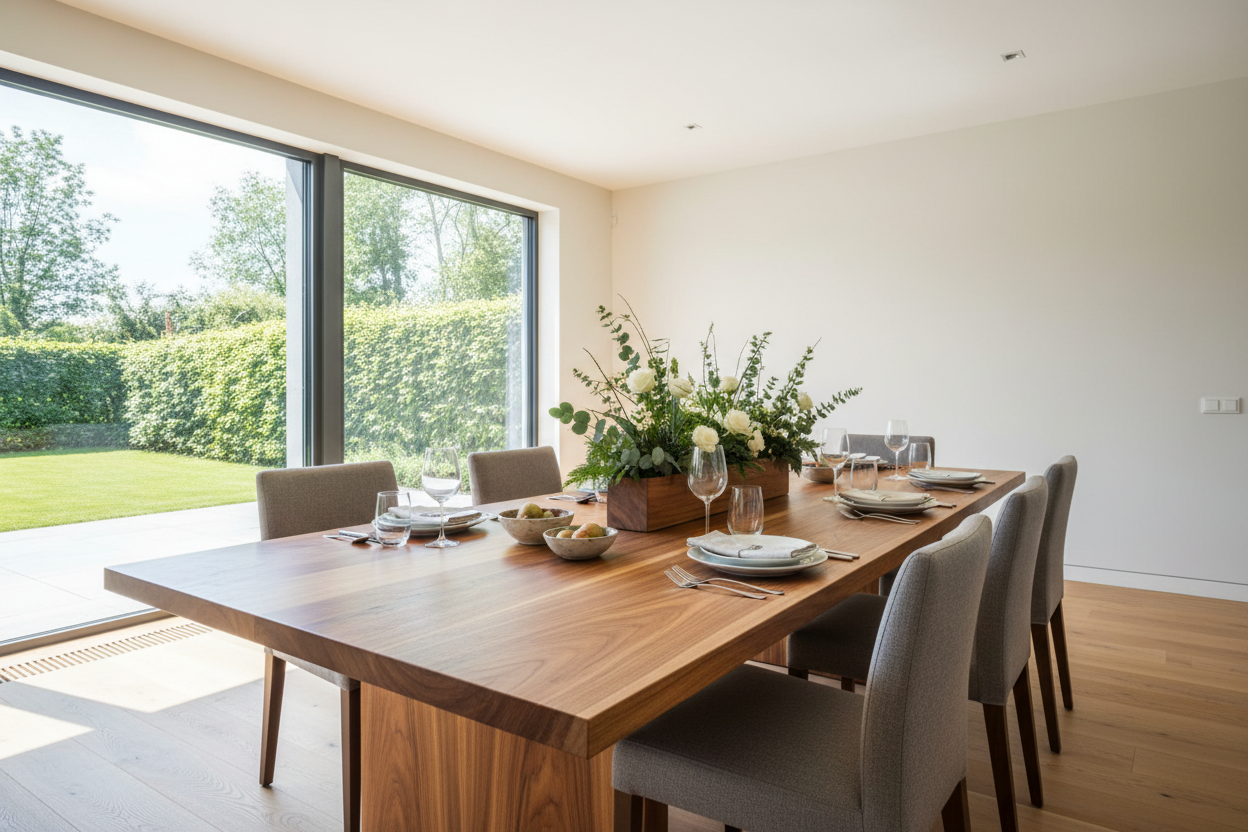
A high wood dining table, often referred to as a counter-height or bar-height table, immediately changes the dynamic of a room. Unlike standard dining setups that sit at 30 inches, these elevated surfaces usually stand between 36 and 42 inches tall. They bridge the gap between a formal dining area and a casual kitchen island, offering a versatile surface that works just as well for chopping vegetables as it does for hosting a dinner party. If you are looking to create a more social, relaxed atmosphere or need to maximize vertical space in a smaller apartment, lifting your dining surface is a practical design choice.
The Social Shift: My Experience with Elevation
Years ago, I moved into a narrow row house where the dining area was essentially a hallway between the kitchen and the living room. A standard low table felt like a barricade; you had to walk around it, and sitting down felt disconnected from anyone standing in the kitchen. I decided to swap it for a solid oak pub-style table that stood at 42 inches. The change was instant. Because the table was closer to eye level for someone standing, guests started gathering around it with drinks while I finished cooking. It didn't feel like they were waiting for dinner to be served; it felt like they were part of the process. That table became a standing desk in the mornings and a prep station in the evenings. The height removed the formality and invited interaction in a way my low table never did.
Defining the Heights: Counter vs. Bar
When shopping for a high wood dining table, you will encounter two distinct categories. Understanding the difference is crucial for buying the right seating.
Counter Height (36 Inches)
These are the same height as a standard kitchen counter. They are excellent for creating a seamless look in an open-concept kitchen. A counter-height wood table creates an extension of your workspace. If you bake or do extensive meal prep, this is the ergonomic choice because you can work while standing without hunching over. These tables require stools with a seat height of approximately 24 to 26 inches.
Bar Height (40-42 Inches)
Often called pub tables, these are significantly taller. They create a distinct separation between the dining zone and the rest of the room. This height is synonymous with a casual, bistro vibe. The visual impact is stronger, but they are less suited for small children or elderly family members who might find climbing onto a 30-inch stool difficult. However, for an adult-centric entertaining space, they are unmatched in style.
Why Wood Species Matters for High Tables
Since high tables often double as work surfaces or leaning posts, the material needs to be robust. A high wood dining table exposes more of the leg structure and the underside of the table than a standard one, making the quality of the timber visually important from all angles.
Hardwoods like maple, oak, and walnut are the gold standards. Oak is incredibly durable and hides scratches well within its prominent grain, making it ideal for high-traffic family homes. Walnut offers a darker, more refined aesthetic that suits modern or mid-century designs, though it is softer and requires more care. If you are aiming for a rustic farmhouse look, reclaimed pine is a popular option. It comes with built-in imperfections, so a new dent or ring from a glass just adds to the character rather than ruining the finish.
Be wary of particle board with thin veneers for high tables. Because these tables are often used as leaning posts, the edges undergo more stress. Solid wood allows you to sand and refinish the surface years down the line, whereas a chipped veneer on a high table is very noticeable and difficult to repair.
Visual Space and Room Flow
One of the less obvious benefits of a taller table is the illusion of space. In compact dining areas, a standard table can feel heavy and squat. A high wood dining table allows light to travel underneath it more freely. This visible floor space tricks the eye into thinking the room is larger than it is.
This verticality also aids in room flow. In a party setting, people naturally move between sitting and standing. With a high table, the difference in head height between a seated person and a standing person is minimal. This encourages conversation flow across the room. No one is left sitting low while others tower over them. It creates an egalitarian, mingling-friendly environment.
Selecting the Right Seating
The table is only half the equation. The biggest complaint people have with high dining setups is uncomfortable seating. Because your feet do not touch the ground, the chair or stool must have a sturdy footrest. Without one, legs dangle, cutting off circulation and causing discomfort within minutes.
Look for stools with backs if you plan to use the table for full meals. Backless stools are fine for a quick breakfast or a drink, but for a three-course dinner, lumbar support is essential. Swivel mechanisms are also highly practical for high tables. They allow guests to turn and exit the seat easily without having to scoot a heavy wooden chair backward across the floor, which can be difficult due to the added weight and height of the furniture.
Styling Your Elevated Dining Space
Styling a high table requires a different approach than a traditional setup. Long, draping tablecloths generally look awkward on tall tables and can pose a tripping hazard. Instead, rely on placemats or a short table runner to expose the beauty of the wood grain.
Lighting also needs adjustment. If you have a chandelier or pendant light, it needs to be raised. A fixture that hangs 30 inches above a standard table will be right in your face at a high table. Aim for the bottom of the light fixture to be 30 to 36 inches above the tabletop surface to maintain visual balance without obstructing views.
Is a High Table Right for Your Lifestyle?
While the aesthetic appeal is undeniable, consider your household needs. If you have toddlers, high chairs for counter-height tables exist, but they are harder to find and can feel precarious. Similarly, if you enjoy long, lazy Sunday dinners that last for four hours, traditional dining height usually offers superior long-term comfort. However, for modern, fast-paced lifestyles, social gatherings, and multi-functional spaces, a high wood dining table is a sophisticated, practical upgrade that changes how you interact with your home.
Frequently Asked Questions
Can I cut the legs of a high table to make it standard height later?
Yes, if the table is solid wood and has straight legs, a professional carpenter can cut them down. However, you must consider the proportions of the table apron and the leg thickness, as a chunky bar-style base might look disproportionately heavy when lowered to standard height.
Are high wood tables stable enough on carpets?
High tables have a higher center of gravity, making them slightly less stable on deep pile carpets than hard floors. If you must place one on carpet, ensure the table has a wide base or substantial weight to prevent wobbling, and avoid lightweight pedestal styles.
What is the ideal amount of legroom for a high table?
You should aim for 10 to 12 inches of clearance between the seat of the chair and the underside of the table. This ensures guests have enough room to cross their legs or move freely without banging their knees against the apron of the table.

Leave a comment
This site is protected by hCaptcha and the hCaptcha Privacy Policy and Terms of Service apply.