










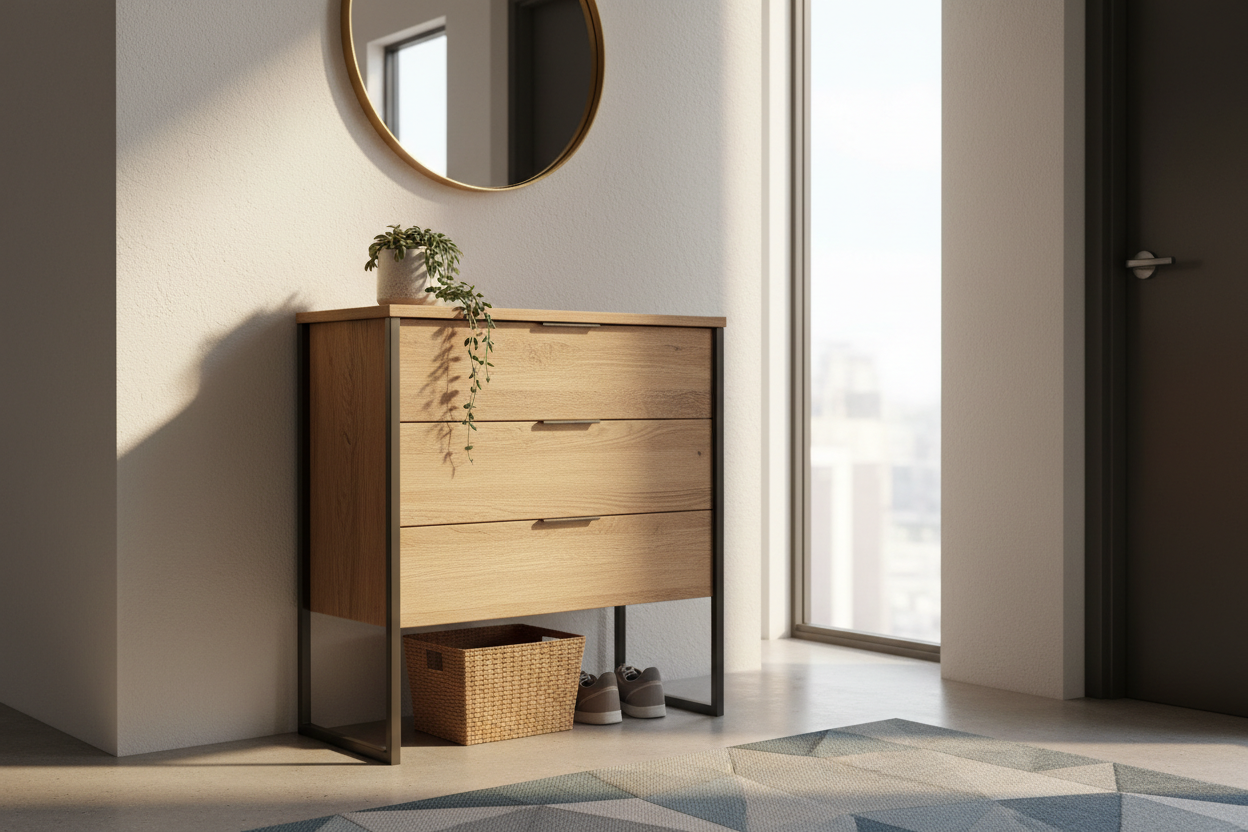
Living in a compact apartment or dealing with awkward corners in your home often means getting creative with furniture choices. A narrow side table with drawers offers the perfect blend of storage and style without eating up precious floor space. These slender pieces typically measure 10-15 inches deep, making them ideal for hallways, bedrooms, or any spot where a standard table would feel overwhelming.
The beauty of these space-saving pieces lies in their versatility. Unlike regular side tables that might only offer a flat surface, models with drawers give you hidden storage for everything from charging cables and reading glasses to medications and remote controls. I discovered this firsthand when I moved into a smaller bedroom last year—my old nightstand stuck out awkwardly, leaving barely enough room to walk around the bed. Switching to a slim side table with drawer transformed the space completely, giving me back nearly a foot of floor space while still providing a spot for my lamp and phone.
What Makes These Tables Different from Standard Options
The defining characteristic is width, or rather, the lack of it. While conventional side tables range from 18-24 inches deep, skinny side table with drawer options stay under 16 inches. This might not sound like much, but in tight quarters, those extra inches make the difference between a comfortable room and one that feels cramped.
Construction varies widely depending on your budget and style preferences. Solid wood versions offer durability and a classic look, though they tend to be pricier. Engineered wood or MDF options provide affordability and often come in modern finishes. Metal frames with wood tops strike a balance between industrial aesthetics and functionality.
Drawer Configuration Matters
Some models feature a single deep drawer, perfect for storing larger items like books or tablets. Others stack two or three shallow drawers, which work better for organizing smaller objects. Think about what you'll actually store before committing to a particular style. A single drawer might look cleaner, but multiple drawers help keep things separated and easier to find.
Where These Tables Work Best
Bedrooms are the obvious choice, especially in apartments or older homes with smaller layouts. Placing a narrow side table with drawers on each side of the bed gives you symmetry without sacrificing walkway space. The drawers keep nighttime essentials close but out of sight, reducing visual clutter.
Hallways benefit enormously from these pieces. A skinny console with drawers near your entryway creates a landing spot for keys, mail, and sunglasses. The slim profile means you won't be bumping into it every time you walk past, and the drawers hide the everyday chaos that tends to accumulate near doors.
Living rooms with challenging layouts also welcome these tables. That narrow gap between your sofa and wall? A slim side table with drawer slots right in, providing a surface for drinks or snacks during movie night. The drawer can hold coasters, TV remotes, or whatever tends to migrate to your couch.
Style Considerations That Actually Matter
Matching your existing decor doesn't mean everything needs to look identical. A sleek, modern table with clean lines can complement traditional furniture by providing visual contrast. Conversely, a rustic wood piece can warm up a contemporary space.
Height deserves attention too. For bedside use, aim for a table that sits level with your mattress top, or slightly below. This makes reaching for your phone or water glass natural and comfortable. In hallways or living areas, you have more flexibility—just ensure the proportions feel balanced with surrounding furniture.
Color and Finish Selection
Lighter finishes like white, cream, or natural wood can make small spaces feel more open and airy. Darker tones add drama and sophistication but can visually shrink a room if you're not careful. Glass or mirrored surfaces reflect light and create an illusion of more space, though they require more cleaning to look their best.
Practical Features Worth Looking For
Drawer glides might seem like a minor detail, but cheap slides stick and frustrate you daily. Metal ball-bearing glides operate smoothly and last longer than plastic alternatives. Some tables include soft-close mechanisms that prevent slamming—a nice touch if you're using them in a bedroom.
Cable management cutouts or grommets help if you plan to use the table with lamps, phone chargers, or other electronics. These small openings let cords pass through cleanly rather than draping over the back edge.
Adjustable feet compensate for uneven floors, preventing wobbling. This feature appears more often on higher-quality pieces but makes a noticeable difference in everyday use.
Assembly and Maintenance Realities
Most narrow side tables with drawers arrive flat-packed and require assembly. The process usually takes 30-60 minutes with basic tools. Read reviews before purchasing—some manufacturers provide clear instructions and quality hardware, while others leave you guessing and struggling with stripped screws.
Maintenance depends on materials. Wood surfaces need occasional dusting and should be protected from water rings with coasters. Metal frames might require periodic tightening of screws as they settle with use. Drawer tracks benefit from occasional cleaning to remove dust buildup that can affect smooth operation.
Budget Expectations and Value
Prices range dramatically based on materials and construction quality. Basic particle board models start around $50-80, while solid wood or designer pieces can exceed $300. Mid-range options in the $120-200 range typically offer the best balance of durability and aesthetics for most buyers.
Consider longevity when evaluating cost. A well-made table that lasts a decade costs less per year than a cheap one you replace every two years. Check weight capacity ratings if you plan to place heavy items like large lamps or stacks of books on top.
Making the Right Choice for Your Space
Measure twice, order once. Know your available space dimensions before shopping, including height clearances if the table will sit under a window or beside other furniture. Account for drawer extension—you need enough room for drawers to open fully without hitting walls or other objects.
Read recent customer reviews focusing on actual use rather than just appearance. People mention problems like drawers that don't align properly, finishes that chip easily, or tables that arrive damaged. These insights prove more valuable than marketing descriptions.
Think about your actual storage needs rather than getting distracted by aesthetics alone. A gorgeous table that doesn't hold what you need will just frustrate you, no matter how good it looks.
FAQ
How narrow is too narrow for a functional side table?
Tables under 8 inches deep become impractical for most uses, as they can't accommodate standard lamps or provide stable surface area. The sweet spot for narrow side tables ranges from 10-14 inches deep, offering enough functionality while saving significant space compared to standard options.
Can a skinny side table support a heavy lamp?
This depends on the table's construction and weight capacity. Check manufacturer specifications—most quality narrow tables support 30-50 pounds on top. Ensure the table has a solid base and isn't top-heavy. Placing heavier lamps toward the back edge against a wall provides additional stability.
What's the best material for a narrow side table in a high-traffic area?
Solid wood or metal frames offer the best durability for hallways and entryways where the table might get bumped frequently. Avoid glass tops in high-traffic zones as they're more prone to damage. Look for tables with reinforced corners and sturdy construction that can withstand daily wear.

Leave a comment
This site is protected by hCaptcha and the hCaptcha Privacy Policy and Terms of Service apply.