










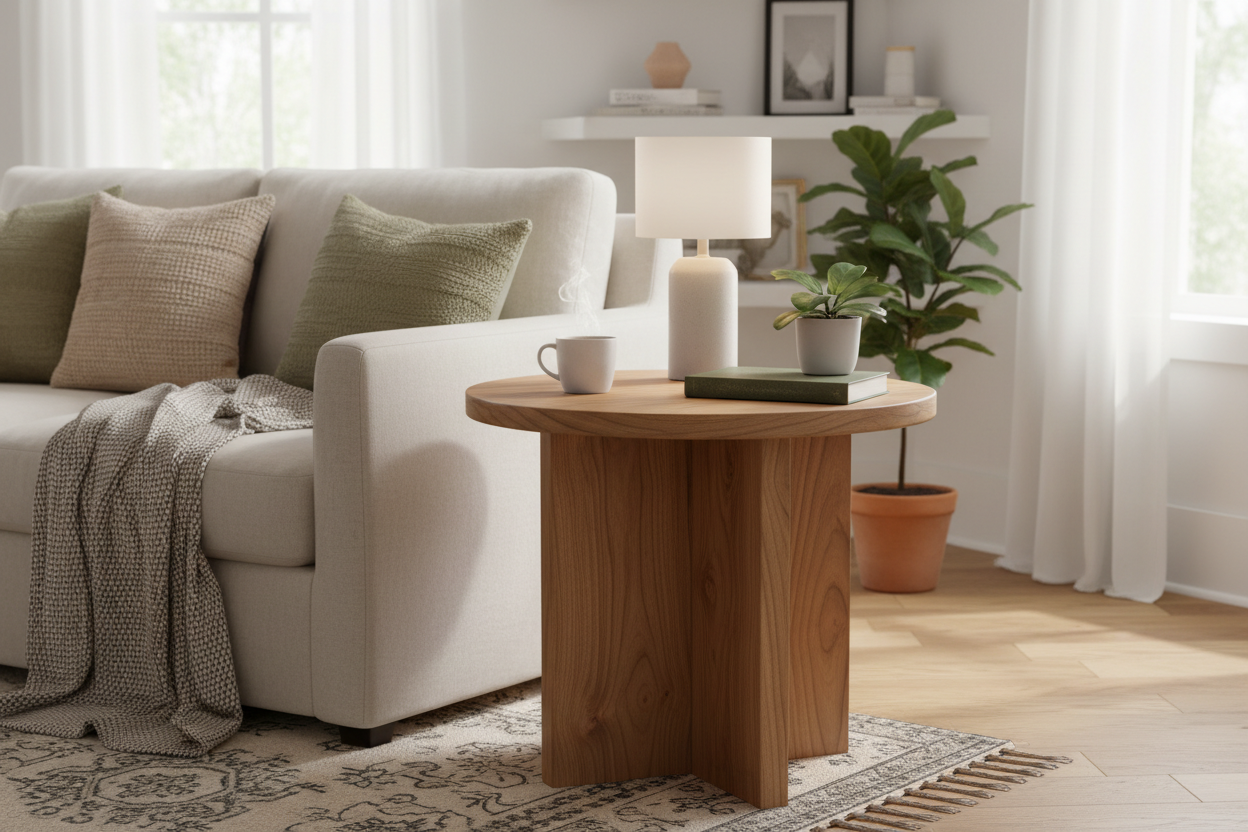
A round side table wood piece can completely transform how a room feels. Unlike their square or rectangular counterparts, circular designs soften harsh angles and create a more inviting flow throughout your space. They're practical, too—no sharp corners to bump into during late-night trips to the kitchen, and they fit seamlessly into tight spots where other furniture simply won't work.
I learned this the hard way after moving into a smaller apartment last year. My old rectangular side table constantly caught my hip as I walked past the sofa, and it made the already cramped living room feel even more confined. Switching to a wooden round side accent table changed everything. The room suddenly felt more open, and I stopped collecting bruises on my thighs.
The Timeless Appeal of Circular Design
There's something inherently pleasing about circles. They've been used in furniture design for centuries because they encourage conversation and create visual harmony. A circle wooden side table draws the eye without dominating a space, making it perfect for rooms where you want multiple focal points rather than one commanding piece.
Wood brings warmth that metal or glass simply can't match. The grain patterns tell a story, and each piece develops its own character over time. Whether you choose oak, walnut, pine, or reclaimed wood, you're bringing a natural element indoors that connects your space to the outside world.
Placement Strategies That Actually Work
The round table side placement matters more than most people realize. Next to a sofa or armchair is the obvious choice, but consider placing one between two chairs to create an intimate conversation area. In bedrooms, they work beautifully as nightstands, especially in smaller rooms where traditional bedside tables feel too bulky.
Corners are another underutilized opportunity. A circle wooden side table can soften a harsh corner while providing a spot for a lamp, books, or a plant. The curved edge means you can push it closer to the wall junction than a square table, maximizing your floor space.
Size Matters More Than You Think
Getting the proportions right makes the difference between a piece that looks intentional and one that seems like an afterthought. Your wooden round side accent table should generally sit level with or slightly lower than the arm of your sofa or chair. This makes it easy to set down a drink or grab your phone without awkward reaching.
Diameter is equally important. For tight spaces, look for tables between 16-20 inches across. These provide enough surface area for essentials without overwhelming the room. Larger rooms can accommodate 24-inch or even 30-inch pieces, which can serve as statement pieces while remaining functional.
Material Quality and Construction
Not all wood furniture is created equal. Solid wood construction will outlast veneer or particleboard by decades. Check how the top is attached to the base—quality pieces use proper joinery rather than just screws or brackets. The finish should feel smooth and even, protecting the wood while letting its natural beauty shine through.
The base design affects both stability and aesthetics. Three-legged designs offer a mid-century modern vibe and work well on uneven floors. Four-legged options provide maximum stability, while pedestal bases create a cleaner, more minimalist look. Consider your existing furniture style when choosing.
Mixing Wood Tones Successfully
You don't need to match wood tones exactly throughout a room—in fact, mixing them creates more visual interest. A lighter round side table wood piece can brighten a room dominated by dark furniture, while a rich walnut or mahogany table adds depth to lighter spaces. The key is ensuring the undertones work together. Warm woods (those with red, orange, or yellow undertones) should stay together, as should cool woods with gray or brown undertones.
Styling Your Surface
The circular shape creates a natural grouping area. Use the rule of thirds: place items at different heights and in odd numbers. A table lamp, a small stack of books, and a decorative object create an appealing vignette without cluttering the surface.
Leave some breathing room. A common mistake is filling every inch of available space. Your round table side should have at least 30-40% of its surface visible to maintain a clean, intentional look. This also ensures you have room to actually use the table for its intended purpose—holding your coffee, remote, or reading glasses.
Maintenance and Long-Term Care
Wood furniture requires minimal maintenance but rewards proper care with decades of beauty. Dust regularly with a soft cloth to prevent buildup that can scratch the finish. Use coasters religiously—water rings are preventable tragedies. For spills, blot immediately rather than wiping, which can spread the liquid and push it into seams.
Every few months, treat your wooden round side accent table to a proper cleaning with a wood-specific cleaner, followed by a quality furniture polish. This nourishes the wood and maintains the protective finish. Avoid placing your table in direct sunlight, which can fade and dry out the wood over time, or near heating vents that create similar problems.
When Refinishing Makes Sense
Even well-maintained wood furniture eventually shows wear. The beauty of solid wood is that it can be refinished. Light scratches often buff out with a furniture marker or touch-up pen in a matching stain color. Deeper damage might require sanding and refinishing, which sounds intimidating but is manageable for most people with basic tools and patience.
Budget Considerations and Value
Quality wooden side tables range from under $100 to several thousand dollars. The price reflects materials, construction methods, and brand names, but expensive doesn't always mean better for your needs. A well-made piece from a mid-range manufacturer often provides better value than a designer name with similar construction.
Consider cost per year of use. A $300 solid wood table that lasts 20 years costs $15 annually. A $75 particleboard version that needs replacing every three years costs $25 annually and creates more waste. Investing in quality often saves money while reducing environmental impact.
Frequently Asked Questions
What's the ideal height for a round wooden side table next to a sofa?
The table surface should sit within two inches of your sofa arm height, typically between 24-26 inches tall. This allows you to comfortably reach items without straining. If you primarily use the table for decorative purposes rather than function, you have more flexibility with height.
Can I use a round side table as a nightstand?
Absolutely. Round tables work beautifully as nightstands, especially in smaller bedrooms where traditional rectangular nightstands feel too bulky. Choose one that's roughly level with your mattress top for easy access to your phone, lamp, and water glass. The lack of corners also means fewer midnight shin collisions.
How do I prevent my wooden side table from wobbling on carpet?
Wobbling usually results from uneven leg lengths or carpet compression. Try furniture coasters or pads under each leg to distribute weight more evenly. For persistent issues, adjustable furniture levelers that screw into the bottom of legs let you fine-tune the height of each leg independently, creating a stable surface even on thick or uneven carpet.


Leave a comment
This site is protected by hCaptcha and the hCaptcha Privacy Policy and Terms of Service apply.