










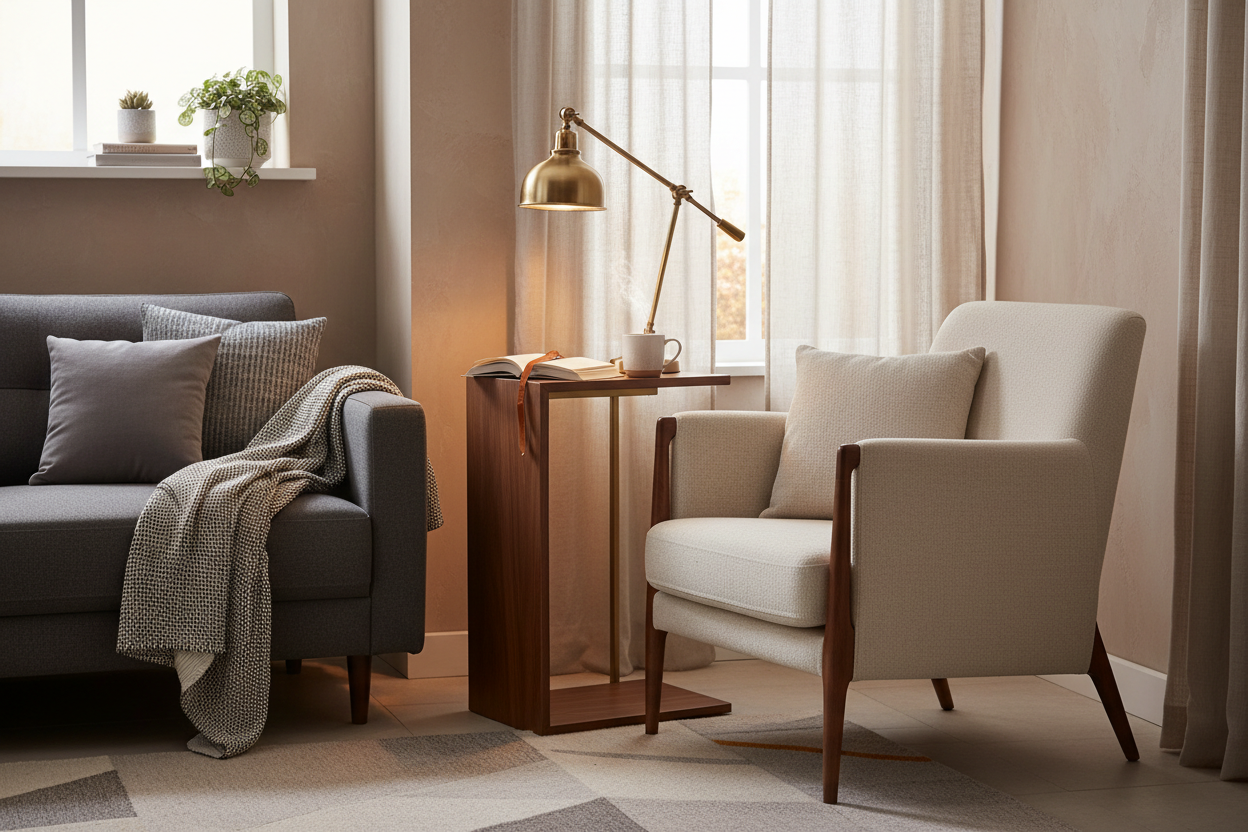
Living in a smaller apartment taught me something valuable: furniture doesn't need to be bulky to be functional. After years of bumping into oversized end tables and struggling to navigate tight spaces, I discovered that slim chairside tables offer everything you need without eating up precious square footage. These slender pieces fit snugly beside sofas and armchairs, providing a convenient surface for drinks, books, and lamps while maintaining an open, breathable feel in your room.
The beauty of a skinny chairside table lies in its ability to disappear when you need space but appear exactly when you need a surface. Unlike traditional end tables that can overwhelm a room, these streamlined alternatives typically measure between 10 to 14 inches in width, making them ideal for tight corners, narrow hallways, or alongside furniture in compact living areas.
Understanding Different Slim Table Styles
When shopping for space-saving furniture, you'll encounter several variations that serve similar purposes but with distinct designs. A 6 end table, for instance, often refers to models with a six-inch profile—extremely narrow pieces perfect for the tightest spaces. These ultra-compact options work wonderfully in studio apartments or between furniture pieces where even a standard slim table might feel too wide.
The skinny c table represents another popular design, featuring a distinctive C-shaped base that slides under sofas or chairs. This configuration allows the tabletop to hover directly over your lap, creating an ideal surface for laptops, meals, or crafts without requiring you to reach awkwardly to the side. I've found these particularly useful for anyone who works from their couch or enjoys breakfast while watching morning television.
Meanwhile, a skinny wood end table brings warmth and natural texture to your space while maintaining that crucial slim profile. Wood construction offers durability and timeless appeal, blending seamlessly with both traditional and contemporary decor schemes. Oak, walnut, and reclaimed wood versions add character without the visual weight of metal or glass alternatives.
Storage Options in Compact Designs
One concern many people have about downsizing their furniture is losing storage capacity. However, a small narrow end table with storage proves you don't have to sacrifice function for form. Manufacturers have become incredibly creative, incorporating drawers, shelves, and compartments into surprisingly slender frames.
Look for models with pull-out drawers that run the full depth of the table rather than the width. This design maximizes storage volume while keeping the footprint minimal. Some versions include lower shelves perfect for displaying books or storing magazines, while others feature hidden compartments behind doors or beneath lift-top surfaces.
An ultra slim end table with storage might include magazine racks on the side, USB charging ports built into the surface, or even pull-out trays that expand the usable surface area when needed. These thoughtful details transform a simple side table into a multi-functional piece that earns its place in your home.
Creative Placement Ideas
The versatility of these narrow pieces opens up placement possibilities beyond the traditional beside-the-sofa position. Narrow end table ideas include using them as bedside tables in tight bedrooms, creating a landing spot in entryways, or positioning them behind sofas to hold lamps and decorative items.
In my own home, I've used a slim chairside table as a makeshift bar cart in the dining room, a plant stand near a sunny window, and even as a printer table in a home office corner where a full desk wouldn't fit. The narrow profile means you can tuck these pieces into spaces you might not have considered usable before.
Hallways particularly benefit from these slender designs. A skinny wood end table positioned along a corridor provides a surface for keys, mail, or decorative accents without creating an obstacle course. Pair it with a mirror above, and you've created a functional entry vignette in previously wasted space.
Choosing the Right Height and Proportion
While width matters most for space-saving, height plays an equally important role in functionality and aesthetics. Standard chairside tables range from 24 to 26 inches tall, positioning them slightly higher than traditional coffee tables and roughly level with sofa armrests. This height makes reaching for items comfortable without requiring you to lean down or stretch up.
Consider what you'll primarily use the table for when selecting height. If you plan to use it mainly for a reading lamp, ensure the table positions the light source at an appropriate level relative to your seating. For laptop work with a C-table design, you'll want the surface to align comfortably with your lap when seated.
Proportion matters visually too. An ultra slim end table can look lost beside an oversized sectional sofa, while the same piece might appear perfectly balanced next to a compact armchair. Take measurements of your furniture and the available space, then visualize how different widths will look in context.
Material Considerations Beyond Wood
While wooden options offer classic appeal, other materials bring their own advantages to slim table designs. Metal frames with glass or marble tops create an airy, modern aesthetic that helps small rooms feel more spacious. The transparency of glass particularly helps maintain visual flow in tight quarters.
Mixed-material designs combine the warmth of wood with the sleekness of metal, offering industrial or transitional styling that works across various decor themes. Acrylic tables provide the see-through quality of glass with improved durability and lighter weight, making them easier to move when rearranging furniture.
Consider your lifestyle when selecting materials. Homes with children or pets might benefit from the durability of solid wood or metal over delicate glass surfaces. High-moisture environments like basements might require materials resistant to warping or rust.
Styling Your Slim Table
The limited surface area of a skinny chairside table requires thoughtful styling to avoid clutter. Choose one or two key items rather than crowding the top with multiple objects. A single lamp and a small tray for remotes creates a functional, clean look. Alternatively, a small plant and a favorite book offers visual interest without overwhelming the space.
Vertical elements work particularly well on narrow tables. A tall, slender lamp draws the eye upward, making ceilings feel higher and rooms more spacious. Similarly, a vertical stack of books or a narrow vase with tall branches adds height without consuming precious tabletop real estate.
Remember that the area beneath the table offers additional opportunities. If your table includes a lower shelf, style it with baskets for hidden storage or a few carefully chosen decorative items that complement your room's color scheme.
Frequently Asked Questions
What's the ideal width for a chairside table in a small living room?
For most small living rooms, a width between 10 to 14 inches provides the best balance of functionality and space-saving. Tables narrower than 10 inches may feel unstable or too small for practical use, while anything wider than 14 inches starts to defeat the purpose of choosing a slim design. Measure your available space and allow at least 24 inches for a comfortable walking path.
Can a C-table support a laptop safely?
Yes, most quality C-tables are designed to support laptops and can typically hold 15 to 30 pounds safely. Look for models with a wide, stable base and consider the weight distribution—keeping heavier items centered on the table rather than at the edges. Always check the manufacturer's weight specifications before purchasing.
How do I prevent a narrow table from tipping over?
Choose tables with a wide base relative to their height, and avoid top-heavy designs. Many slim tables feature weighted bases or L-shaped feet that extend under furniture for added stability. If you have concerns, look for models specifically marketed as tip-resistant, or consider securing the table to the wall if it will remain in a fixed location.

Leave a comment
This site is protected by hCaptcha and the hCaptcha Privacy Policy and Terms of Service apply.