










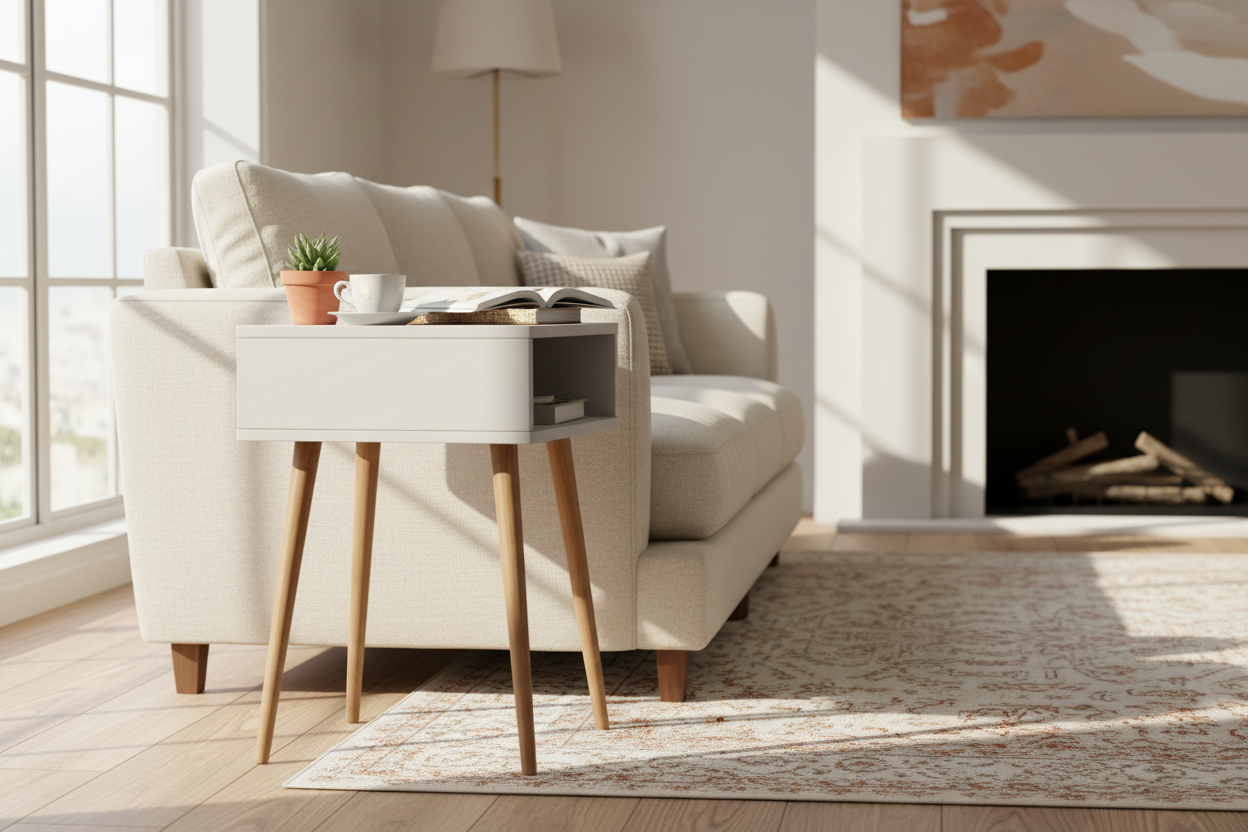
A white side table with wood legs offers the perfect balance between modern minimalism and natural warmth, making it one of the most versatile furniture pieces you can add to any room. This combination creates a Scandinavian-inspired aesthetic that works beautifully whether you're decorating a contemporary apartment or a traditional family home.
I'll admit, I was skeptical at first. When I moved into my new apartment last year, the blank canvas of white walls and light hardwood floors felt overwhelming. I needed something that would anchor my living space without making it feel cluttered or too matchy-matchy. That's when I discovered the magic of pairing a crisp white tabletop with natural wooden legs.
The Design Appeal of White and Wood
The contrast between a painted white surface and exposed wood grain creates visual interest without overwhelming a space. White reflects light and makes rooms feel larger, while wooden legs add texture and prevent the piece from feeling too sterile or clinical. This combination has become a staple in interior design because it bridges multiple style categories—from mid-century modern to coastal chic to farmhouse aesthetics.
What makes a white side table wooden legs design particularly appealing is its chameleon-like quality. Place it next to a velvet sofa with brass accents, and it reads sophisticated. Put it in a bedroom with linen bedding and rattan baskets, and it feels relaxed and beachy. The neutral palette means you're not locked into one decorating direction.
Material Considerations That Actually Matter
The quality of both the white finish and the wood species significantly impacts how your table will age. For the white surface, you'll typically encounter three options: solid wood painted white, MDF with a white veneer, or laminate finishes. Solid wood offers the best longevity but comes at a higher price point. MDF provides a smooth, consistent surface that's less prone to warping, while laminate is budget-friendly and easy to clean.
The wooden legs deserve equal attention. Oak legs bring a light, honey-toned warmth with prominent grain patterns. Walnut creates a richer, more dramatic contrast against white. Rubberwood offers an affordable middle ground with decent durability. I chose oak for my table because I wanted something that would complement my existing flooring without creating too much visual competition.
Finish Options for Different Lifestyles
The finish on your white side table with wood legs determines both its appearance and maintenance needs. Matte white finishes hide fingerprints and minor scratches better than glossy ones, making them ideal for high-traffic areas or homes with children. Glossy finishes reflect more light and photograph beautifully, but they show every smudge.
For the wooden legs, natural oil finishes showcase the grain beautifully and can be refreshed over time, though they require occasional maintenance. Polyurethane-sealed wood is more resistant to water rings and spills but loses some of that touchable, organic quality. Consider how you'll actually use the table—if it's holding your morning coffee cup daily, durability trumps aesthetics.
Size and Proportion Guidelines
A side table should sit at approximately the same height as the arm of your sofa or chair, give or take two inches. This typically translates to 24-27 inches tall. The surface area depends on what you'll place on it. If you only need space for a lamp and a book, an 18-inch diameter works perfectly. If you're using it as a functional workspace or dining surface in a small apartment, consider going up to 20-24 inches.
The leg style affects the visual weight of the piece. Tapered legs create an airier, mid-century feel, while thicker, turned legs lean more traditional. Splayed legs (angled outward) offer better stability and a retro vibe. My table has simple tapered oak legs, which I appreciate because they don't compete with the other furniture in the room.
Styling Your White and Wood Side Table
The beauty of this furniture style lies in its flexibility. I keep mine relatively minimal—a ceramic table lamp with a linen shade, a small succulent in a terracotta pot, and whatever book I'm currently reading. This setup takes up about two-thirds of the surface, leaving breathing room that prevents the arrangement from feeling cluttered.
Layering different textures amplifies the natural warmth of the wooden legs. A woven basket tucked underneath adds storage and visual interest. A small tray on top corrals smaller items like remotes or coasters while creating a defined zone. Metallic accents—whether through a brass lamp base or copper picture frame—catch light and add a touch of glamour without overwhelming the clean aesthetic.
Common Placement Strategies
Beyond the obvious spot next to your sofa, white side tables with wooden legs work beautifully as nightstands, providing a lighter alternative to traditional bedroom furniture. In entryways, they offer a landing spot for keys and mail without the visual bulk of a console table. I've even seen them used as plant stands in sunrooms, where the white surface reflects light onto the foliage.
Pairing two matching tables on either side of a bed or sofa creates symmetry and balance. Alternatively, mixing a white side table wooden legs design with a different style on the opposite side adds personality and prevents the space from feeling too coordinated. The key is maintaining similar heights and visual weights even when the styles differ.
Maintenance and Longevity
White surfaces inevitably show wear over time, but proper care extends their lifespan considerably. Use coasters religiously—water rings on white paint or finish are difficult to remove. Dust regularly with a microfiber cloth rather than letting grime build up, which can dull the finish. For painted surfaces, a slightly damp cloth handles most spills, but avoid harsh chemicals that might yellow the white over time.
The wooden legs need occasional attention too. Depending on the finish, you might need to reapply oil annually or simply dust and wipe them down. Check the leg joints periodically to ensure they remain tight—a wobbly table isn't just annoying, it can stress the joints and lead to more serious damage.
Budget Ranges and What to Expect
You can find basic versions starting around $50-80, typically featuring MDF tops and rubberwood legs. These work fine for light use but may not withstand daily wear in high-traffic areas. The mid-range sweet spot sits between $150-300, where you'll find better construction, solid wood options, and more thoughtful design details. Premium pieces from established furniture makers can exceed $500, offering heirloom quality with dovetail joinery and sustainably sourced hardwoods.
I spent about $180 on mine, which felt like the right balance between quality and budget. After eighteen months of daily use, it still looks nearly new, which tells me the investment was worthwhile. Cheaper options I considered showed wear patterns in store displays that made me hesitant about their longevity.
Environmental and Sustainability Factors
If eco-consciousness matters to you, look for tables made from FSC-certified wood, which ensures responsible forest management. Some manufacturers use reclaimed wood for legs, giving new life to materials that might otherwise end up in landfills. Water-based paints and finishes contain fewer volatile organic compounds than traditional options, improving indoor air quality.
The durability of a white side table with wood legs also contributes to sustainability. A well-made piece that lasts decades generates far less waste than cheap alternatives replaced every few years. This is where investing in quality construction pays dividends beyond just aesthetics—you're making a choice that reduces your environmental footprint.
Frequently Asked Questions
How do I prevent the white top from yellowing over time?
Keep your table away from direct sunlight, which is the primary cause of yellowing in white finishes. UV rays break down paint and protective coatings, causing discoloration. If your table must sit in a sunny spot, consider UV-filtering window film or rotate it periodically. Using cleaning products specifically designed for white furniture also helps maintain the original color.
Can I refinish or paint a white side table if I get tired of the color?
Absolutely. One advantage of wood furniture is its ability to be refinished. You can sand down the white top and restain or repaint it in any color you choose. The wooden legs can also be stripped and refinished if you want to change their tone. This flexibility means your table can evolve with your changing tastes rather than ending up in a donation pile.
What's the best way to match wooden legs to my existing flooring?
You don't need an exact match—in fact, a slight contrast often looks more intentional than trying to match perfectly. If you have warm-toned floors like oak or maple, choose legs in a similar warmth family but perhaps a shade lighter or darker. With cool-toned floors like gray-washed wood, walnut or darker stained legs create beautiful contrast. Bringing a photo of your room when shopping helps visualize how different wood tones will interact with your space.


Leave a comment
This site is protected by hCaptcha and the hCaptcha Privacy Policy and Terms of Service apply.