










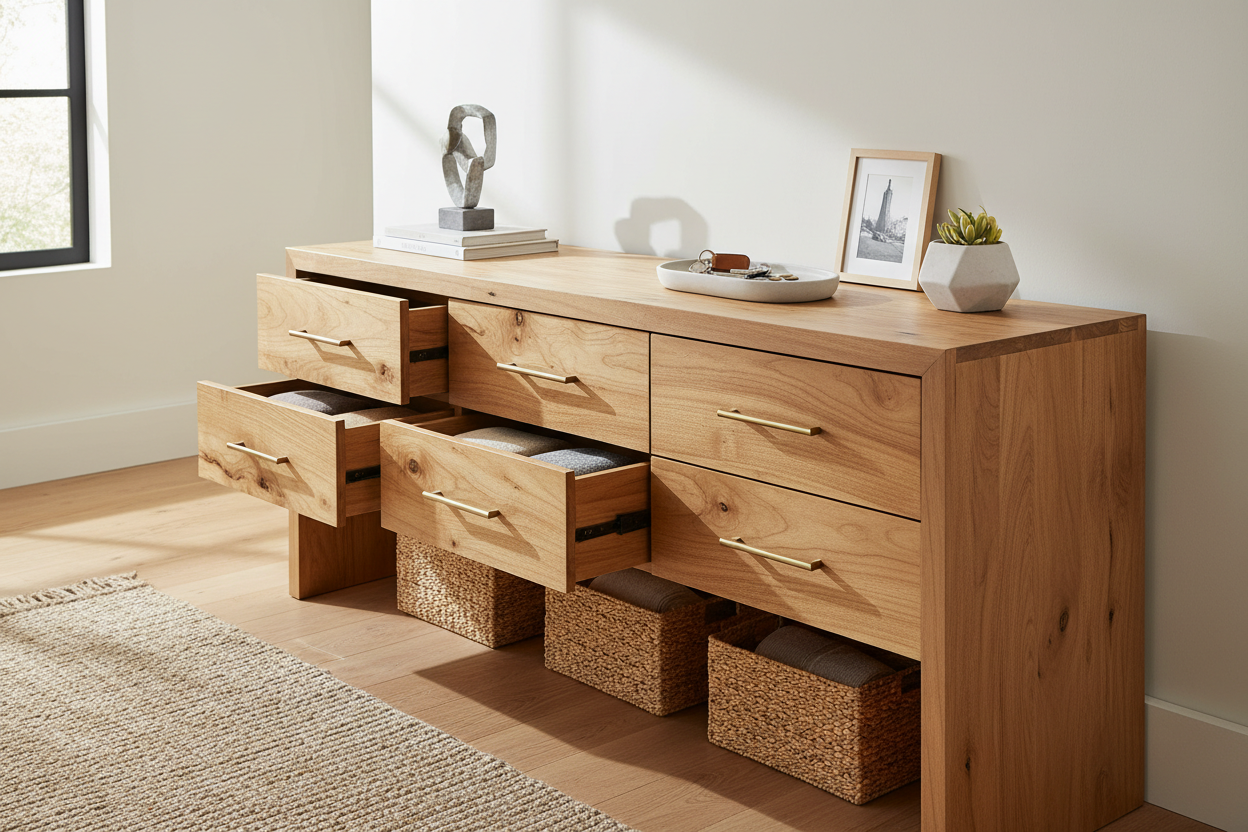
The entryway often sets the tone for the entire home, yet it is frequently the most neglected space in terms of functionality. You walk through the door, hands full of mail, keys, and sunglasses, looking for a place to land. Without a dedicated surface, these items end up on the kitchen counter or the dining table, creating instant clutter. The solution isn't just a flat surface; it is a piece of furniture that combines warmth with hidden utility. A wood console table with drawers offers exactly that balance, providing a stage for decor while swallowing up the small, messy items that define daily life.
Choosing the right piece goes beyond just measurements. It requires understanding how wood types interact with your existing decor and recognizing the difference between a decorative accent and a functional storage unit. Whether you are looking to ground a floating sofa or organize a chaotic hallway, a solid timber console brings an organic texture that metal or glass simply cannot replicate.
The specific value of drawers in console design
Many homeowners make the mistake of buying open-shelf consoles. While these look airy and beautiful in showroom catalogs, they require you to be impeccably tidy. Every item placed on an open shelf is on display. If you drop your car keys, a handful of receipts, and a charging cable on a flat table, it looks messy immediately.
This is where wood console tables with drawers become essential. The drawers act as a "junk filter." They provide a designated home for the necessary but unsightly objects that accumulate near the front door. Think about the utility of having a specific drawer for batteries, spare keys, or the dog’s leash. By hiding these items away, the surface of the table remains free for intentional styling—a lamp, a tray, or a vase of fresh flowers.
I learned this lesson the hard way in my first apartment. I bought a sleek, glass-top industrial table because it looked modern and took up very little visual weight. Within a week, the glass was covered in fingerprints and a layer of dust, and the "minimalist" look was ruined by a pile of unopened mail I didn't know where else to put. Years later, I swapped it for a vintage reclaimed oak console with two deep drawers. The visual noise in the hallway vanished instantly. The mail went into a designated organizer, and the loose change and keys went into the drawers. The difference in my mental clarity walking through the door was palpable.
Selecting the right wood species and finish
When shopping for a wood console table with drawers, the material quality dictates longevity. You aren't just buying a look; you are buying durability. Softwoods like pine are cost-effective and offer a rustic, farmhouse aesthetic, but they dent easily. If your hallway sees heavy traffic—kids throwing backpacks or groceries brushing against the furniture—pine might show wear and tear too quickly.
Hardwoods such as oak, walnut, and maple are superior choices for high-traffic zones. Walnut offers a rich, dark tone that works exceptionally well in mid-century modern or contemporary spaces. Its grain is tight and durable. Oak, usually available in white or red varieties, is incredibly hard-wearing and hides dust better than darker woods due to its pronounced grain pattern. For a more sustainable or exotic look, mango wood has become increasingly popular. It is a byproduct of the fruit industry and offers unique, variegated grain patterns that turn a simple furniture piece into a statement.
Understanding joinery and construction
The construction of the drawers tells you everything you need to know about the quality of the table. When you pull a drawer out, look at the side. If you see interlocking teeth at the corner, that is dovetail joinery. This is a hallmark of craftsmanship and ensures the drawer front won't pull away after years of use.
Pay attention to the glide mechanism as well. Traditional wood-on-wood slides are common in antiques and rustic reproductions. They can be stiff in humid weather but are generally fail-safe. Modern metal ball-bearing glides offer a smoother experience and allow the drawer to extend fully, giving you access to the very back. If you plan on using the drawers daily, smooth glides are a non-negotiable feature.
Placement beyond the entryway
While the hallway is the most obvious location, wood console tables with drawers are surprisingly versatile throughout the home. In an open-concept living room, placing a console behind a floating sofa helps define the space. It covers the often-unattractive back of the couch and provides a surface for reading lamps, which is perfect if you don't have floor outlets nearby.
In a dining room, a console can serve as a compact buffet or sideboard. The drawers become the perfect spot for storing napkin rings, placemats, or serving utensils that don't fit in the kitchen silverware drawer. Because consoles are typically narrower than traditional buffets, they save precious floor space in smaller dining areas.
Even in a bedroom, a console can replace a traditional vanity. If you pair a table with a wall-mounted mirror and a small stool, you have a dedicated grooming station. The drawers hold makeup and brushes, keeping the surface clean.
Styling your console for maximum impact
Once you have the piece in place, styling it is the final step to integrating it into your home. The goal is to create balance without overcrowding. Start with an anchor piece on the wall above the table. A large round mirror is a classic choice because it reflects light and breaks up the straight lines of the console. Alternatively, a large piece of art can introduce color to a neutral area.
Create height on one side of the table. A tall table lamp is usually the best way to do this, adding a warm glow that is much more inviting than harsh overhead lighting. On the opposite side, create a grouping of lower items to balance the visual weight. A stack of three coffee table books with a small decorative object on top works well, or perhaps a ceramic bowl for catching items that you need to grab quickly.
Leave some negative space. You do not need to cover every inch of the wood. Part of the beauty of buying a wood console is seeing the grain and the finish. Let the material breathe. If the table has a bottom shelf, use large baskets to add texture and store larger items like throw blankets or umbrellas. This keeps the visual weight grounded and adds another layer of storage utility.
Finding the perfect fit
Before making a purchase, measure your space carefully. A console should not impede the flow of traffic. Standard depth ranges from 12 to 18 inches. If your hallway is narrow, look for a piece closer to 12 inches deep. Ensure the length is proportional to the wall or the sofa it sits behind—generally, the table should be about two-thirds the length of the sofa.
Investing in a high-quality wood piece pays dividends in both style and organization. It transforms a pass-through space into a destination and turns clutter into curated order. By focusing on solid materials and functional drawer design, you ensure the piece remains a staple in your home for years to come.
Frequently Asked Questions
How tall should a console table be?
Most standard console tables stand between 30 and 36 inches tall. If you are placing the table behind a sofa, measure the sofa back first; the console should be level with or slightly lower than the top of the couch cushions, never higher.
Can I mix wood tones between my floor and the console table?
Yes, mixing wood tones adds depth and prevents a room from looking flat or overly matched. A good rule of thumb is to ensure the undertones match (warm with warm, cool with cool) or to create high contrast, such as placing a dark walnut table on light oak flooring.
What is the difference between a console table and a sofa table?
Technically, they are the same type of furniture, defined by their long, narrow shape. The distinction lies in placement: it is called a console table when placed against a wall (usually in an entryway) and a sofa table when placed behind a couch. Because sofa tables are freestanding, they often need to be finished on all four sides, whereas some wall consoles may have an unfinished back.


Leave a comment
This site is protected by hCaptcha and the hCaptcha Privacy Policy and Terms of Service apply.