










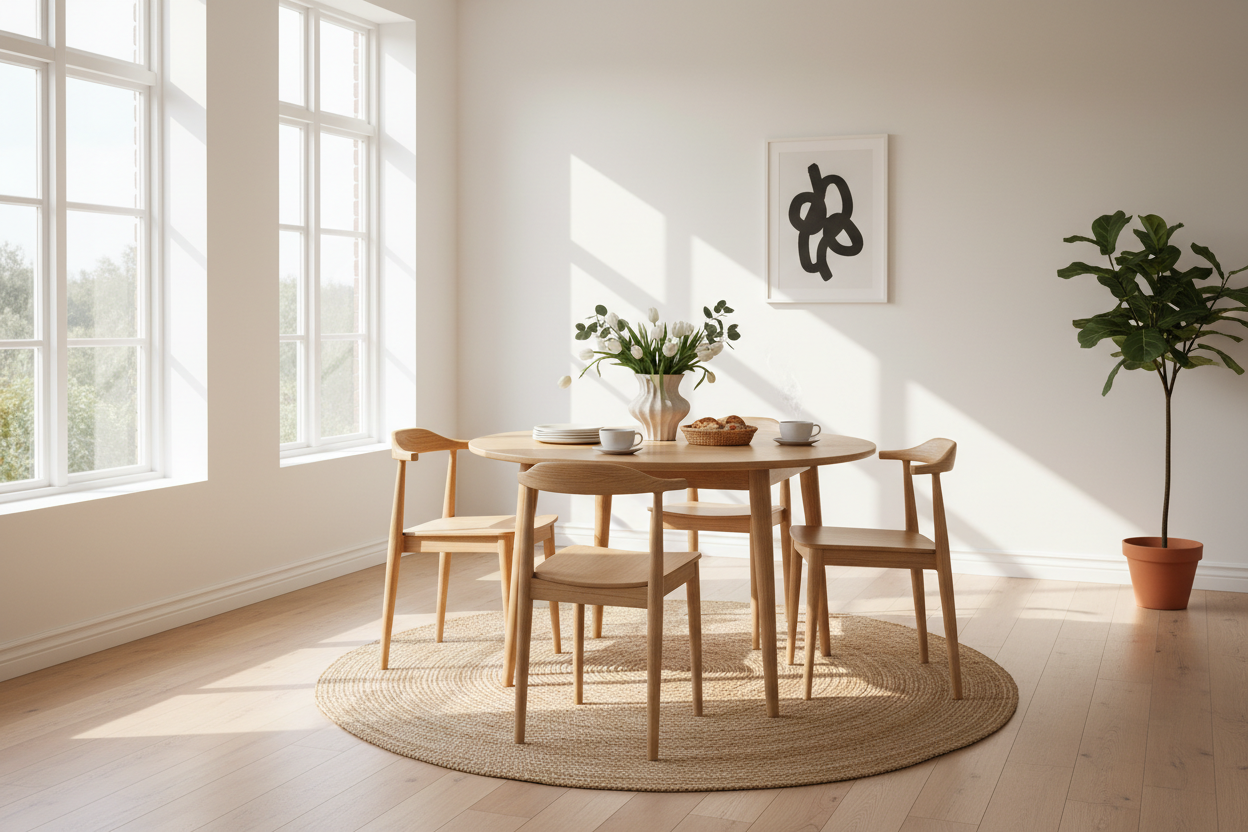
Choosing the right furniture for a dining area often feels like a geometry test you didn't study for. You measure, you tape out outlines on the floor, and you worry about flow. If you are dealing with a tighter footprint or a boxy room that feels too rigid, an IKEA round dining table is usually the first solution that pops up in search results. It is the default choice for a reason: the curved edges soften the room, the lack of corners saves your hips from bruises, and the price point is generally hard to beat.
But are they actually durable? Do they wobble? Having assembled and lived with a few of these over the years, the answer isn't a simple yes or no. It depends entirely on whether you prioritize aesthetic over heavy-duty usage, or if you need an extendable option for the occasional dinner party. The appeal of a circular setup goes beyond just saving space; it creates a communal atmosphere where no one is stuck at the head of the table, making conversation flow as easily as the traffic around the room.
My Love-Hate Relationship with the Docksta
I cannot talk about circular furniture without addressing the elephant in the room: the Docksta. This is the IKEA round table that launched a thousand Pinterest boards. It is a clear dupe for the mid-century Saarinen Tulip table, which costs thousands of dollars. When I moved into my first true one-bedroom apartment, the dining nook was barely large enough for a rug, let alone a standard six-seater. I bought the Docksta because I wanted that clean, white, pedestal look that makes a small room feel airy.
Living with it taught me a few things. Visually, it is a stunner. The single pedestal leg means you aren't tangling your knees with table legs, and you can slide chairs all the way in. However, you have to be realistic about the finish. The white top is not indestructible. After about six months of daily use—dropping keys, sliding ceramic bowls, and general life—I noticed micro-scratches. If you buy this table, treat it gently or use placemats. It stabilizes well if you tighten the bolts underneath periodically, but if you lean heavily on one edge, a pedestal base will always have a slight flex compared to a four-legged table.
The Ingatorp: When You Need Flexibility
If the Docksta is the beauty queen, the Ingatorp is the workhorse. This model solves the biggest complaint people have about round tables: the inability to host a big group. The Ingatorp is an extendable IKEA round dining table that hides a leaf inside. Unlike older tables where you have to store the extra leaf in a closet, this one folds neatly beneath the tabletop.
The mechanism is surprisingly smooth. You pull the sides apart, flip the leaf up, and suddenly your intimate breakfast table is an oval that seats six. The aesthetic here is more traditional, featuring turned legs and detailing that fits a farmhouse or classic style better than a modern loft. Because it has four legs rather than a central pedestal, it feels significantly more grounded. You don't get the "wobble" factor. The trade-off is that the legs can sometimes get in the way of chairs if you are trying to squeeze extra people in, but for stability and flexibility, it is arguably the best value in their lineup.
Why Round Tables Work Better in Small Spaces
Rectangular tables dictate the flow of a room. They create clear lanes of traffic. Round tables, conversely, act like a stone in a river; traffic flows organically around them. This is why interior designers constantly recommend an IKEA round table for square rooms or open-plan apartments. You shave off the corners, which physically gives you more square footage, but psychologically, it makes the room feel less cluttered.
There is also the social dynamic. At a round table, everyone faces the center. You can make eye contact with everyone else without craning your neck. It levels the playing field. For families with young children, the lack of sharp corners is a massive safety bonus. You stop worrying about a toddler running full speed into a 90-degree edge.
Material Matters: Veneer vs. Laminate
When browsing the warehouse aisles, pay close attention to the materials listed on the tag. IKEA generally uses a mix of particleboard, fiberboard, and either melamine foil, acrylic paint, or wood veneer. The durability difference is noticeable.
Tables like the Vedbo or the Mörbylånga use a wood veneer over a particleboard core. This gives you the warmth and texture of real wood without the warping issues of solid timber (or the high price tag). These tend to hide dust and fingerprints much better than the high-gloss white finishes. If you plan on using your dining table as a work-from-home desk, a veneer top is generally more forgiving of laptops and coffee mugs than the painted finishes, which can chip if you drop something heavy on them.
Styling Your Setup
The challenge with an IKEA round dining table is often pairing the right chairs. Because the table shapes are simple, you have permission to go a bit wild with seating. The transparent Tobias chairs are a classic pairing for the Docksta because they maintain that invisible, airy look. For the wood-toned tables, mixing in upholstered chairs can add softness and absorb sound, which is helpful if your dining area is in a room with hard floors and high ceilings.
Lighting also plays a crucial role. A round table practically begs for a pendant light centered directly above it. It anchors the space. If your junction box isn't centered, swagging a light fixture on a hook over the center of the table is an easy fix that looks intentional rather than messy.
The Verdict on Assembly
We have to talk about putting these things together. The pedestal tables usually come in two heavy boxes. The base is weighted to prevent tipping, so it is heavier than it looks. You will want a second pair of hands just to flip the table over once it is assembled. The four-legged versions are straightforward, usually just requiring a hex key and twenty minutes.
A pro tip for assembly: do not use a power drill on the final tightening of screws into particleboard. It is too easy to strip the hole, and once that grip is gone, the table will wobble forever. Hand-tighten until you feel resistance, then stop. If you move, disassemble the legs. Trying to squeeze a fully assembled round table through a doorway is a geometry puzzle you do not want to solve on moving day.
Frequently Asked Questions
Can I paint an IKEA laminate table if it gets scratched?
Yes, but you cannot just slap paint on it. The laminate surface is non-porous, so you must sand it down lightly to create grip and use a high-quality bonding primer (like a shellac-based primer) before applying your topcoat. Without the primer, the paint will peel off within weeks.
How many people can comfortably sit at a standard IKEA round table?
Most standard IKEA round tables, which hover around 100cm to 110cm in diameter, comfortably seat four people. You can squeeze in five for a game night or drinks, but for a full meal with place settings, four is the maximum before elbows start bumping.
Do the pedestal bases loosen over time?
They can. The single bolt or attachment point bears all the stress of the table's movement. It is good practice to keep the included tool in a nearby drawer and give the main bolt a quarter-turn tightening every few months to keep everything rock solid.


Leave a comment
This site is protected by hCaptcha and the hCaptcha Privacy Policy and Terms of Service apply.