










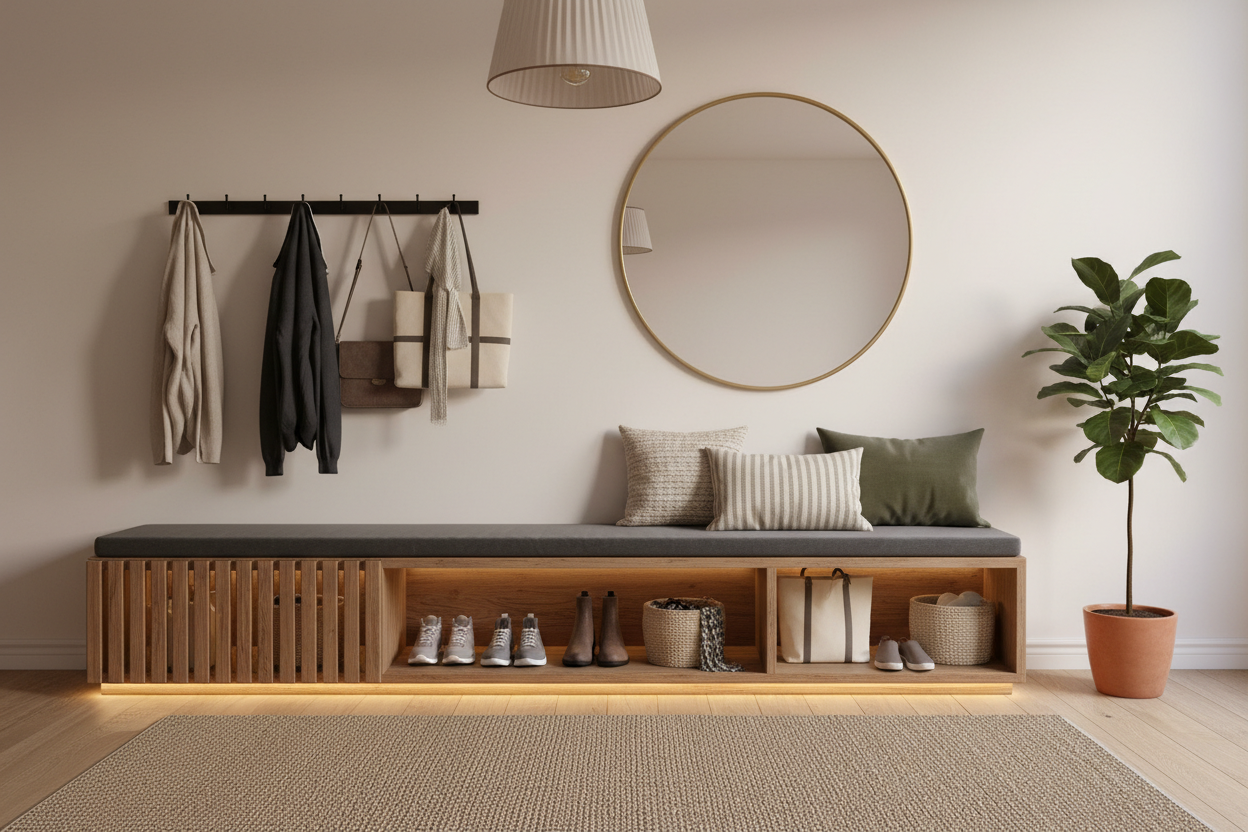
Finding the balance between a welcoming entryway and a functional storage zone is a constant struggle in most homes. You need a place to sit while putting on shoes, but you also need to hide the clutter that inevitably accumulates near the front door. While open cubbies and flip-top chests have been popular for years, the storage bench with doors is the superior choice for high-traffic areas. It solves the specific ergonomic problem of accessibility: you can retrieve items without standing up or clearing off the seat.
If you are tired of moving throw pillows, mail piles, or sitting guests just to grab a pair of sneakers from inside a chest, switching to a front-opening design changes the flow of the room. It transforms a simple seat into a piece of functional cabinetry, blending the utility of a locker with the comfort of living room furniture.
The "Flip-Top" Trap: A Personal Lesson in Functionality
A few years ago, I fell in love with a vintage cedar chest for my mudroom. It was beautiful, smelled great, and had a massive hinged lid. I envisioned a tidy space where winter blankets and spare boots would live happily out of sight. The reality was much different. Because the bench was the only flat surface in the hallway, it became a magnet for "temporary" clutter—backpacks, grocery bags, and the dog’s leash.
Every time I needed something from inside, I had to completely clear the surface. Consequently, I stopped using the storage space altogether. It became a coffin for things I never touched. When I finally swapped it out for a modern bench with doors, the dynamic changed instantly. I could sit on the bench, tie my laces, and reach down to open the cabinet and grab my umbrella without disturbing the ecosystem on top of the cushion. That accessibility is the primary reason front-access storage beats top-access storage in active living spaces.
Why Front-Facing Doors Win on Versatility
The mechanics of how you access your belongings dictate where you can place the furniture. A flip-top bench requires vertical clearance. You cannot place it under a low window sill, coat hooks, or a wall-mounted mirror if the lid swings up too high. A storage bench with doors eliminates this vertical constraint.
This design flexibility allows you to utilize the bench in tighter quarters. In a dining room setup, specifically for banquette seating, a bench with cabinet-style access is essential. You certainly do not want to ask your dinner guests to stand up so you can retrieve the serving platter stored beneath them. With cabinet doors, the storage remains active and accessible regardless of who is using the seat.
Types of Door Mechanisms to Consider
Not all doors function the same way, and the clearance in your room should dictate your choice. Standard hinged doors swing outward, requiring about 12 to 18 inches of floor space in front of the unit. This is standard for most cabinetry, but it can be tight in a narrow hallway.
Sliding doors are the alternative for cramped corridors. They slide on a track behind one another, meaning they require zero clearance to open. The trade-off is that you can only access half the interior space at a time. If you plan to store large, bulky items like rigid boxes or vacuum cleaners, sliding doors might be frustrating. For shoes and smaller bins, however, they are excellent.
Assessing Build Quality and Hardware
Since this piece of furniture serves double duty as a seat, structural integrity is non-negotiable. When shopping, look past the aesthetic finish and inspect the construction materials. Particleboard can struggle to hold heavy screws over time, especially on moving parts. If the bench will see daily use, solid wood or high-grade plywood is preferable.
Pay close attention to the storage bench doors and their hinges. In cheaper models, the constant vibration from people sitting down and standing up can cause the door alignment to shift. This leads to doors that scrape the floor or refuse to stay closed. Look for European-style adjustable hinges (hidden cup hinges) which allow you to tweak the alignment easily with a screwdriver. Soft-close mechanisms are also a major plus, preventing the doors from slamming shut on fingers—a crucial feature if you have children.
Optimizing the Interior Space
A cavernous empty box behind a door is only slightly better than a pile on the floor. To get the most out of a bench with doors, you need to customize the interior. Many units come with adjustable shelving. If you are storing shoes, you will want a shelf to double the capacity; otherwise, you are wasting the vertical space inside the cabinet.
For items that tend to tumble out, like scarves, gloves, or dog toys, use baskets or plastic bins that slide onto the shelves. This effectively turns the cabinet space into drawers. Labeling these bins can help maintain order, ensuring that the "winter gear" doesn't get mixed up with the "sports equipment." If your bench lacks internal shelves, consider installing simple wire risers or stacking bins to maximize the volume.
Ventilation Considerations
If the primary purpose of your furniture is shoe storage, airflow is a factor you cannot ignore. Completely sealed cabinets can trap odors and moisture, which ruins leather and fabric over time. Look for designs that incorporate louvers, slats, or decorative cutouts in the door panels. This allows air to circulate even when the unit is closed. If you fall in love with a solid-door unit, you can easily drill a few discreet holes in the back panel to facilitate airflow without ruining the front-facing aesthetic.
Styling Your Bench for the Room
Integrating a bench into your decor is about softening the hard lines of the cabinetry. Since the base looks like a cabinet, the top needs to look like a sofa. A high-quality, dense foam cushion is essential. It prevents the piece from looking like a low bookshelf someone just happened to sit on. Use throw pillows to add height and draw the eye up, balancing the visual weight of the wood or metal base.
In a bedroom setting, placing a bench with doors at the foot of the bed offers a sophisticated alternative to the classic trunk. It provides a place to store extra linens while offering a spot to put on socks. Match the hardware (knobs and pulls) to the other furniture in the room—like your dresser or nightstands—to make the piece feel custom and intentional rather than a mismatched add-on.
Making the Final Decision
The choice between open shelves, flip-tops, and cabinet doors comes down to your visual tolerance for clutter and your physical habits. If you are the type of person who drops things on the nearest flat surface, a flip-top is your enemy. If you hate the look of cluttered shoe rows, open cubbies will annoy you. The cabinet-style bench offers the clean look of concealed storage with the ergonomic ease of front access. It is a furniture investment that acknowledges how real life happens—messy, fast, and usually requiring a place to sit down.
Frequently Asked Questions
Does a storage bench with doors provide enough ventilation for shoes?
It depends on the design. Benches with louvered (slatted) doors or rattan inserts provide excellent airflow, which is ideal for footwear. If you choose a bench with solid doors, it is advisable to ensure the back panel has ventilation holes or to open the doors periodically to prevent odor buildup.
What is the standard depth for a bench intended for seating?
Most comfortable seating benches are between 15 and 18 inches deep. Anything shallower than 14 inches can feel precarious to sit on, while anything deeper than 20 inches might make it difficult to lean back against a wall or cushion comfortably. Always measure your available floor space to ensure the doors can swing open fully without hitting other furniture.
Can I use a storage bench with doors for dining seating?
Yes, this is a popular use case known as banquette seating. However, ensure the bench height (including the cushion) is roughly 18 to 19 inches, which is the standard height for dining chairs. Also, check that the doors do not scrape against the table legs when opened.

Leave a comment
This site is protected by hCaptcha and the hCaptcha Privacy Policy and Terms of Service apply.