










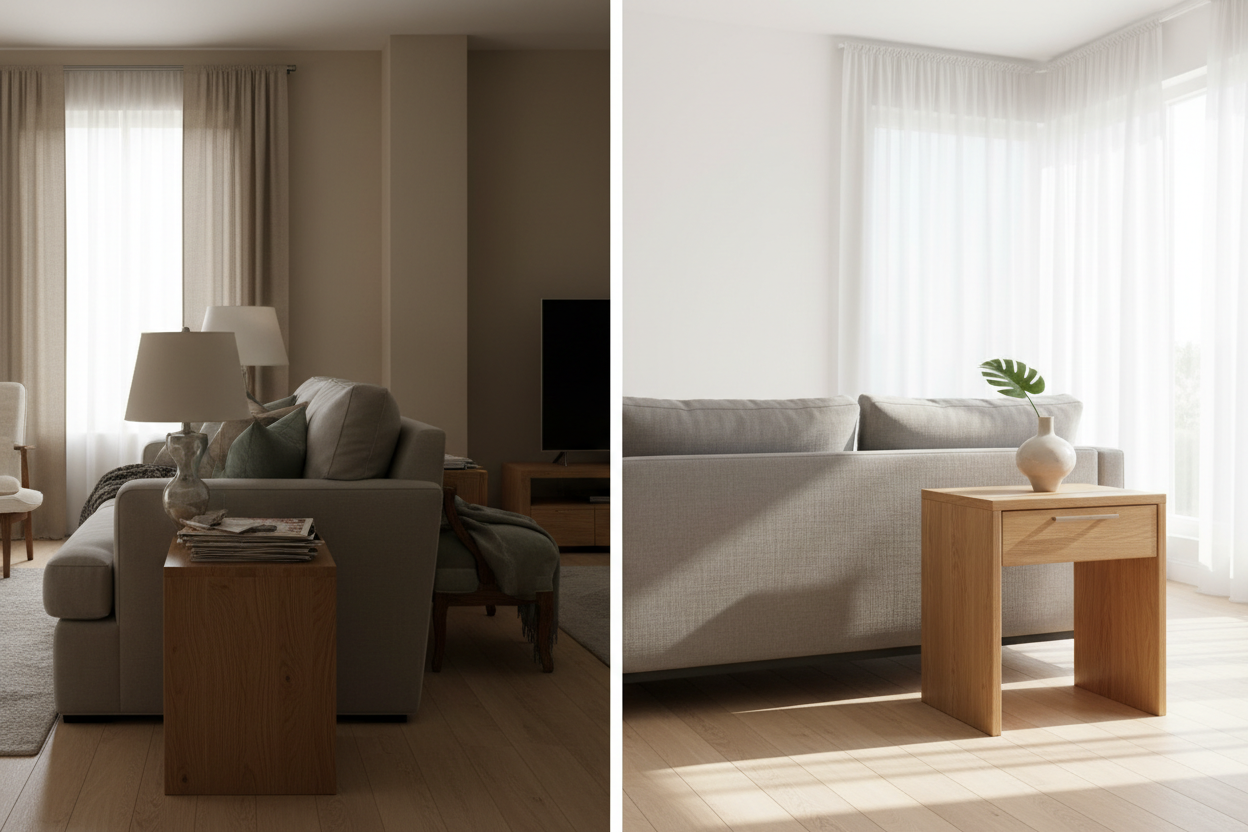
Living in a smaller apartment taught me something valuable: you don't need to sacrifice storage for space. A narrow end table with drawer became my secret weapon for keeping essentials within reach without cluttering my living room. These slim pieces fit perfectly between furniture, alongside beds, or in tight corners where traditional tables would never work.
The beauty of a skinny end table with drawer lies in its dual purpose. You get a surface for your coffee cup, phone, or reading lamp, plus hidden storage for remotes, chargers, and all those small items that tend to pile up. I remember the exact moment I realized I needed one—standing in my living room, looking at the awkward 8-inch gap between my sofa and the wall, thinking there had to be a better solution than letting that space go to waste.
What Makes These Tables Different
Standard end tables typically measure 18-24 inches wide, which sounds reasonable until you're trying to navigate a narrow hallway or fit furniture in a cozy bedroom. A narrow end table with drawer usually ranges from 7 to 14 inches in depth, making it possible to place them in spots you never considered before. The drawer adds functionality without requiring extra floor space, since it pulls out horizontally.
I've seen these tables work wonders in bedrooms where space is tight. Positioned next to the bed, they provide just enough room for a lamp and alarm clock on top, while the drawer holds books, glasses, medications, or whatever you need close by at night. The slim profile means you can still walk comfortably around your bed without stubbing your toes in the dark.
Choosing the Right Size and Style
Measuring your space before shopping saves tremendous frustration. I learned this the hard way when I ordered what looked like a perfect table online, only to find it stuck out too far from the wall. Take precise measurements of your available width, and remember to account for the drawer pull when it's open—you need clearance for that too.
Height matters just as much as width. Your skinny end table with drawer should align reasonably well with your sofa arm or mattress height. Too low, and you're constantly reaching down. Too high, and it looks awkward and feels uncomfortable to use. Most tables range from 22 to 30 inches tall, so match this to your existing furniture.
Material Considerations
Wood tables bring warmth and durability, though they typically cost more than alternatives. Metal frames with wood or glass tops offer a modern aesthetic and often weigh less, making them easier to move when cleaning. I opted for a solid wood option because I wanted something that could handle daily use without wobbling or showing wear quickly.
Glass tops look sleek but require constant cleaning—every fingerprint shows. If you have kids or pets, you might want to skip glass unless you enjoy wiping surfaces multiple times daily. Engineered wood or MDF provides budget-friendly options that can look surprisingly good, though they won't last as long as solid hardwood.
Placement Ideas Beyond the Obvious
Sure, these tables work great beside sofas and beds, but think creatively about other locations. Hallways often have dead space that a narrow table can transform into a functional drop zone for keys and mail. The drawer keeps clutter hidden while the top serves as a display area for a small plant or photo frame.
Bathrooms with enough floor space benefit from a skinny end table with drawer too. Use it to store extra toiletries, towels, or cleaning supplies while the top holds decorative items or daily essentials. Just make sure you choose water-resistant materials or apply appropriate sealant to protect against moisture.
Home offices cramped for space can use these tables as printer stands or extra storage adjacent to desks. The drawer provides a spot for office supplies, keeping them accessible but out of sight. This setup works particularly well in converted bedrooms where every inch counts.
Organization Tips for Small Drawers
Drawer dividers or small organizer boxes prevent items from becoming a jumbled mess. Without organization, you'll spend more time digging through the drawer than you save by having convenient storage. I use small fabric bins inside mine to separate different categories—one for electronics and chargers, another for reading glasses and bookmarks.
Avoid the temptation to overstuff the drawer. These tables aren't built to handle excessive weight, and overloading can cause the drawer mechanism to fail or the table to tip forward. Keep heavier items toward the back of the drawer to maintain balance.
Maintenance and Longevity
Regular dusting and occasional polish (for wood tables) keep your narrow end table with drawer looking fresh. Check the drawer slides periodically and apply a bit of wax or lubricant if they start sticking. Loose screws should be tightened promptly to prevent wobbling that can worsen over time.
Coasters are your friend, even on small tables. Water rings and heat marks damage finishes just as easily on narrow tables as wide ones. Taking these small preventive steps means your table will look good and function properly for many years.
Price Ranges and What to Expect
Budget options start around $40-60 and typically feature engineered wood construction with basic drawer slides. Mid-range tables ($80-150) offer better materials, smoother drawer mechanisms, and more attractive designs. Premium options ($200+) provide solid wood construction, dovetail joints, and superior finishes that justify the higher price through longevity.
I initially bought a cheap version, thinking it would do the job temporarily. Within six months, the drawer wouldn't close properly and the whole thing wobbled. Investing a bit more in a quality skinny end table with drawer proved worthwhile—it's still going strong three years later.
Common Mistakes to Avoid
Don't assume all narrow tables are created equal. Some advertised as "narrow" are still 16-18 inches deep, which might not fit your space. Always verify exact dimensions before purchasing. Online shopping makes this tricky since you can't see the actual size, so read measurements carefully and check customer reviews for accuracy.
Matching your room's aesthetic matters more than you might think. A rustic farmhouse table looks out of place in a modern minimalist room, and vice versa. The table might be functional, but if it clashes with your décor, you'll never be fully satisfied with it.
Another mistake is forgetting about assembly difficulty. Some tables arrive fully assembled, while others require significant setup. If you're not handy with tools, check reviews about assembly before buying. There's nothing worse than receiving furniture you can't put together properly.
Real-World Performance
After using a narrow end table with drawer daily, I can confirm they're not just space-saving gimmicks. The convenience of having storage exactly where you need it, without consuming valuable floor space, genuinely improves daily life. Whether you're reaching for the TV remote, storing charging cables, or keeping a book handy, having that drawer right there makes a difference.
The slim profile also makes rooms feel less cramped. Unlike bulky furniture that dominates a space, these tables blend in while remaining functional. Guests often don't even notice them until they need to set down a drink, which is exactly how good furniture should work—present when needed, invisible when not.
Frequently Asked Questions
How narrow can end tables actually be while remaining stable?
Most stable narrow end tables measure at least 7-8 inches deep. Anything slimmer tends to tip easily, especially when the drawer is pulled out. Look for tables with a wider base or lower center of gravity if you're concerned about stability. Tables with metal frames often achieve better stability at narrower widths than all-wood designs.
Can a skinny end table with drawer hold a lamp safely?
Yes, as long as the table is stable and the lamp base isn't too large. Choose lamps with bases no wider than the table's depth to prevent overhang. Shorter, wider lamps work better than tall, top-heavy designs. I use a lamp with a 6-inch base on my 10-inch deep table without any issues.
What's the best way to measure for a narrow end table?
Measure the available floor space width and depth, then subtract 2 inches from each dimension to allow clearance. Don't forget to measure the drawer pull-out space—add the drawer depth to your table depth measurement to ensure you have room for the drawer to open fully. Also measure the height of adjacent furniture to find an appropriate table height.

Leave a comment
This site is protected by hCaptcha and the hCaptcha Privacy Policy and Terms of Service apply.