










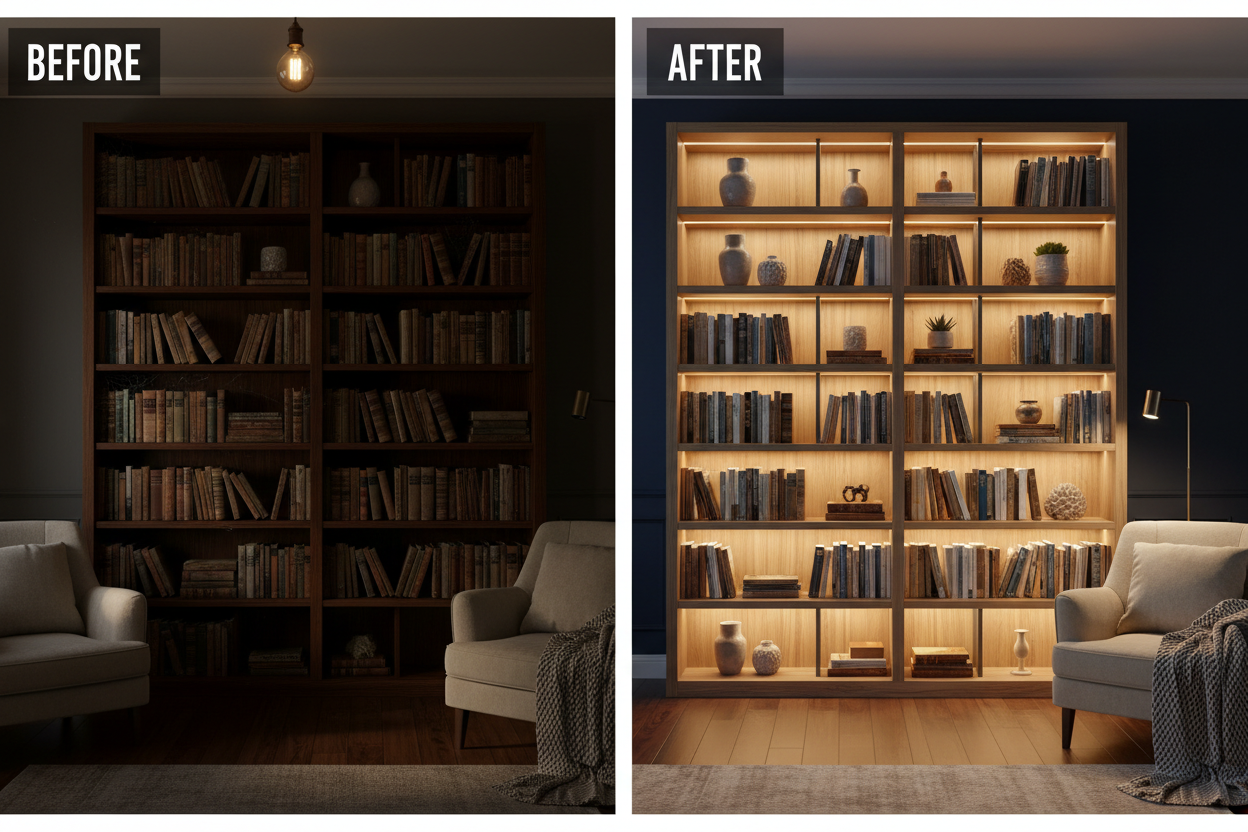
A lighted bookcase with glass doors transforms how you display and access your book collection while adding ambient lighting to any room. These elegant furniture pieces combine practical storage with sophisticated design, featuring built-in LED or puck lighting that illuminates your books, collectibles, and decorative items behind protective glass panels.
I spent years with a standard wooden bookcase in my home office, watching dust settle on my favorite hardcovers and rare editions. The spines faded from sunlight exposure, and finding specific titles in dim evening light meant squinting or turning on harsh overhead lights. That all changed when I discovered illuminated display cases designed specifically for book lovers.
The Practical Benefits You'll Actually Notice
Glass doors serve a dual purpose that goes beyond aesthetics. They create a barrier against dust, pet hair, and the inevitable grime that accumulates on exposed shelves. If you've ever run your finger along a bookshelf and seen the gray residue, you know exactly what I'm talking about. The enclosed design means less frequent cleaning and better preservation of your collection.
The lighting component addresses a problem many readers don't realize they have until it's solved. Built-in illumination eliminates shadows and makes titles readable from across the room. During my evening reading sessions, I no longer need to walk over and crane my neck to find what I'm looking for. The soft glow also creates ambiance that overhead fixtures simply can't match.
Choosing the Right Style for Your Space
These bookcases come in various configurations, from traditional wood frames with tempered glass to sleek modern designs with frameless panels. The lighting systems vary too—some feature adjustable LEDs with dimmer switches, while others use fixed puck lights positioned at strategic points.
Consider the size of your collection and available wall space. Tall, narrow units work well in apartments or smaller rooms, maximizing vertical storage without consuming floor area. Wider models with multiple compartments suit larger libraries and can serve as room dividers in open-concept layouts.
The glass itself matters more than you might think. Clear glass provides unobstructed views but shows fingerprints easily. Frosted or seeded glass adds visual interest and hides minor smudges while still allowing light to pass through. Some premium models offer UV-protective glass that shields books from harmful rays—a worthwhile investment if you're storing valuable or rare editions.
Installation and Lighting Considerations
Most illuminated display cases require electrical connections, though battery-operated options exist for those who want flexibility in placement. Hardwired units offer consistent brightness without worrying about battery replacement, but they limit where you can position the furniture.
LED lighting has become the standard for good reason. The bulbs last for years, generate minimal heat (protecting your books), and consume far less electricity than traditional incandescent options. Many contemporary designs include touch controls or remote operation, letting you adjust brightness levels to match the time of day or your mood.
When I installed mine, I positioned it perpendicular to the window to avoid glare on the glass during daytime hours. This placement also prevents direct sunlight from reaching the books, even with the protective doors. The built-in lighting takes over seamlessly as natural light fades.
Beyond Books: Versatile Display Options
While these cases excel at book storage, they're equally effective for displaying collectibles, family heirlooms, or decorative objects. The combination of glass protection and focused lighting turns ordinary items into gallery-worthy displays.
I've dedicated one shelf to vintage cameras and another to signed first editions. The adjustable shelving in quality models lets you customize spacing for items of different heights. Some people use these cases in dining rooms for china and glassware, or in living rooms for art pieces and photographs.
Maintenance and Long-Term Care
The enclosed design reduces maintenance compared to open shelving, but glass doors do require occasional cleaning. A microfiber cloth and standard glass cleaner handle most smudges. For the interior, a quick dusting every few months keeps everything pristine—far less frequent than open shelves demand.
Check the lighting system periodically. LED strips typically last 25,000 to 50,000 hours, but connections can loosen over time. Most units make bulb replacement straightforward, with access panels that don't require removing books or shelves.
Wood frames benefit from the same care as any furniture. Avoid placing the bookcase in direct sunlight or near heating vents, which can cause warping or finish damage. A light application of furniture polish once or twice yearly maintains the exterior appearance.
Investment Value and Quality Markers
Prices range dramatically based on materials, size, and features. Budget options start around $200-300 for basic models with simple lighting, while custom-built units with premium woods and sophisticated lighting systems can exceed $2,000.
Quality indicators include solid wood construction (rather than particle board), tempered glass panels, smooth-operating hinges with soft-close mechanisms, and adjustable shelving with sturdy supports. The lighting should distribute evenly without creating hot spots or dark corners.
Read reviews carefully, paying attention to comments about assembly difficulty and long-term durability. Some manufacturers offer warranties covering both the furniture structure and electrical components—a good sign of confidence in their product.
Making the Most of Your Purchase
Arrange books by color for a visually striking display, or organize by author and genre for practical access. Mix in decorative objects to break up rows of spines and add visual interest. The lighting will highlight whatever arrangement you choose, so experiment until you find what works.
Consider the viewing angle from your most-used seating areas. Position your favorite or most attractive books at eye level where the lighting shows them to best advantage. Less frequently accessed items can go on higher or lower shelves.
The right lighted bookcase with glass doors becomes a focal point that combines function with form, protecting your collection while showcasing it beautifully. Mine has become the first thing visitors comment on when entering my office, and it's made my reading life genuinely more enjoyable.
Frequently Asked Questions
Do lighted bookcases use a lot of electricity?
Modern LED-lit bookcases consume minimal power, typically between 5-20 watts depending on size and number of lights. Running the lights for several hours daily costs just a few dollars per year in electricity. The energy efficiency of LED technology means you can leave them on for ambiance without worrying about your utility bill.
Can I install lighting in an existing bookcase with glass doors?
Yes, retrofit lighting kits are available for adding illumination to existing furniture. Battery-powered LED strips offer the easiest installation, requiring no electrical work. For a more permanent solution, plug-in puck lights or hardwired LED strips can be installed with basic tools and some patience.
How do I prevent glare on the glass doors?
Position your bookcase away from direct window light and adjust interior lighting angles if possible. Anti-glare glass is available on some premium models. You can also apply anti-reflective film to existing glass panels, though this may slightly reduce clarity.

Leave a comment
This site is protected by hCaptcha and the hCaptcha Privacy Policy and Terms of Service apply.