










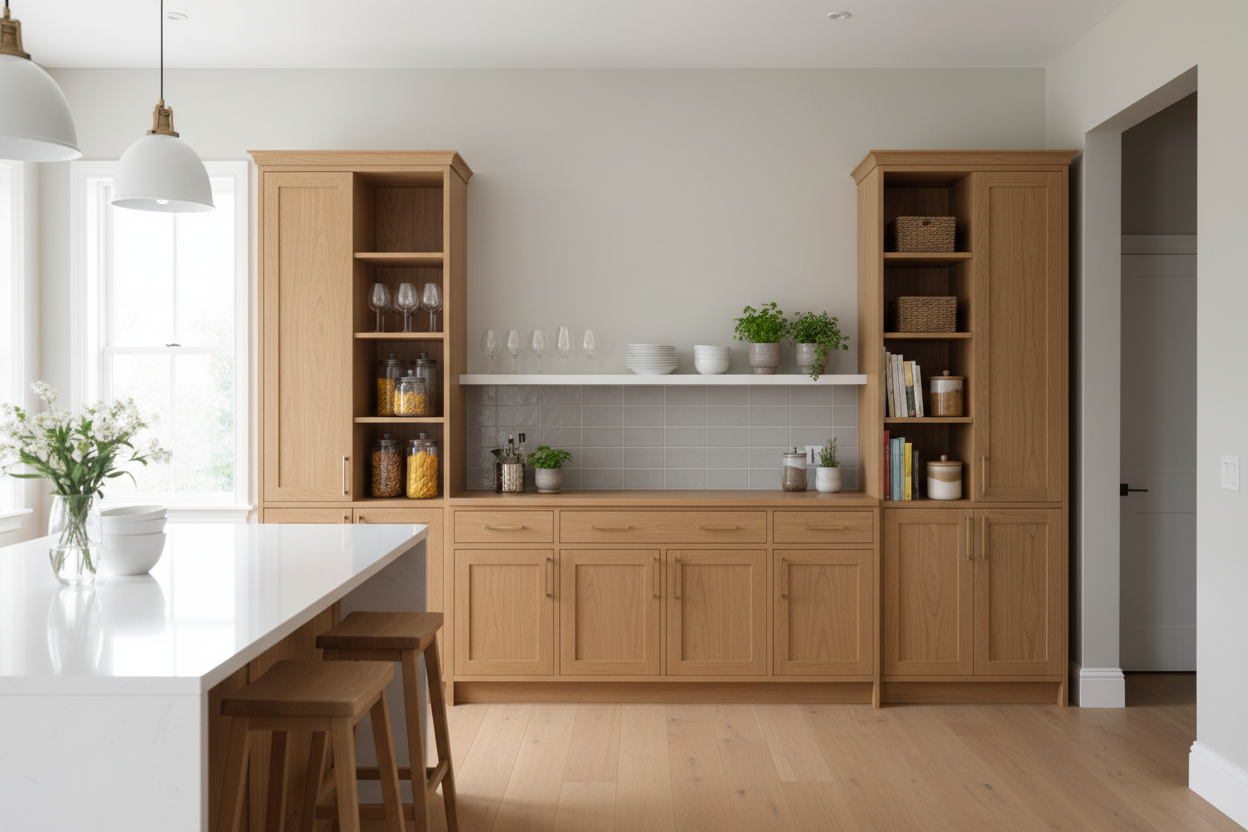
If you're struggling with kitchen clutter and wondering whether a sideboard and pantry set is worth the investment, the short answer is yes—especially if you value both storage capacity and aesthetic appeal. These furniture pieces have evolved far beyond their traditional dining room roles to become essential storage solutions for modern homes where kitchen space is at a premium.
A sideboard pantry set combines the best of both worlds: the elegant, low-profile design of a sideboard with the vertical storage capabilities of a pantry cabinet. This combination creates a cohesive look while maximizing your storage potential without overwhelming your space. Unlike standalone pieces that can make a room feel cluttered or mismatched, a coordinated set brings visual harmony to your kitchen or dining area.
What Makes a 3-Piece Sideboard and Pantry Set Different
The typical 3-piece pantry set includes a tall pantry cabinet flanked by two sideboard units, though configurations vary by manufacturer. This arrangement gives you multiple storage zones for different purposes. The pantry cabinet handles your bulk items, small appliances, and dry goods, while the sideboards provide easy-access storage for dishes, linens, serving pieces, and everyday essentials.
I discovered the value of this setup after years of making do with a mishmash of kitchen storage. My old approach involved a standalone pantry from one retailer, a buffet table from another, and whatever shelving units I could squeeze into corners. Nothing matched, and the visual chaos made my kitchen feel smaller than it actually was. When I finally invested in a pantry and sideboard set, the transformation wasn't just about storage capacity—it completely changed how the space felt.
Storage Capacity That Actually Works
The real advantage of a 3 piece sideboard configuration is how it distributes storage across different heights and depths. Tall pantry cabinets typically reach 72 inches or higher, giving you vertical storage that doesn't eat up precious floor space. The accompanying sideboards, usually around 30-36 inches tall, create accessible storage at the perfect height for items you use daily.
This height variation matters more than you might think. Reaching into a tall pantry for items you need three times a day gets old quickly. Having complementary sideboard units means your most-used items stay within easy reach, while seasonal serving pieces or bulk purchases can live higher up in the pantry cabinet.
Design Cohesion Beyond Function
A sideboard set with pantries solves a problem that individual pieces can't: creating a unified look that feels intentional rather than collected over time. Matching wood finishes, hardware, and design details make your space feel curated and complete. This matters whether you're working with a traditional farmhouse aesthetic, modern minimalism, or something in between.
The visual weight distribution also works in your favor. A single tall pantry cabinet can look imposing or out of place, but flanking it with lower sideboards creates balance. Your eye travels across the arrangement rather than getting stuck on one dominant piece.
Material and Construction Considerations
Quality varies dramatically in sideboard and pantry furniture, and understanding construction makes a difference in longevity. Solid wood construction costs more upfront but typically outlasts composite alternatives. Look for dovetail drawer joints, soft-close hinges, and adjustable shelving—these features indicate better craftsmanship and improve daily usability.
Engineered wood with quality veneers offers a middle ground, providing stability and attractive finishes at a lower price point than solid wood. The key is ensuring any composite materials are moisture-resistant, especially if your set will live in or near the kitchen where humidity fluctuates.
Practical Layout Strategies
Placement of your sideboard and pantry set requires some thought beyond just finding wall space. Consider traffic patterns in your kitchen and dining areas. You want easy access without creating bottlenecks, especially if multiple people cook together or you entertain frequently.
Corner placements can work beautifully, particularly if you position the tall pantry cabinet in the corner with sideboards extending along adjacent walls. This creates an L-shaped storage zone that defines space without blocking sightlines. Alternatively, a linear arrangement along one wall creates a gallery-like effect that works well in open-concept layouts.
Maximizing Your Investment
Once you have your 3-piece sideboard in place, organization becomes crucial. The worst thing you can do is treat these beautiful pieces like junk drawers. Designate specific zones: one sideboard for table linens and serving pieces, another for everyday dishes and glassware, and the pantry for food storage and small appliances you don't use daily.
Drawer dividers, shelf risers, and clear storage containers help maintain order inside your cabinets. This isn't just about aesthetics—when everything has a designated spot, you'll actually use the full capacity of your storage rather than letting items pile up in front while the back stays empty.
When a Sideboard Pantry Set Makes Sense
This furniture investment works best for specific situations. If you have a separate dining room that feels underutilized, a sideboard set with pantries can transform it into functional storage space while maintaining its formal character. For homes with small kitchens but adjacent spaces that could accommodate furniture-style storage, these sets bridge the gap between kitchen and living areas beautifully.
They're particularly valuable for people who entertain regularly. Having dedicated storage for serving pieces, table linens, and glassware near your dining area simplifies setup and cleanup. You're not running back and forth to the kitchen for every course or trying to remember which cabinet holds the good wine glasses.
The sets also appeal to anyone transitioning from a larger home to a smaller one. If you're downsizing but not ready to part with kitchen items you've collected over the years, a well-organized pantry and sideboard set can accommodate more than you'd expect while keeping everything accessible.
Budget and Value Considerations
Expect to invest anywhere from $800 to $3,000 or more for a quality 3-piece set, depending on materials, brand, and features. While that's not insignificant, compare it to the cost of built-in cabinetry or a kitchen renovation. Furniture-style storage offers flexibility that built-ins can't match—you can take it with you when you move or rearrange it as your needs change.
Sales and clearance events can yield significant savings, particularly on floor models or discontinued styles. Just verify that all pieces are available before committing to a set. Missing one component defeats the purpose of coordinated storage.


Leave a comment
This site is protected by hCaptcha and the hCaptcha Privacy Policy and Terms of Service apply.