










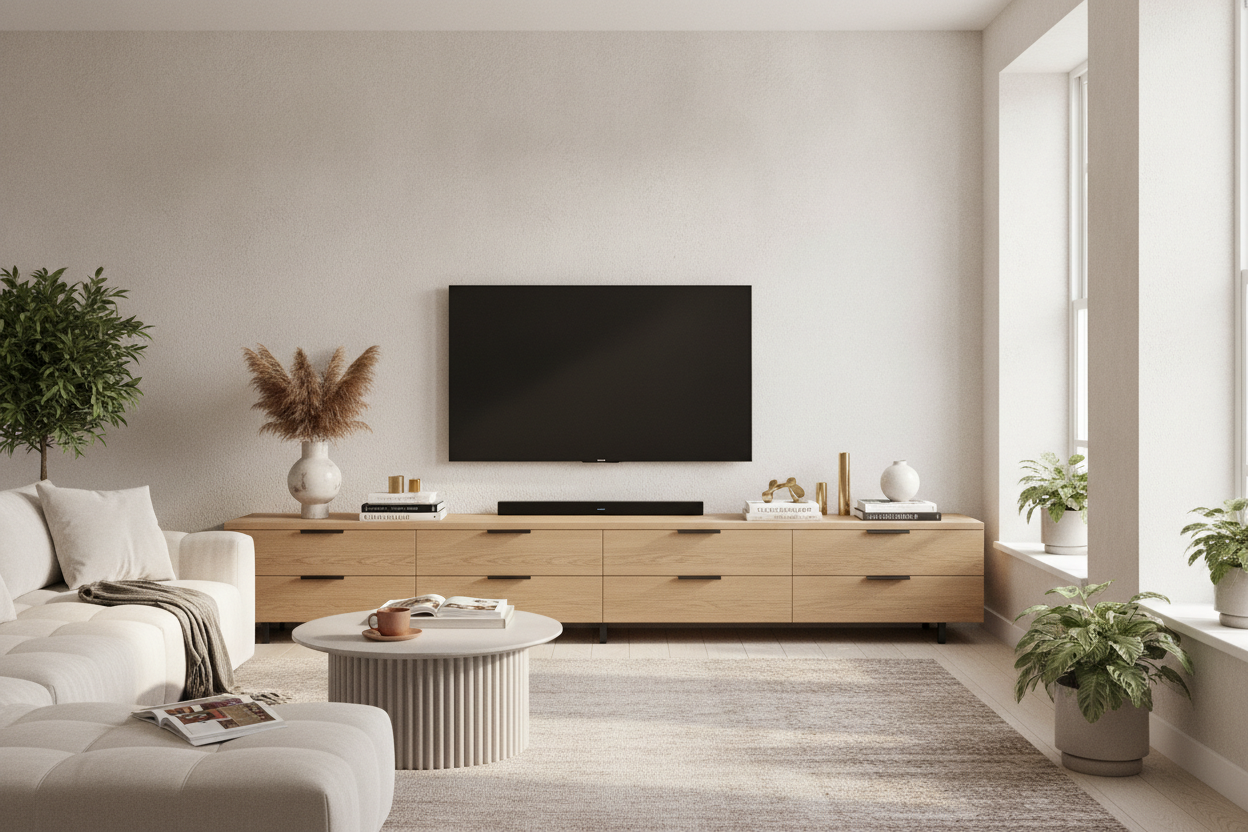
I used to have this gorgeous mid-century sideboard that I repurposed as a TV stand. It looked incredible in photos, but every time I needed a spare HDMI cable or a fresh pair of AA batteries, I had to get on my hands and knees and crawl into a dark wooden cavern. It was a mess of tangled wires and loose controllers that would literally spill out onto the rug the second I cracked the door. Eventually, I realized my mistake: I didn't need more space, I needed media consoles with drawers.
Quick Takeaways
- Drawers provide a 'bird's-eye view' of your tech, so nothing gets lost in the back.
- Standard cabinets are designed for large plates, not tiny remotes and charging cables.
- Using drawer dividers can turn a messy console into a professional-grade tech station.
- Console height is critical—if it is too tall, you are heading for a neck adjustment at the chiropractor.
The 'Cabinet Avalanche' Ruined My Living Room
We have all been there. You open the cabinet door under the TV to find a specific Nintendo Switch cartridge, and instead, you're hit with a literal avalanche of instruction manuals, half-empty battery packs, and three different remotes for devices you don't even own anymore. Standard cabinets are the worst place for small electronics. They are deep, dark, and they encourage stacking. And once you stack tech, you've already lost the battle.
I spent years digging through the 'void' of my old media unit. Items would get pushed to the back, hidden behind the heavy receiver or the PlayStation. I once found a lost Apple TV remote six months after I'd already bought a replacement, simply because it had slipped into a crevice behind a stack of DVDs. It is frustrating, it makes the room feel cluttered even when the doors are shut, and it's a total waste of time.
Enter the Savior: Media Consoles With Drawers
The switch to a drawer-based system was the best thing I ever did for my living room sanity. Mechanically, drawers just make more sense for the way we live now. Instead of reaching blindly into a box, you pull the storage out to you. You get a full, top-down view of every single item. No more flashlights, no more crawling on the floor, and no more 'lost' cables.
Visually, drawers also keep a room looking much tighter. Even when a drawer is slightly disorganized inside, the exterior remains sleek and flush. You don't have to worry about the 'leaning tower of junk' pushing against a cabinet door and making it pop open. Plus, modern drawer glides—especially the soft-close variety—feel significantly more high-end than a basic hinge. It turns a piece of furniture into a functional tool.
Why a Media Table With Drawers Actually Works for Tech
When you use a media table with drawers, you aren't just storing stuff; you're organizing it. I’ve found that adding simple bamboo or plastic dividers transforms a deep drawer into a hyper-organized hub. I have one section dedicated to 'daily use' remotes, another for gaming controllers, and a third for those annoying dongles and adapters that usually end up in a junk drawer in the kitchen.
I even went as far as drilling a small hole in the back of one drawer to run a multi-port USB charger inside. Now, my media table with drawers doubles as a hidden charging station. My controllers charge out of sight, and I don't have cables draped across the front of my furniture like some kind of tech-themed spiderweb.
Height Matters (Don't Make This Viewing Mistake)
One mistake I see people make constantly is buying a unit that is way too tall. They see a beautiful six-drawer chest and think it'll be perfect for storage. But if your TV is sitting 35 inches off the ground, you're going to be staring upward from your sofa. It’s the same reason a tall dresser makes a terrible table for TV in bedroom setups—it ruins your viewing angle and gives you a literal pain in the neck.
Ideally, you want your eyes to be level with the middle of the screen when you're seated. If you absolutely must use a taller drawer unit because you're short on space, please make sure the base is wide and stable. I generally trust table top stands for TV units that have a heavy, weighted center to prevent tipping, especially if you're frequently pulling out heavy drawers full of gear. Safety first, even in the name of organization.
What I Actually Keep in My Media Drawers
If you're wondering if you have enough 'stuff' to justify drawers, trust me, you do. Here is the current inventory of my right-hand drawer: three gaming controllers, a spare HDMI 2.1 cable, the soundbar remote, a microfiber cloth for screen cleaning, and my collection of coasters. The left drawer holds the boring stuff: the internet router (hidden but ventilated), the power strip, and the manuals for the TV that I refuse to throw away.
Having a specific home for these items means they never end up on the coffee table. My living room finally feels like a place to relax rather than a graveyard for plastic electronics. If you're still fighting the cabinet avalanche, take this as your sign to make the switch.
FAQ
Can I use a bedroom dresser as a media console?
You can, but watch the height. Most dressers are 30-36 inches tall, which is often too high for a standard sofa. Look for 'low-boy' dressers or dedicated media units that stay under 24 inches.
Are drawers harder to assemble?
Usually, yes. Aligning drawer slides takes a bit more patience than slapping a hinge on a door. But the 20 extra minutes of assembly is worth the years of better organization.
Do drawers cause electronics to overheat?
Don't put your Xbox or PlayStation inside a closed drawer while it's running. Use drawers for accessories, remotes, and cables. Keep the actual consoles on open shelves or in ventilated cabinets.

Leave a comment
This site is protected by hCaptcha and the hCaptcha Privacy Policy and Terms of Service apply.