










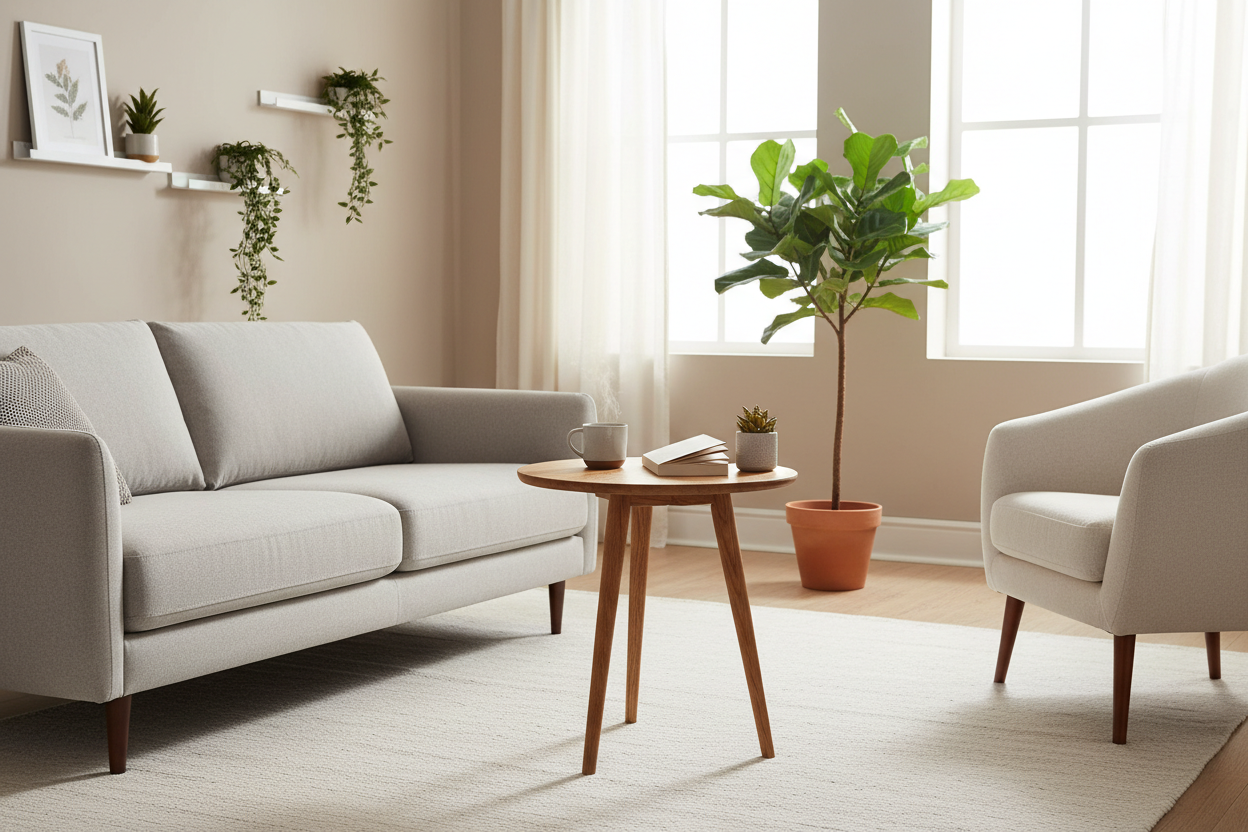
Last spring, I made a simple change to my living room that completely transformed how the space felt. I swapped out my oversized rectangular coffee table for a small round oak side table, and suddenly my cramped apartment felt breathable again. The warm honey tones of the oak wood brought an organic element that my previous glass-and-chrome setup never could, and I found myself actually using the space instead of just navigating around furniture.
A small round oak end table offers something that larger, more imposing furniture simply can't: versatility without visual weight. These compact pieces fit into corners, slide next to armchairs, and nestle between seating areas without demanding attention or blocking pathways. The circular shape means no sharp corners to bump into during late-night trips to the kitchen, which anyone living in a studio apartment will appreciate.
The Practical Magic of Round Oak Tables
Oak has been a furniture staple for centuries, and there's a reason it hasn't gone out of style. The wood's distinctive grain patterns mean each table carries its own character—some with dramatic cathedral patterns, others with subtle straight lines that speak to a quieter aesthetic. Unlike particleboard or laminate alternatives, solid oak develops a richer patina over time, meaning your table actually becomes more beautiful with age rather than showing wear.
The durability factor matters more than you might think. I've knocked over coffee mugs, dropped books, and even used mine as an impromptu stepstool when changing a lightbulb (not recommended, but it held). Oak's hardness rating sits around 1,300 on the Janka scale, making it resistant to dents and scratches that would mar softer woods like pine or poplar within weeks.
Finding the Right Size for Your Space
When shopping for a small round oak side table, dimensions matter more than aesthetics. Most fall between 16 to 24 inches in diameter, with heights ranging from 20 to 26 inches. The general rule I followed was matching the table height to my sofa arm—this creates a natural resting place for drinks, books, or a reading lamp without requiring awkward reaching.
For tighter spaces, look for tables with a smaller footprint around 16-18 inches across. These work beautifully in bedrooms as nightstands or in reading nooks where you need just enough surface for a cup of tea and a book. Larger diameters around 22-24 inches function better as shared surfaces between two chairs or as statement pieces in entryways.
Styles That Work With Everything
The beauty of oak lies in its chameleon-like ability to adapt to different design schemes. A mid-century modern piece with tapered legs and clean lines fits seamlessly into contemporary spaces, while a pedestal-style table with carved details brings traditional charm to classic interiors. I've seen the same wood type work in industrial lofts (paired with metal accents) and Scandinavian-inspired rooms (left natural with minimal finishing).
Finish options range from natural oil that highlights the wood's raw texture to darker stains that create drama and depth. White oak tends toward cooler, grayish tones, while red oak carries warmer, peachy undertones. Understanding this distinction helps when coordinating with existing wood furniture—mixing cool and warm tones can create unintentional visual discord.
What to Look for When Shopping
Construction quality separates a table that lasts decades from one that wobbles within months. Check how the top attaches to the base—screws directly into the wood often loosen over time, while mortise-and-tenon joinery or metal brackets provide superior stability. Solid wood tops beat veneer every time, though quality veneers over plywood cores offer a budget-friendly middle ground that still looks authentic.
Pay attention to the finish quality. Run your hand across the surface—it should feel smooth without sticky patches or rough spots that indicate poor sanding or application. The finish protects the wood from moisture and stains, so this isn't merely aesthetic. I learned this the hard way when a water ring appeared on an unfinished table after a single sweaty glass sat for twenty minutes.
Caring for Oak Furniture
Maintenance is surprisingly minimal. Dust regularly with a soft cloth, wipe spills immediately, and avoid placing hot items directly on the surface. Every few months, I use a wood conditioner to keep the finish from drying out, especially during winter when indoor heating creates desert-like conditions. This five-minute task has kept my table looking showroom-fresh for three years.
Sunlight can fade oak over time, so positioning matters. Direct afternoon sun streaming through west-facing windows will lighten the wood's color within months. If your layout doesn't allow for shade, consider UV-filtering window treatments or simply rotate the table occasionally to ensure even aging.
Styling Your Small Round Oak End Table
The round shape creates a natural focal point that draws the eye without overwhelming a room. I keep mine relatively simple—a small lamp, a coaster, and whatever book I'm currently reading. The circular surface doesn't have corners where items get lost or forgotten, which means everything stays visible and accessible.
Layering adds visual interest without clutter. A small tray corrals remotes and coasters while protecting the wood surface. A low-profile plant (I use a pothos in a ceramic pot) adds life without blocking sightlines across the room. The key is maintaining negative space—covering every inch defeats the purpose of choosing a small table in the first place.
For rooms with multiple seating areas, consider using matching small round oak side tables to create cohesion. They don't need to be identical—variations in height or leg style add personality while the shared material ties everything together. This approach works particularly well in open-concept spaces where defining separate zones without walls becomes necessary.
Budget Considerations and Where to Buy
Prices vary wildly based on construction and sourcing. Mass-produced tables from big-box retailers start around $80-150, while handcrafted pieces from local woodworkers can exceed $500. The middle ground—solid oak tables from established furniture brands—typically falls between $200-350 and offers the best balance of quality and value.
Estate sales and vintage shops often yield incredible finds. I've seen beautiful mid-century oak tables selling for a fraction of their original cost simply because they don't match current trends. A light sanding and fresh finish can revive these pieces into showstoppers that carry more character than anything bought new.
Online marketplaces provide convenience but require caution. Read dimensions carefully—photos distort scale, and what looks substantial online might arrive disappointingly small. Check return policies before purchasing, and don't hesitate to ask sellers for additional photos showing construction details, wood grain patterns, or any existing wear.
Frequently Asked Questions
What's the difference between a side table and an end table?
The terms are largely interchangeable, though "end table" traditionally refers to tables placed at the ends of sofas, while "side tables" can go anywhere. In practical use, both describe small accent tables used beside seating. The distinction matters more to furniture salespeople than actual homeowners.
How do I remove water rings from my oak table?
For light rings, try rubbing the spot with a mixture of equal parts white vinegar and olive oil, moving with the grain. More stubborn marks often respond to a paste of baking soda and water applied gently with a soft cloth. If these don't work, the finish may need professional refinishing rather than just surface treatment.
Can a small round oak table work as a nightstand?
Absolutely. The 20-24 inch height range matches most mattress heights perfectly, and the round shape prevents painful shin-bumping during groggy nighttime bathroom trips. Just ensure the diameter provides enough surface area for your essentials—lamp, phone, water glass, and book—without overcrowding.

Leave a comment
This site is protected by hCaptcha and the hCaptcha Privacy Policy and Terms of Service apply.