










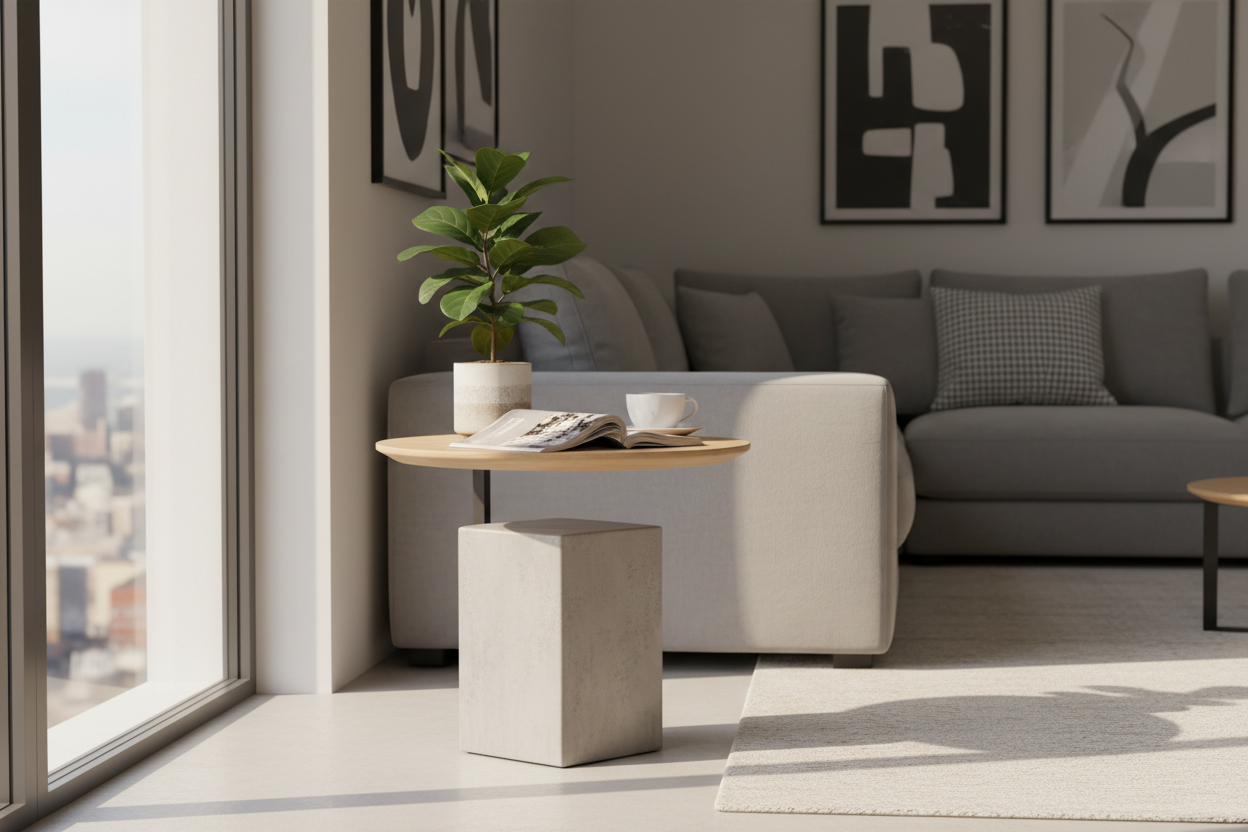
A small modern side table can completely transform your living room without demanding much space or budget. These compact pieces serve as functional anchors for drinks, books, and lighting while adding visual interest to otherwise forgotten corners and awkward gaps between furniture. The right side table bridges the gap between practicality and style, turning dead space into a purposeful design element.
Modern side tables come in countless variations, but their defining characteristic is clean lines and minimal ornamentation. Think sleek metal frames, smooth wooden surfaces, and geometric shapes that complement contemporary interiors. Unlike traditional side tables with ornate carvings or heavy proportions, modern designs prioritize simplicity and versatility.
Finding the Right Size for Your Space
The "small" designation matters more than you might think. A side table should sit within a few inches of your sofa or chair's arm height—typically between 22 and 30 inches tall. This ensures you can comfortably reach for your coffee or phone without awkward stretching.
For surface area, consider what you'll actually place on the table. A 15 to 20-inch diameter or square provides enough room for a lamp, a drink, and perhaps a small plant or book. Anything larger starts encroaching on floor space, while smaller surfaces become frustratingly impractical.
I learned this lesson the hard way after buying a gorgeous marble-top table that looked perfect online. Once it arrived, the 12-inch surface could barely hold a mug without feeling precarious. It ended up in the bedroom holding a single succulent—beautiful, but not exactly what I needed for the living room.
Material Choices That Match Your Lifestyle
Wood remains the most popular material for modern side tables, offering warmth that balances metal and glass elements elsewhere in the room. Walnut and oak bring rich tones, while lighter woods like ash or maple keep things airy. Engineered wood provides budget-friendly options that still deliver on style.
Metal frames have become increasingly common in contemporary designs. Black powder-coated steel creates industrial vibes, while brass or gold finishes add unexpected elegance. These frames often support glass, marble, or wood tops, creating interesting material combinations.
Glass tables work beautifully in smaller living rooms because they don't visually clutter the space. The transparency allows light to flow through, making the room feel more open. However, they require regular cleaning to maintain that pristine look—fingerprints and dust show up quickly on glass surfaces.
Considering Durability and Maintenance
Your choice should reflect how you actually live. Households with kids or pets might want to avoid glass tops or light-colored wood that shows every scratch and stain. Metal and dark wood finishes hide wear better and can withstand the occasional bump or spill.
Marble and stone tops look luxurious but need sealing to prevent staining. They're also heavy, which makes rearranging furniture more challenging. Conversely, lightweight materials like bamboo or rattan offer easy mobility but may not support heavier items like large lamps.
Design Features That Add Function
Storage shouldn't be overlooked just because the table is small. Many modern designs incorporate a lower shelf, providing space for magazines, remote controls, or decorative objects. This second tier keeps your tabletop clear while maximizing vertical space.
Some side tables include built-in USB ports or wireless charging pads—a genuinely useful feature in our device-dependent lives. These tech-integrated designs eliminate the need for visible cords snaking across your floor to reach outlets.
Nesting tables offer flexibility that single pieces can't match. You can separate them when hosting guests or tuck the smaller table underneath when you need more floor space. This adaptability makes them particularly valuable in apartments or multi-purpose rooms.
Color and Finish Considerations
Neutral tones like black, white, gray, and natural wood work with virtually any color scheme. They provide a stable foundation that won't clash when you change throw pillows or artwork. This versatility extends the table's lifespan in your home—you won't tire of it as quickly as a bold statement piece.
That said, a pop of color can energize a neutral room. Navy blue, forest green, or burnt orange side tables serve as accent pieces that draw the eye without overwhelming the space. Just ensure the color appears elsewhere in the room—in artwork, textiles, or decorative objects—to create visual cohesion.
Matching Versus Mixing Styles
Your side tables don't need to match your coffee table or other furniture perfectly. In fact, mixing materials and styles often creates more visual interest than perfectly matched sets. A wooden side table can beautifully complement a glass coffee table, while metal accents can tie together various elements in the room.
The key is finding a common thread—whether that's finish, shape, or era. Tables with similar leg styles or proportions will feel related even if they're made from different materials.
Placement Strategies That Work
The obvious spot is beside your sofa or armchair, but don't limit yourself to conventional arrangements. A small modern side table can anchor a reading nook, fill the space beside a window seat, or create a landing spot in an entryway.
Symmetry works well in formal living rooms—identical tables flanking a sofa create balance and order. Asymmetrical arrangements feel more relaxed and contemporary, allowing you to mix different table styles on either side of your seating area.
Corner placement maximizes floor space while creating useful surface area. L-shaped or triangular tables specifically designed for corners make the most of these often-wasted spaces.
Budget-Friendly Options That Don't Look Cheap
Quality doesn't always require a premium price tag. Many retailers offer well-designed modern side tables under $100 that deliver on both style and durability. Look for solid construction—tables should feel stable without wobbling, and finishes should be even without drips or rough spots.
Shopping secondhand can yield surprising finds. Mid-century modern pieces from the 1960s and 70s align perfectly with contemporary aesthetics and were often built to last. A quick refinishing job can transform a dated piece into something that looks brand new.
DIY options abound for those willing to invest time instead of money. Simple designs using hairpin legs and a wooden or marble top require minimal tools and skills but result in custom pieces that fit your exact specifications.
Frequently Asked Questions
What's the ideal height for a side table next to a sofa?
The table should be roughly the same height as your sofa's armrest, typically between 24 and 26 inches. This allows you to easily reach items without straining. If you're placing it beside an armless sofa or chair, aim for seat height or slightly above.
Can I use outdoor side tables indoors?
Absolutely. Many outdoor tables feature weather-resistant materials like powder-coated metal and sealed wood that work beautifully indoors. They often cost less than indoor furniture while offering comparable style. Just ensure the design fits your aesthetic—some outdoor pieces have a distinctly casual look that may not suit formal living rooms.
How many side tables does a living room need?
This depends on your seating arrangement and lifestyle. At minimum, place one beside your primary seating area for drinks and devices. Larger rooms with multiple seating zones benefit from two or more tables. The goal is ensuring everyone has convenient access to a surface without cluttering the space.

Leave a comment
This site is protected by hCaptcha and the hCaptcha Privacy Policy and Terms of Service apply.