










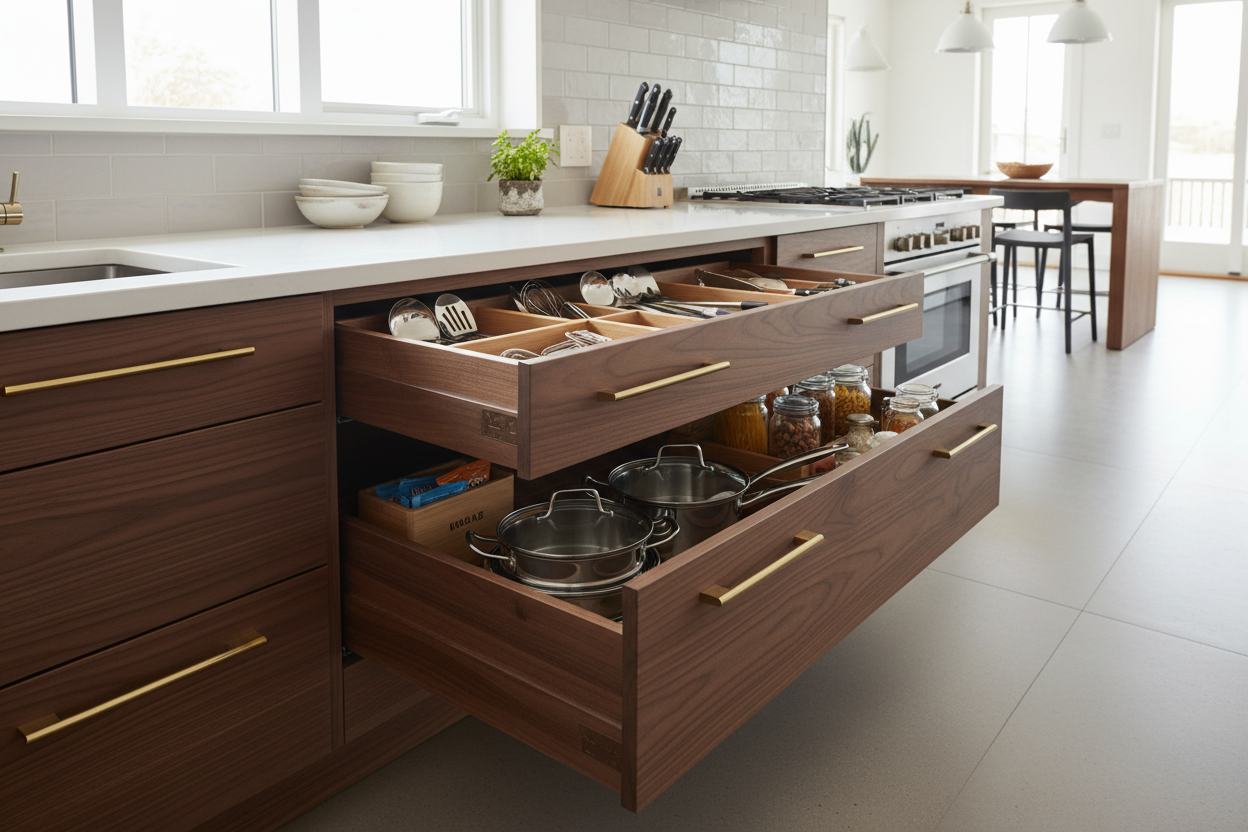
Anyone who has ever had to get on their hands and knees to dig out a Dutch oven from the back of a dark cupboard knows the specific frustration of standard base cabinetry. You have to move three other pans, a stack of lids, and a random roasting tray just to get to the one item you need. This is exactly why the cabinet with two drawers has moved from being a luxury upgrade to a standard requirement in modern kitchen design. Unlike traditional door-and-shelf setups, these deep drawer units bring the contents to you, changing the way you interact with your workspace.
I learned this lesson the hard way during my first kitchen remodel. I was trying to save money by sticking to standard door cabinets, thinking drawers were an unnecessary expense. A contractor friend convinced me to install just one 2 drawer base cabinet next to the stove. Within a month, that single unit became the most valuable real estate in my kitchen. It held my heaviest cast iron skillets and awkward stockpots with ease. The difference was so stark that in my current home, I swapped out almost every lower door for drawers. The accessibility factor alone changes the flow of cooking, allowing you to grab heavy equipment with one hand while stirring sauce with the other.
The Ergonomics of the Two Drawer Base Cabinet
The primary appeal of this cabinetry style lies in ergonomics. A standard two drawer base cabinet splits the vertical space into two deep, equal-height compartments. This design is specifically engineered for bulk. While a three-drawer stack usually offers a shallow top drawer for cutlery, the two-drawer configuration dedicates all its space to large items. This makes it the ideal home for stacking pots, nesting mixing bowls, or storing small appliances like blenders and food processors that usually clutter the countertop.
By using a 2 drawer kitchen cabinet, you eliminate the need to crouch. You pull the handle, and the full depth of the cabinet extends outward. You can see the item at the very back just as easily as the item in the front. For aging in place or for anyone with back issues, this shift from reaching in to pulling out is significant. It transforms the kitchen from a space of physical strain to one of fluid movement.
Weight Capacity and Hardware Matters
Because these units are destined to hold heavy items, the construction quality is non-negotiable. A flimsy cabinet with 2 drawers won't last long if you load it with stoneware. When shopping or designing, pay close attention to the drawer slides. You need heavy-duty, undermount glides rated for at least 75 to 100 pounds. Soft-close mechanisms are also essential here; momentum can make a heavy drawer slam shut with alarming force, potentially damaging your cabinet frame or the contents inside.
Full-extension slides are another feature you cannot compromise on. If the drawer only opens three-quarters of the way, you lose the main benefit of the 2 drawer base kitchen cabinet, which is total accessibility. You shouldn't have to angle your hand to retrieve a pot lid from the back.
Organizing the Deep Abyss
One valid concern people have is that deep drawers can become disorganized "dumping grounds." Without structure, stacks of plates can slide, and Tupperware can become a chaotic jumble. This is where internal organizers come into play. A double drawer cabinet works best when paired with a peg system or adjustable dividers.
Peg systems allow you to customize the floor of the drawer to fit your specific plates or bowls, keeping them snug so they don't rattle when the drawer opens or closes. For pot lids, simple vertical dividers can turn a messy pile into a file-folder system, letting you grab the right lid instantly. Even without fancy inserts, the sheer volume of a two drawer kitchen cabinet allows for vertical stacking that shelf cabinets simply cannot accommodate effectively.
Sizing and Placement Strategies
These cabinets come in various widths, typically ranging from 15 inches up to 36 inches. A wide, 36-inch unit is luxurious, offering massive amounts of storage, but it requires substantial floor space to open fully. Conversely, a small cabinet with 2 drawers—perhaps in the 15 to 18-inch range—is an unsung hero for tight spaces. These narrower units are perfect for storing tall bottles of oil, vinegar, and spices, or vertical baking sheets.
Placement is just as critical as size. The golden zone for a 2 drawer base cabinet is directly adjacent to your cooking range or cooktop. This allows you to transfer pots from storage to burner with zero steps. Another excellent location is the kitchen island. Installing these deep drawers in an island facing the stove creates a highly efficient pivot zone where you can prep, cook, and plate without traversing the kitchen.
Aesthetic Considerations
Beyond utility, there is a visual weight to these cabinets that appeals to modern and transitional design sensibilities. The horizontal lines of a 2 drawer kitchen cabinet create a wider, more expansive look compared to the vertical lines of cabinet doors. This can make a small kitchen feel larger. Whether you choose shaker style fronts or sleek flat panels, the symmetry of two equal drawers provides a calming, orderly appearance.
Cost vs. Value
It is true that a cabinet with two drawers will generally cost more than a standard door cabinet. The price difference comes down to the hardware (slides are expensive) and the construction of the drawer boxes themselves. However, the return on investment is high. You are gaining usable storage volume. In a standard cabinet, the back half of each shelf is often dead space because it's too hard to reach. With drawers, you utilize 100% of the cubic footage. When you factor in the frustration saved and the increased storage density, the premium price pays for itself quickly.
If you are planning a renovation, prioritize drawers for your base cabinets. Even if budget constraints force you to mix and match, try to ensure your primary cooking zone is equipped with at least one wide double drawer cabinet. It is a decision your future self—holding a heavy pot of boiling water—will thank you for.
Frequently Asked Questions
Can a 2 drawer cabinet hold the weight of cast iron cookware?
Yes, provided you choose the right hardware. Look for heavy-duty, undermount drawer slides rated for 100 pounds or more. The drawer box should also be constructed with dovetail joints and a solid bottom (plywood rather than particle board) to prevent sagging under the weight of heavy pots and pans.
What is the best width for a 2 drawer base cabinet?
For pots and pans, a width between 30 and 36 inches is ideal as it allows for side-by-side placement of large items. However, a small cabinet with 2 drawers (18 to 24 inches) is excellent for dry goods, Tupperware, or smaller appliances, making it a versatile option for tighter kitchen layouts.
Can I retrofit an existing cabinet with drawers?
Converting a cabinet with doors to drawers is possible but labor-intensive. It usually involves removing the center stile, ordering custom drawer boxes, and installing new slides. A easier alternative for existing cabinets is installing rollout trays (pull-out shelves), which offer similar accessibility without altering the cabinet face.

Leave a comment
This site is protected by hCaptcha and the hCaptcha Privacy Policy and Terms of Service apply.