










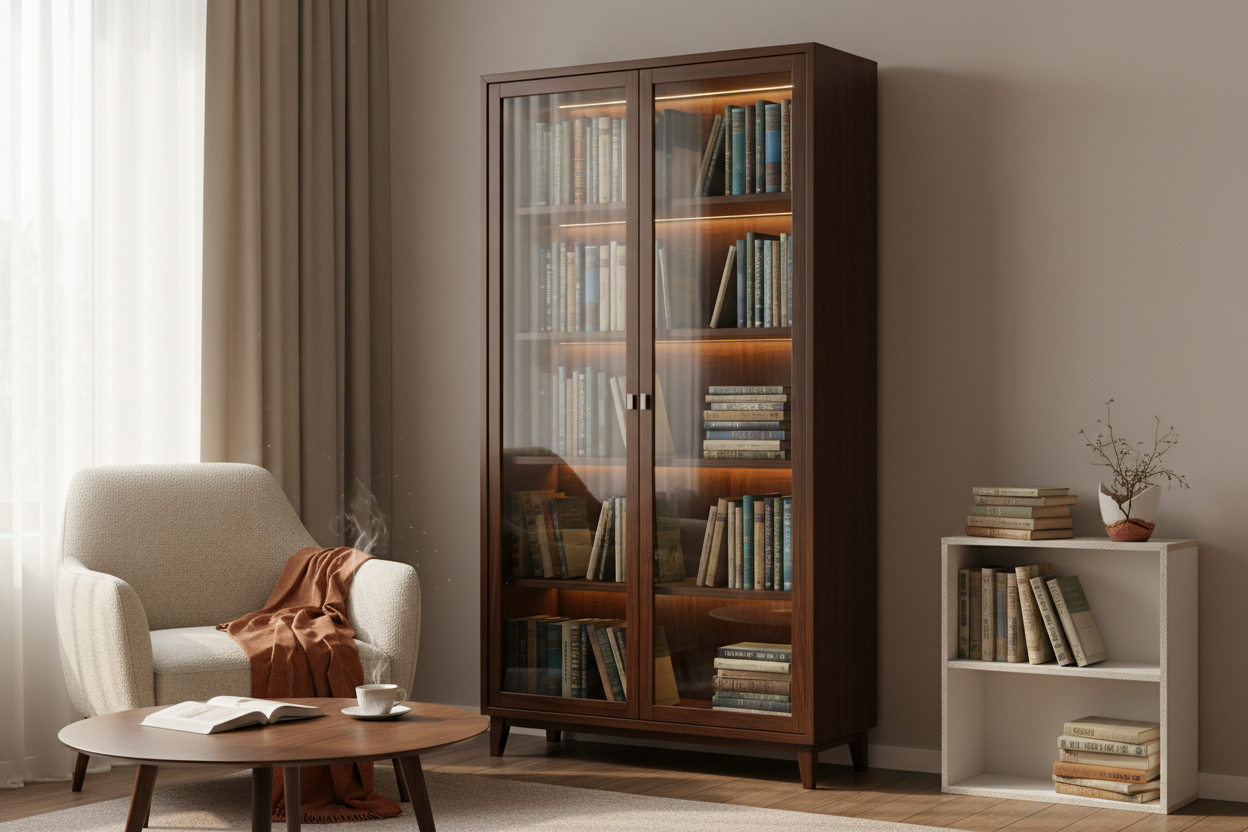
Your book collection tells a story about who you are, what you value, and where your curiosity leads you. Yet most of us stuff our beloved volumes onto basic shelves where they gather dust, fade from sunlight, and disappear into the background of our living spaces. A well-chosen display cabinet and bookcase transforms your books from clutter into a curated collection that enhances your home while keeping your treasures protected and accessible.
The difference between ordinary storage and a proper book display cabinet comes down to intention. While standard bookshelves serve a purely functional role, display cabinets elevate books to the status they deserve—particularly valuable first editions, signed copies, leather-bound classics, or illustrated volumes that deserve protection from environmental damage. Glass doors shield pages from dust, UV-resistant panels prevent fading, and adjustable shelving accommodates everything from oversized art books to vintage paperbacks.
What Makes a Display Cabinet Different From Regular Bookcases
Regular bookcases work fine for everyday reading material, but they leave books exposed to everything your home throws at them. Cooking smoke, pet dander, humidity fluctuations, and direct sunlight all take their toll over time. I learned this the hard way when I noticed my grandfather's collection of National Geographic magazines from the 1960s had developed a yellow tinge along the spines after just three years on open shelving near a west-facing window.
Display cabinets address these issues with enclosed storage that maintains more stable conditions. The glass panels—often treated with UV protection—create a barrier against airborne particles while still showcasing your collection. Many designs include interior lighting that highlights your books without generating the heat that damages paper and bindings. The best models feature adjustable shelves that let you customize spacing based on book height, preventing that awkward situation where you can't quite fit your coffee table books anywhere.
Choosing Between Open and Closed Storage
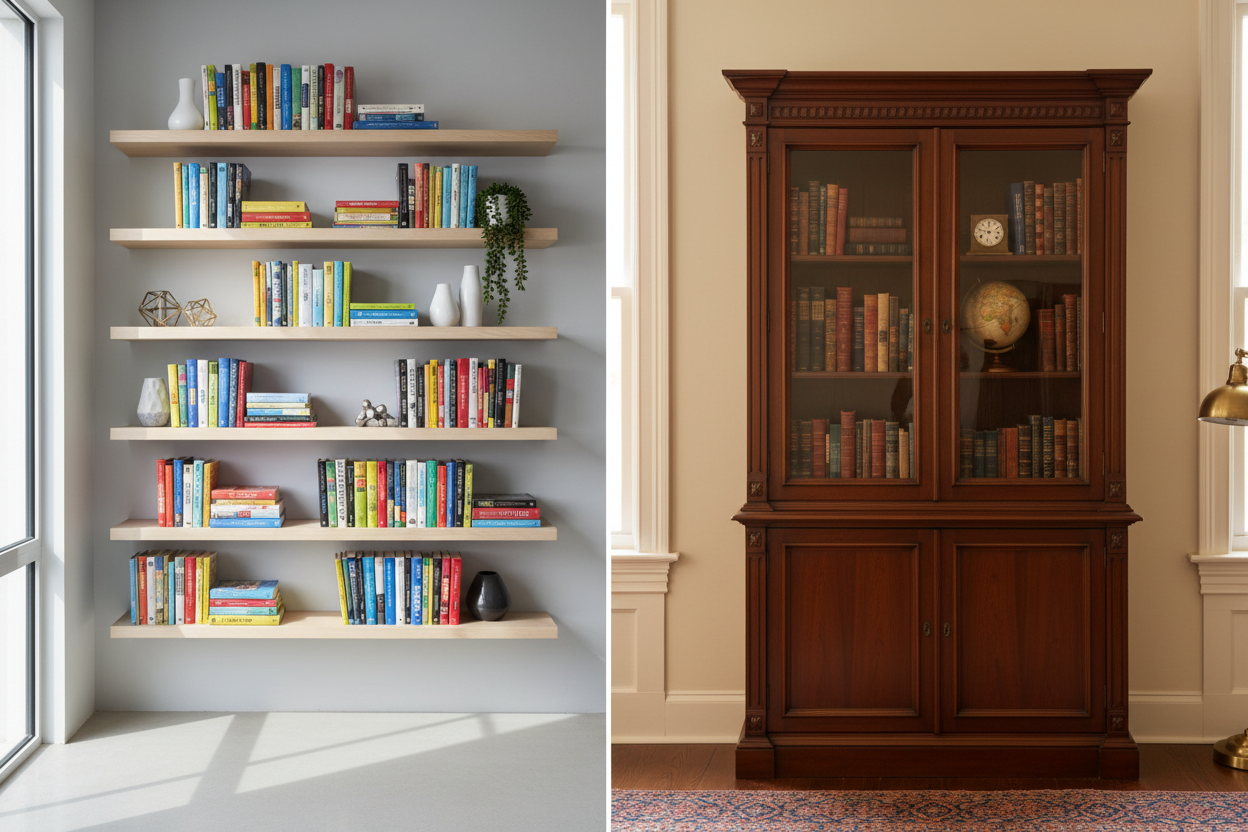
Not every book needs to live behind glass. A hybrid approach often works best—a display cabinet and bookcase combination that offers both protected and open storage. Keep your most valuable or delicate volumes in enclosed sections while leaving frequently accessed reading material on open shelves for easy grabbing.
This mixed approach also solves the aesthetic challenge many collectors face. A wall of glass-fronted cabinets can feel museum-like and cold, while completely open shelving sometimes looks chaotic no matter how carefully you arrange things. Combining both styles creates visual rhythm and practical functionality.
Material Considerations That Actually Matter
Solid wood cabinets offer durability and classic appeal, but they're heavy and expensive. Engineered wood with quality veneers provides similar aesthetics at a fraction of the weight and cost. Metal frames with glass panels suit modern interiors and handle humidity better than wood, though they may not complement traditional décor.
The glass itself deserves attention. Tempered glass resists breakage and handles temperature changes better than standard panes. If you're displaying rare or valuable books, look for UV-filtering glass that blocks 99% of harmful rays—the same technology museums use to protect artifacts. Regular glass offers no such protection, and your books will fade just as quickly as they would on open shelves.
Size and Configuration Planning
Measure twice, buy once. Sounds obvious, but the number of people who purchase furniture without checking ceiling heights, doorway widths, and floor space is staggering. A book display cabinet needs at least three inches of clearance on all sides for proper air circulation and to prevent moisture buildup against walls.
Depth matters more than you might think. Standard bookcases run about 12 inches deep, which accommodates most books but wastes space with smaller volumes. Display cabinets often come shallower—8 to 10 inches—making them perfect for paperbacks and vintage books while creating a sleeker profile that works in hallways or dining rooms where deeper furniture would obstruct traffic flow.
Tall, narrow cabinets maximize vertical space in smaller rooms. Wide, low designs work better for displaying large-format books and creating a visual anchor in spacious areas. Corner units capitalize on otherwise wasted space, though they can be tricky to access and may not accommodate wider books.
Lighting Your Collection Properly
Built-in LED lighting transforms a display cabinet from simple storage into a focal point. The key is choosing warm-spectrum LEDs that don't emit UV radiation or generate excessive heat. Cool white LEDs can make books look washed out and uninviting, while warm tones create an ambiance that draws people in.
Positioning matters as much as the bulbs themselves. Top-mounted lights create shadows on lower shelves. Better designs incorporate lighting at multiple levels or use vertical LED strips along the cabinet sides for even illumination. Dimmable options let you adjust brightness based on time of day and ambient light conditions.
Organizing Your Books for Maximum Impact
How you arrange books in your display cabinet affects both aesthetics and accessibility. Organizing by color creates Instagram-worthy visuals but makes finding specific titles nearly impossible. Grouping by subject or author proves more practical while still looking intentional.
Leave some breathing room. Cramming every shelf to capacity looks cluttered and makes removing books difficult. Strategic gaps create visual interest and give your collection room to grow. Mixing in small decorative objects—a vintage camera, a piece of pottery, a small plant—breaks up long rows of spines and adds personality.
Varying book orientation adds dimension. Most volumes stand upright, but stacking a few horizontally creates visual breaks and provides platforms for displaying smaller items. Just avoid stacking too many books on top of each other, as the weight can damage bindings over time.
Maintenance and Long-Term Care
Even behind glass, books need occasional attention. Dust still infiltrates through small gaps around doors and ventilation openings. A quarterly cleaning with a soft, dry cloth keeps both the cabinet and books in good condition. Avoid furniture polish on wood near books, as the oils can transfer to covers and pages.
Monitor humidity levels if you're storing valuable books. Ideal conditions hover around 30-50% relative humidity. Too dry, and pages become brittle. Too humid, and you're inviting mold. Small wireless hygrometers cost less than $20 and provide peace of mind.
Budget Realities and Where to Invest
Quality display cabinets range from $200 for basic models to several thousand for custom-built units. The middle ground—$500 to $1,200—offers the best value for most collectors. This price point typically includes solid construction, adjustable shelving, quality glass, and decent hardware that won't fail after a year.
Where should you splurge? Invest in UV-filtering glass if you're displaying valuable books. Spend extra for solid wood if the cabinet will serve as a room's focal point. Quality hinges and door hardware matter more than you'd expect—cheap mechanisms fail quickly and can't be easily replaced.
Where can you save? Fancy finishes and decorative molding add cost without improving functionality. Built-in lighting seems appealing but often uses proprietary bulbs that become expensive to replace. Battery-operated LED puck lights offer similar effects at a fraction of the cost and can be easily upgraded.


Leave a comment
This site is protected by hCaptcha and the hCaptcha Privacy Policy and Terms of Service apply.