











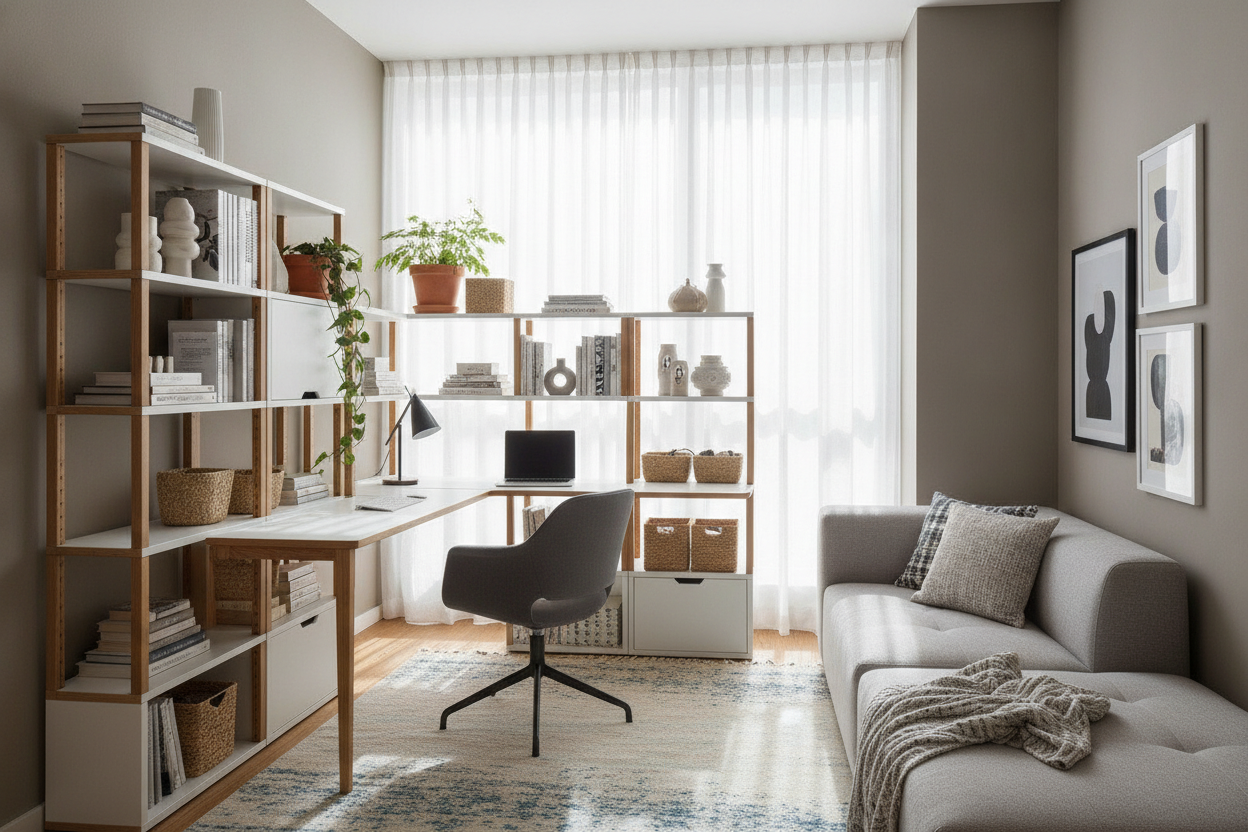
I spent three years working from a 'Frankenstein' office. It started with a cheap table from a big-box store, followed by a plastic rolling cart, and eventually, a leaning bookshelf that didn't quite match the wood grain of anything else in the room. Every time I sat down to work, I felt like I was navigating a storage unit rather than a professional workspace. Finally, I ditched the chaos for a modular desk and shelves system, and for the first time, my brain actually felt quiet.
Quick Takeaways
- Modular systems utilize vertical space, freeing up valuable floor real estate.
- Unified furniture reduces visual clutter, which helps with focus and productivity.
- Unlike fixed furniture, modular pieces can be reconfigured when you move or upgrade your tech.
- Integrated storage keeps your most-used items within arm's reach.
The Frankenstein Furniture Trap
Most of us build our offices piece by piece. You buy a standard writing computer desk because it looks sleek and fits your laptop. Then, three months later, you realize you have nowhere to put your printer, your stack of tax documents, or that second monitor you just bought. So, you buy a separate shelf. Then a filing cabinet. Before you know it, your room is a jigsaw puzzle of mismatched legs and varying heights.
The problem with this approach is that standalone pieces rarely play nice together. They leave awkward gaps where dust bunnies thrive and cords tangle into a bird's nest. A basic desk is great for a minimalist laptop user, but it fails the moment your life gets a little more complex. You end up with a room that feels cramped because you're forced to spread horizontally across the floor instead of building up.
Wait, What Actually Makes It Modular?
There is a big difference between furniture that just sits next to each other and a true modular desk with shelves. A modular system is designed to interlock. The shelves aren't just nearby; they are often physically connected to the desk frame or use a consistent rail system that allows you to move components around.
I look for systems that use heavy-duty steel uprights or solid wood brackets. If you can't swap a shelf for a drawer unit in ten minutes or less, it's not truly modular—it's just a set. Real modularity means the furniture adapts to you, not the other way around. If you decide you want your shelves on the left instead of the right next year, a modular system lets you make that change without buying a single new screw.
The Magic of Storage You Don't Have to Stand Up For
The biggest workflow killer is having to get up to find a piece of paper. In my old setup, my books were on a shelf across the room. Every time I needed a reference, I had to break my focus, stand up, and walk over there. It sounds small, but those micro-interruptions add up over an eight-hour day.
When you use an office desk with drawers and shelves that are integrated into one unit, everything stays within your 'reach zone.' I can grab my hard drives, my notebooks, and my reference materials without my chair wheels ever leaving the rug. It turns your desk into a cockpit. You have total control over your environment, and your most-used tools are literally at your fingertips.
How My Setup Survived Three Different Room Layouts
I’m a chronic redecorator. Last year, I moved my office from a dark corner of the bedroom to a bright sunroom. If I had invested in permanent built-in desk and shelves, I would have been stuck. Built-ins look great, but they are a commitment that stays with the house. Modular furniture gives you that same 'custom' look but stays with you when you move.
When I upgraded to a 49-inch ultra-wide monitor, I simply popped out two of the middle shelves to make room for the massive screen. If I had a standard hutch, I would have had to take a saw to it or sell the whole desk. That flexibility is why I’ll never go back to static furniture. I even added a small cabinet module later when my filing needs grew. It took five minutes to install and matched the rest of my setup perfectly.
The Final Verdict: Stop Buying Separate Pieces
People often hesitate at the price of a modular system because it costs more upfront than a cheap flat-pack desk. But do the math: by the time you buy a desk, a bookshelf, and a storage cart separately, you've spent nearly the same amount. Plus, you’re stuck with three pieces of furniture that will likely end up on the curb during your next move because they don't fit the new floor plan.
Investing in a cohesive system is a 'buy it once' move. It looks more expensive because it's visually consistent, and it functions better because it was engineered as a single unit. Stop patching your office with temporary fixes. Get a system that actually works as hard as you do.
FAQ
Is modular furniture harder to assemble?
Usually, no. Because modular systems come in smaller, standardized components, the individual pieces are often easier to handle than one giant, heavy executive desk. You just have to be comfortable with a level to make sure your wall rails or uprights are straight.
Can I add to my modular desk later?
That is the best part. Most reputable brands keep their modular lines in production for years. You can start with a basic desk and two shelves, then add more units as your budget or your workload grows.
Does it work in small apartments?
It’s actually better for small spaces. Because you can build vertically, you can get the same amount of storage in a 48-inch wide footprint that would normally require 72 inches of floor space with traditional furniture.


Leave a comment
This site is protected by hCaptcha and the hCaptcha Privacy Policy and Terms of Service apply.